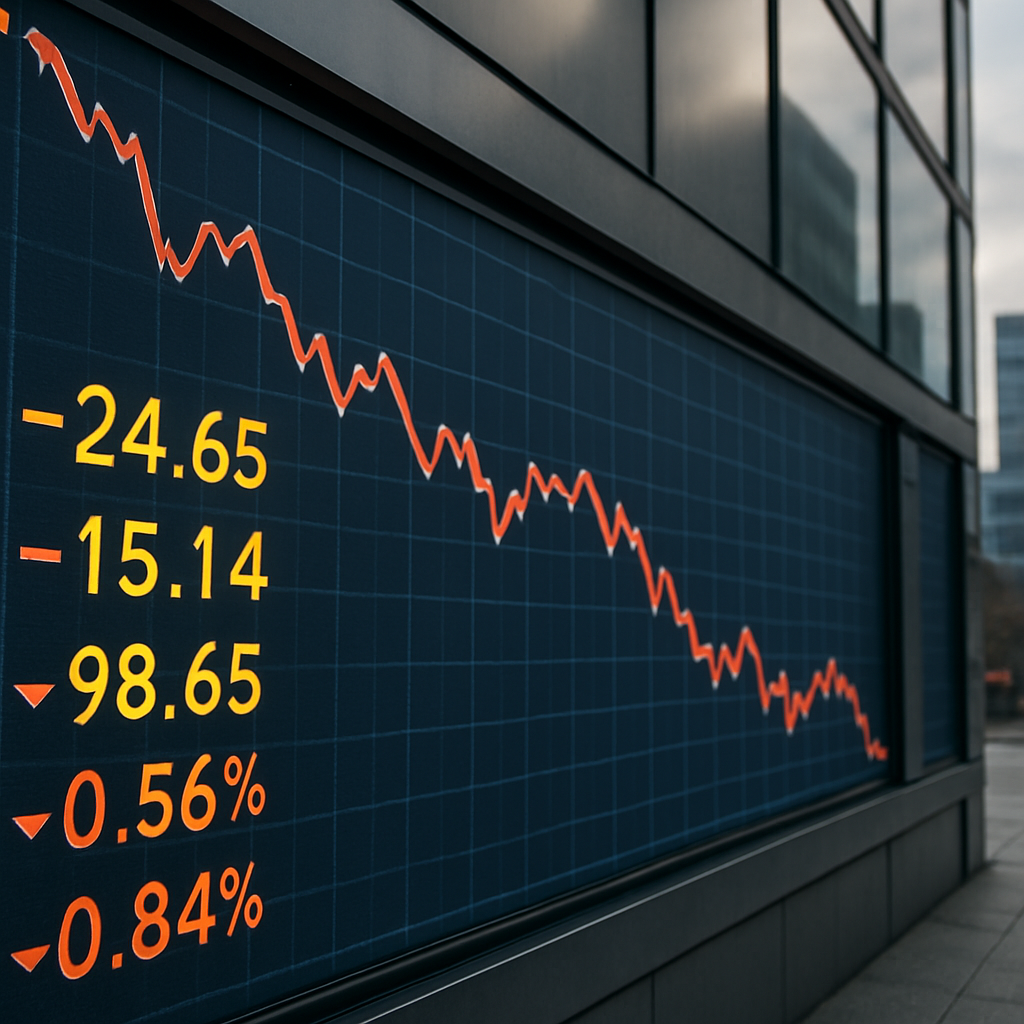
December has opened on a cautious note for global investors. After a strong November rally across equities, tech, and crypto, markets pulled back on December 1 as renewed risk aversion set in. Major U.S. benchmarks — including the S&P 500 and Nasdaq Composite — slipped roughly 0.6% to 0.7%, according to Financial Times and Bloomberg, with similar softness seen across European and Asian markets. The early-month reversal underscores a growing sense that investors are reassessing valuations at a time when macro uncertainty remains high.
As earnings season winds down and investors shift their focus toward the Federal Reserve’s December policy meeting, the mood across markets is shifting from momentum-driven optimism to selective defensiveness.
A Market Pauses After November’s “Everything Rally”
November delivered one of the strongest monthly advances for global equities in 2024, driven by cooling inflation data, renewed rate-cut hopes, and a rebound in tech enthusiasm. But as December begins, investors appear less willing to extend risk exposure without fresh economic clarity.
U.S. tech names — which had powered the year’s upside — saw selling pressure early in the session. Meanwhile, crypto markets experienced a noticeable pullback, with traders locking in gains after weeks of strong inflows into major tokens.
Risk-sensitive sectors such as semiconductors, cloud-software, digital assets, and growth-heavy ETFs reflected the broader shift in sentiment. The VIX volatility index inched higher, signalling a rise in hedging activity ahead of a critical month filled with U.S. macro data releases.
Why This Matters for Investors
1. December Historically Sets the Tone for the Following Year
Seasonality matters. December is often a month of window dressing, tax-loss harvesting, and positioning for Q1. When the month starts with broad selling, it can indicate:
- investor fatigue after strong rallies,
- concerns about overstretched valuations,
- and caution ahead of key central-bank guidance.
The S&P 500’s early-month decline shows that markets may be entering a consolidation phase.
2. Economic Data Could Re-Shape Rate Expectations
Upcoming U.S. releases — including nonfarm payrolls, CPI, PPI, and retail sales — will be critical for shaping the Federal Reserve’s December statement and its 2025 policy outlook.
Investors are particularly focused on:
- Whether inflation continues to decelerate
- The resilience of U.S. consumer spending
- Labor-market signals of softening or overheating
Any upside surprise in inflation or jobs data could reverse expectations of early 2025 rate cuts.
3. Tech and Crypto Are Showing Sensitivity
Tech and crypto — both leaders of 2024’s risk rebound — were among the first to retreat. According to Bloomberg, large-cap tech names experienced heavier selling compared to defensive sectors such as utilities and consumer staples.
Crypto’s pullback, meanwhile, highlights that traders are still quick to reduce exposure when macro clarity weakens. Despite long-term digital-asset adoption trends, short-term volatility remains driven by risk sentiment.
Broader Context: Global Currencies and Bonds Are Signaling Caution
The early-December selloff isn’t confined to equities. Bond markets saw increased inflows into U.S. Treasuries and Canadian government bonds, a classic sign of defensive positioning. The U.S. dollar strengthened modestly, while emerging-market currencies weakened — another indicator that global capital is seeking safer ground.
European markets mirrored this trend, with Germany’s DAX and the FTSE 100 slipping as investors questioned the sustainability of early rate-cut pricing. Asian equities, particularly in Japan and Hong Kong, reflected similar pressure.
Future Trends to Watch
1. Fed communication in December
Any shift in tone regarding inflation, rate cuts, or economic resilience will determine whether markets regain momentum or deepen their pullback.
2. Corporate guidance heading into Q1 2025
Companies may begin offering early hints on demand trends, capex plans, and margin expectations. Markets will be watching for signs of slowing growth.
3. Crypto liquidity and ETF inflows
Digital assets may regain strength if ETF flows stabilize or if macro conditions improve. For now, traders are positioning cautiously.
4. Sector rotation
A rotation toward value, dividends, and defensives could accelerate if volatility increases, marking a notable shift from 2024’s growth-driven rally.
Key Investment Insight
The early-December market pullback is less a signal of broad weakness and more a reminder that investors are recalibrating after a sharp rally. With major indices down around 0.6–0.7% and risk-sensitive assets showing softness, a defensive tilt may be prudent.
Investors may want to prioritize:
- high-quality large caps,
- dividend-paying stocks,
- companies with strong balance sheets,
- and select defensive sectors such as utilities, consumer staples, and healthcare.
Meanwhile, keeping a close eye on U.S. macro data and central-bank commentary will be essential, as these factors are likely to dictate market direction throughout December.
Stay connected with MoneyNews.Today for daily market insights, macro analysis, and actionable investment intelligence.