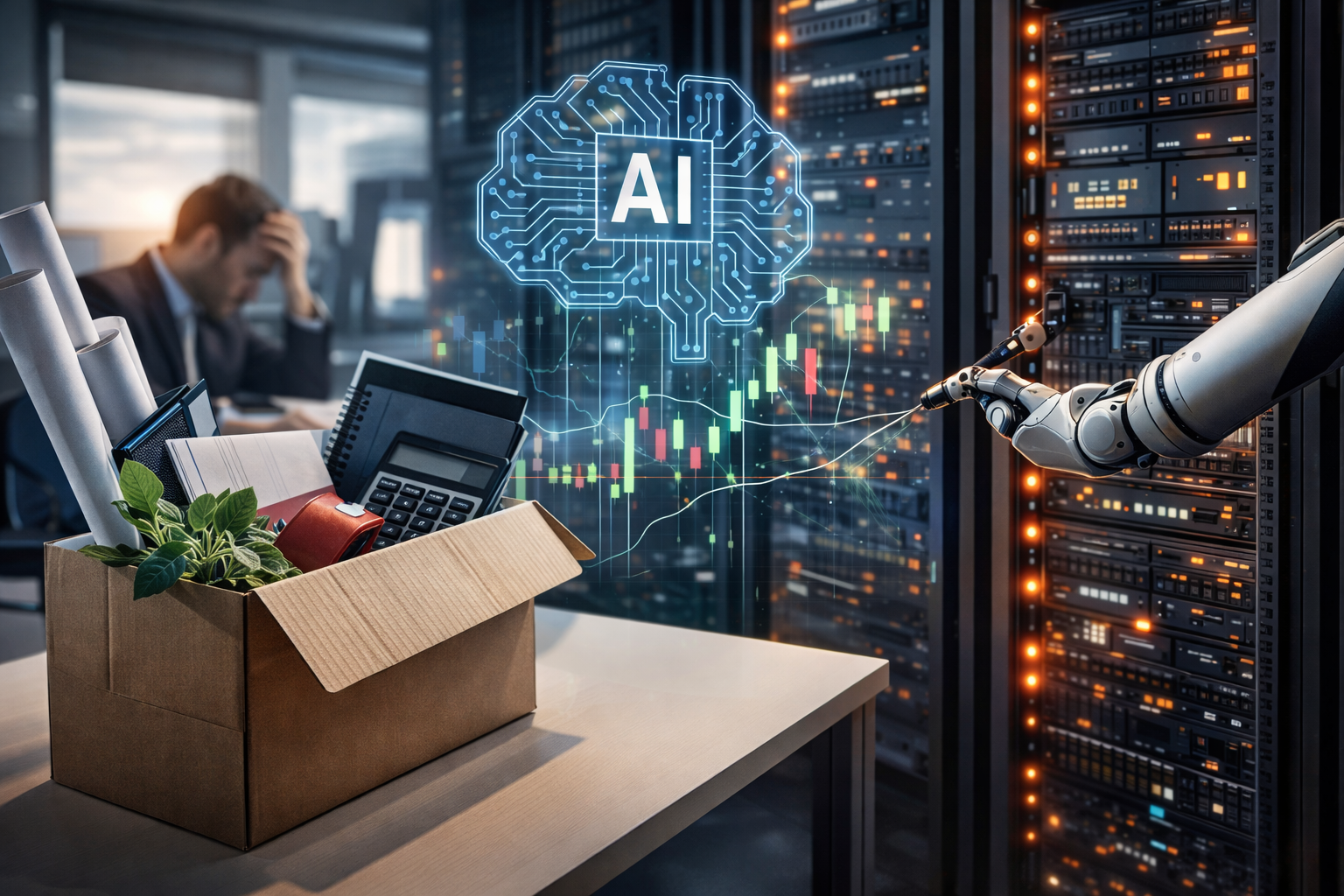
Global equity markets are entering a period of heightened volatility as investors weigh two powerful forces shaping financial markets today: rising geopolitical uncertainty and the massive wave of investment flowing into artificial intelligence infrastructure.
Major indices have struggled to maintain consistent momentum in recent weeks, reflecting investor concerns about interest rates, inflation trends, and geopolitical tensions. Yet at the same time, technology and AI-related stocks continue to attract strong capital inflows as the world’s largest technology companies accelerate spending on artificial intelligence.
According to market coverage from Reuters and Bloomberg, analysts estimate that major technology companies could invest more than $600 billion into AI infrastructure in 2026 alone, highlighting the enormous scale of the industry’s expansion.
This dynamic is creating a split within global equity markets. While broader indices remain sensitive to macroeconomic shocks, AI-driven technology companies are increasingly becoming the primary engine of market growth.
For investors navigating today’s markets, understanding this divergence is becoming essential.
Markets Caught Between Risk and Opportunity
The global investment landscape is currently shaped by two competing narratives.
On one side, geopolitical tensions and economic uncertainty are creating volatility across financial markets. Investors remain cautious as they assess risks tied to international conflicts, supply chain disruptions, and shifting monetary policy expectations.
On the other side, the explosive growth of artificial intelligence is fueling one of the most significant investment cycles in modern technology history.
The result is a market environment where volatility and opportunity coexist.
Major indices such as the S&P 500 and Nasdaq Composite have experienced fluctuations as investors react to macroeconomic news and geopolitical developments.
Yet technology stocks tied to AI infrastructure—including chipmakers, data center providers, and cloud computing companies—continue to outperform broader markets.
This divergence reflects the growing influence of AI as a long-term economic driver.
The $600 Billion AI Investment Wave
At the center of the current market narrative is the extraordinary level of capital being deployed into artificial intelligence infrastructure.
According to estimates cited in Bloomberg market reports, the world’s largest technology companies could collectively invest over $600 billion in AI infrastructure in 2026.
These investments include:
- Advanced semiconductor manufacturing
- AI-focused data centers
- High-performance computing infrastructure
- Cloud computing platforms
- Power generation and cooling systems
Technology giants such as Microsoft, Amazon, Meta Platforms, and Alphabet are leading the spending surge as they compete to dominate the next generation of AI technologies.
These companies are building massive data centers equipped with thousands of GPUs to support the training and deployment of advanced machine learning models.
The scale of these investments is reminiscent of earlier technological revolutions, such as the expansion of the internet in the late 1990s or the rise of cloud computing in the 2010s.
For investors, the AI infrastructure boom is emerging as one of the most important market themes of the decade.
Why AI Stocks Continue to Attract Capital
Despite broader market volatility, companies involved in AI development and infrastructure continue to see strong investor interest.
One reason is the long-term growth potential of artificial intelligence technologies.
Consulting firms such as McKinsey estimate that AI could contribute trillions of dollars to global economic output over the next decade by improving productivity, automation, and data analysis across multiple industries.
Another reason is the central role of semiconductor companies in the AI ecosystem.
Advanced chips are essential for training and running AI models, and demand for these components has surged dramatically.
Companies such as Nvidia have become key beneficiaries of the AI boom, with their high-performance GPUs powering much of the world’s AI computing infrastructure.
This has made semiconductor firms among the most closely watched stocks in global markets.
Beyond chips, investors are also increasingly focusing on companies involved in cloud computing, networking equipment, and data center development.
Together, these sectors form the technological backbone of the AI economy.
Geopolitical Risks Continue to Influence Markets
While the AI boom is driving growth in technology stocks, geopolitical risks continue to create volatility across broader markets.
International conflicts, trade tensions, and regional instability have all contributed to uncertainty among investors.
These developments can affect everything from commodity prices to supply chains and global economic growth.
For example, disruptions in energy markets or trade routes can quickly impact inflation expectations and central bank policy decisions.
Because of this, investors remain highly sensitive to geopolitical headlines.
Market volatility often increases during periods of global uncertainty as investors adjust portfolios to manage risk exposure.
However, even in this environment, certain sectors—particularly those linked to long-term technological innovation—have demonstrated resilience.
AI infrastructure appears to be one of those sectors.
Interest Rate Expectations Add Another Layer of Uncertainty
Another factor contributing to market volatility is uncertainty surrounding interest rates.
Central banks, including the Federal Reserve, continue to balance inflation control with the need to support economic growth.
Changes in interest rate expectations can significantly impact equity markets.
Higher interest rates typically reduce valuations for growth stocks by increasing borrowing costs and lowering the present value of future earnings.
However, the AI sector has shown unusual resilience to these pressures due to the enormous demand for AI computing resources.
Even in a higher-rate environment, companies are continuing to invest heavily in artificial intelligence infrastructure.
This suggests that the AI investment cycle may remain strong regardless of short-term macroeconomic fluctuations.
A New Market Leadership Cycle
Market strategists increasingly believe that artificial intelligence could drive the next long-term leadership cycle in global equities.
Historically, major technological breakthroughs have reshaped stock market leadership.
The personal computer revolution fueled technology stocks in the 1980s and 1990s.
The internet boom created a new generation of digital companies in the early 2000s.
Cloud computing transformed enterprise technology in the 2010s.
Artificial intelligence may now represent the next phase of that evolution.
As AI becomes integrated into industries ranging from healthcare to finance, the companies building the underlying infrastructure could become some of the most valuable businesses in the world.
This possibility is attracting enormous interest from institutional investors, hedge funds, and sovereign wealth funds.
Future Trends Investors Should Watch
Several major trends will likely shape the trajectory of global markets in the coming years.
Expansion of AI Data Centers
Massive data center construction projects are underway worldwide to support the growing demand for AI computing.
Semiconductor Supply Chains
Advanced chip manufacturing will remain a critical bottleneck in the AI industry.
Energy Demand from AI Infrastructure
The electricity required to power AI data centers is becoming an increasingly important issue.
Institutional Investment in Technology
Large investment funds are allocating more capital to AI-related sectors.
These trends highlight how artificial intelligence is influencing not only the technology industry but also the broader global economy.
Key Investment Insight
The current market environment reflects a powerful contrast between short-term volatility and long-term technological transformation.
While geopolitical risks and interest rate uncertainty continue to affect broader markets, the AI infrastructure boom is creating a new wave of investment opportunities.
Investors are increasingly rotating capital into sectors tied to artificial intelligence—including semiconductors, cloud computing, data centers, and advanced networking technologies.
For long-term investors, the key may be identifying companies positioned to benefit from the multi-year AI investment cycle now underway.
As the global technology landscape evolves, these sectors could play an increasingly dominant role in shaping equity market performance.
Financial markets are constantly evolving, and the intersection of macroeconomic forces and technological innovation is creating new opportunities for investors worldwide. For deeper analysis and daily coverage of the trends shaping global markets, MoneyNews.Today continues to deliver the insights investors need to stay ahead in an increasingly complex financial landscape.