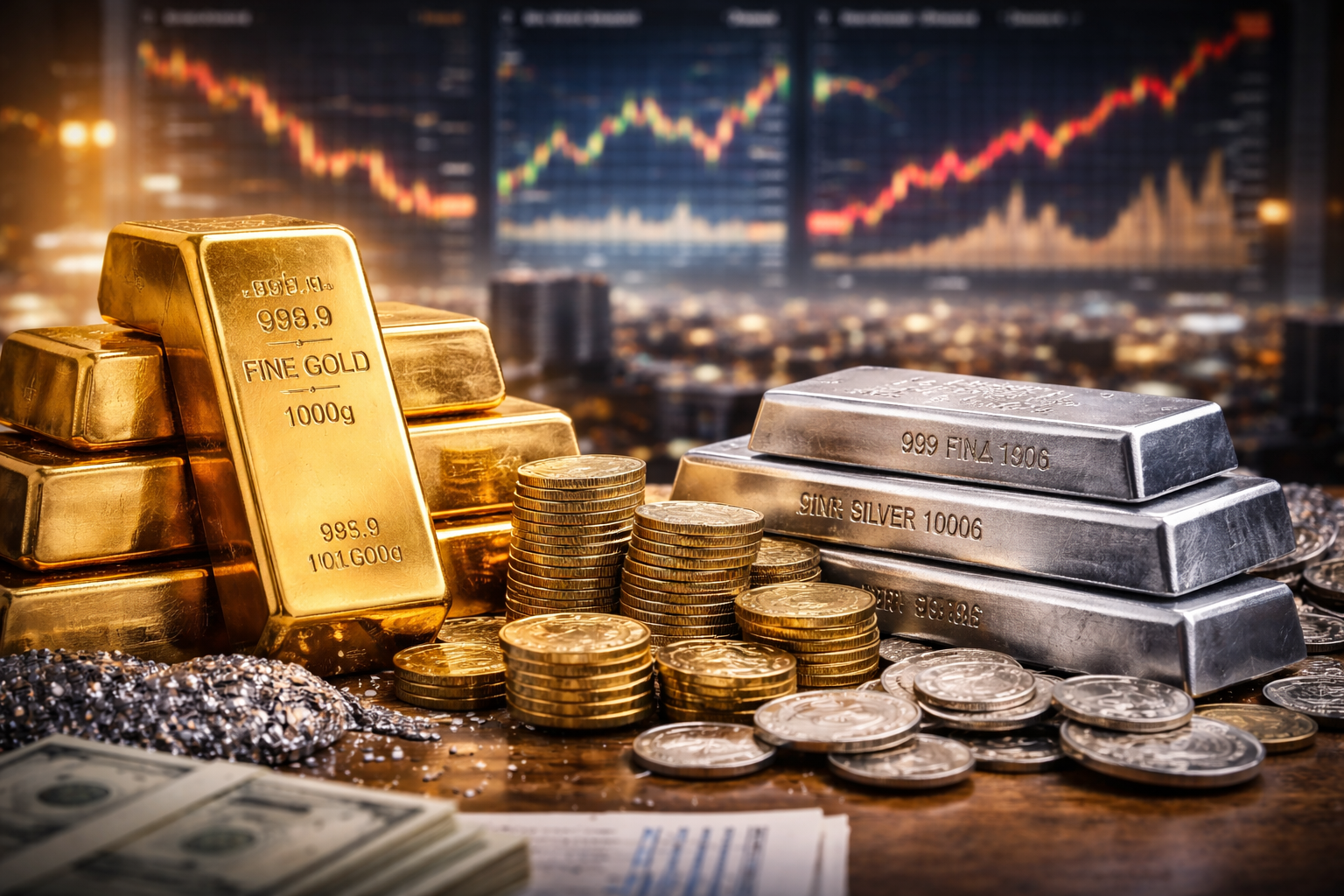
Precious metals are once again commanding global attention as investors seek shelter from rising geopolitical and economic uncertainty. Gold has surged to fresh all-time highs above $5,100 per ounce, while silver has followed with a breakout to record levels, underscoring a powerful shift toward safe-haven assets. The rally has spilled into mining equities, with major producers such as Newmont and Freeport-McMoRan posting notable gains as capital flows rotate away from riskier assets and into stores of value.
This renewed strength in metals is unfolding against a backdrop of escalating geopolitical tensions, uneven global growth, and persistent concerns about inflation and currency stability. According to Bloomberg and Reuters, institutional investors and central banks alike have been increasing their exposure to gold, reinforcing its role as a strategic hedge in periods of macro stress.
Why This Matters for Investors
Gold and silver have historically performed well during periods of uncertainty, serving both as inflation hedges and as protection against financial-market volatility. The current rally reflects a convergence of several powerful forces:
- Geopolitical Risk: Ongoing trade disputes, regional conflicts, and political instability are driving demand for assets perceived as independent of government policy and credit risk.
- Monetary Policy Uncertainty: While inflation has moderated in some economies, real interest rates remain volatile, and expectations around future central-bank actions continue to shift. Lower or uncertain real yields tend to support precious-metal prices, as noted in recent Federal Reserve and World Gold Council analyses.
- Currency Fluctuations: A stronger or more volatile U.S. dollar can influence global capital flows, but sustained concerns about long-term currency debasement often push investors toward hard assets.
For diversified portfolios, the surge in metals highlights their value as a counterbalance to equities and high-yielding assets, particularly when correlations across risk assets rise.
What’s Driving the Record Highs
1. Central Bank Buying
Official sector demand has been a major pillar of support. Data from the World Gold Council show that central banks have been among the largest net buyers of gold in recent years, seeking to diversify reserves and reduce dependence on any single currency. This steady, price-insensitive demand has helped create a strong floor under the market.
2. Investment Flows and Safe-Haven Demand
Exchange-traded funds backed by physical gold and silver have seen renewed inflows as investors hedge against market turbulence. Analysts at JPMorgan and UBS note that when volatility rises in equity and bond markets simultaneously, precious metals often benefit from rebalancing flows.
3. Supply Constraints and Cost Pressures
On the supply side, mining output growth has been relatively modest. Rising energy costs, tighter environmental regulations, and longer project lead times are limiting how quickly new production can come online. McKinsey research on the mining sector highlights that capital discipline and higher operating costs could keep supply growth constrained, supporting higher long-term price levels.
Impact on Mining Stocks
The rally in spot prices is translating into improved cash flows and margin expectations for miners. Companies such as Newmont, Barrick Gold, and Freeport-McMoRan stand to benefit from higher realized prices, particularly those with low production costs and strong balance sheets. According to Bloomberg Intelligence, every $100 increase in the gold price can have a meaningful impact on free cash flow for major producers, potentially supporting dividends, debt reduction, and share buybacks.
Silver-focused and diversified miners may also gain from rising industrial demand tied to renewable energy, electronics, and electric vehicles, where silver plays a critical role. This dual role—as both a monetary and industrial metal—adds an additional layer of support to silver prices.
Future Trends to Watch
Several developments will shape the outlook for precious metals in the months ahead:
- Inflation and Real Yields: Sustained declines in real interest rates would likely reinforce the appeal of non-yielding assets like gold and silver.
- Geopolitical Developments: Any escalation or de-escalation in global tensions can quickly influence safe-haven demand.
- Currency Movements: A weakening U.S. dollar could provide further upside, while sharp appreciation may temper gains.
- Mining Investment Cycles: Capital spending decisions by major producers will determine future supply growth and cost structures.
Key Investment Insight
With gold and silver acting as effective risk diversifiers, investors may consider maintaining or increasing strategic exposure to precious metals within a balanced portfolio. This can be achieved through a combination of physical-backed ETFs, high-quality mining equities, and diversified resource funds. Emphasis should be placed on companies with strong cost discipline, geopolitical diversification of assets, and solid balance sheets.
Monitoring currency trends, central-bank policy signals, and real-yield movements will be critical in assessing whether the current rally has further room to run. In an environment marked by geopolitical uncertainty and shifting macro dynamics, precious metals are once again proving their role as a stabilizing force in portfolios.
For continuous, in-depth coverage of commodities, global markets, and investment strategies, stay connected with MoneyNews.Today, your trusted source for daily investor intelligence.