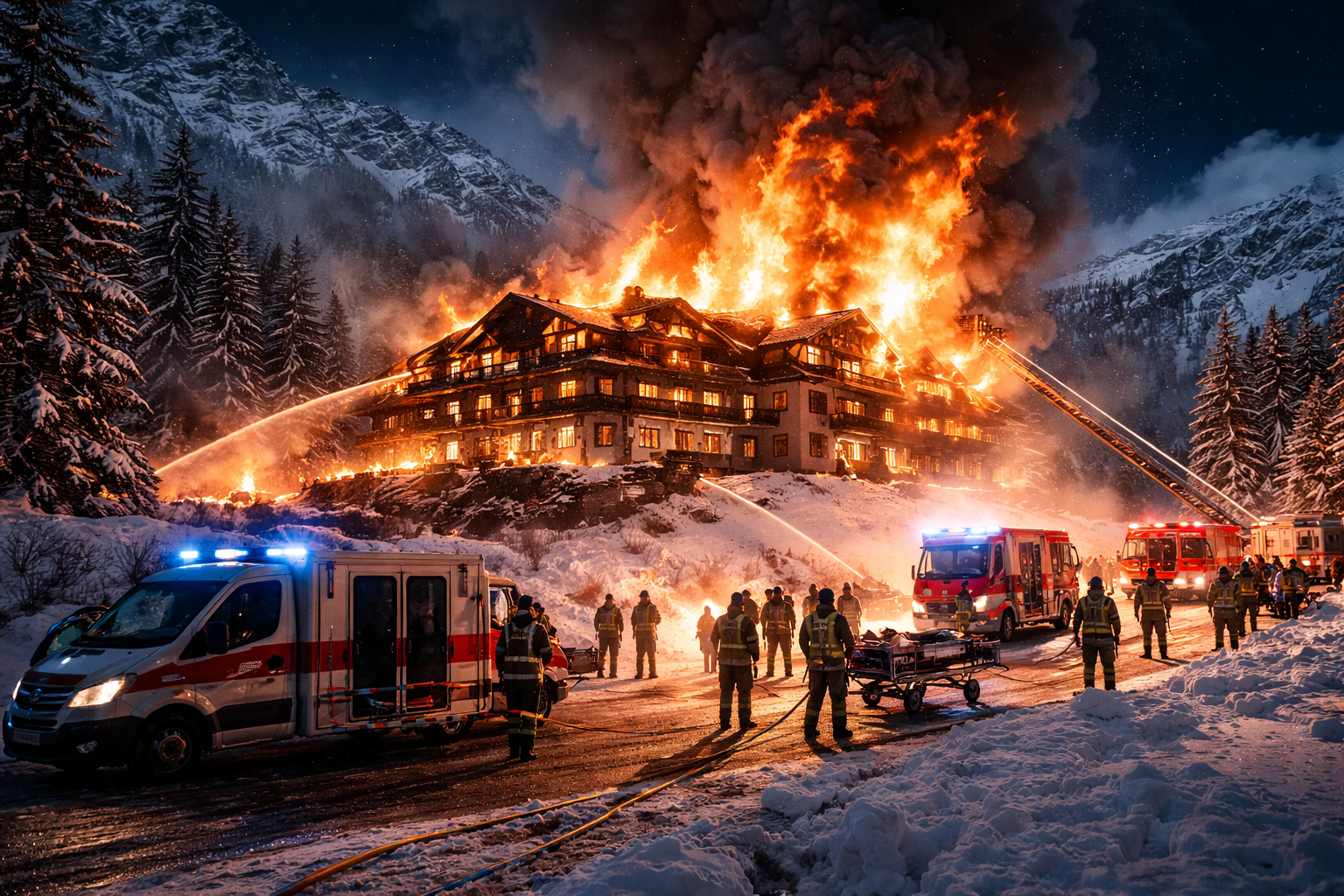
Global markets opened 2026 absorbing grim breaking news from Europe: a devastating fire at a venue in the Swiss Alps that authorities say resulted in “several tens” of fatalities and approximately 100 injuries. Reported widely by The Economic Times and other international outlets, the tragedy has captured political and investor attention at the very start of the new year—underscoring how sudden global events can shape market sentiment even when they occur outside North America.
For investors, the incident is a stark reminder that headline risk can emerge without warning, influencing risk appetite, sector performance, and policy priorities across borders.
Why This Matters for Investors Right Now
While Switzerland is not a major driver of global equity indices, events of this magnitude often trigger a broader reassessment of risk. In early trading on major exchanges, investors typically respond to unexpected geopolitical or humanitarian crises with a short-term risk-off posture, favoring safe-haven assets and reducing exposure to cyclical sectors.
Market strategists quoted by Bloomberg in similar past events have noted that global tragedies can influence sentiment disproportionally, particularly when they raise questions about safety standards, infrastructure resilience, or emergency response readiness in developed economies. The Swiss Alps fire is already prompting discussions among European policymakers around venue safety, tourism regulation, and cross-border emergency coordination—topics with tangible economic implications.
Travel, Tourism, and Insurance in Focus
One of the first sectors investors are watching is travel and tourism. Alpine regions are major contributors to Europe’s winter tourism economy, supporting airlines, hotels, rail operators, and hospitality companies. Any tightening of safety regulations or temporary restrictions following the incident could affect bookings, insurance costs, and operating margins.
Historically, major accidents or disasters in tourism hubs have led to:
- Short-term declines in travel-related equities
- Increased scrutiny of safety compliance and liability coverage
- Higher insurance premiums for large venues and operators
Analysts from major insurers have previously told Reuters that large-scale incidents often accelerate regulatory reviews, which can reshape cost structures across the sector.
Political and Regulatory Implications
Beyond markets, the political response is gaining momentum. Swiss authorities and European officials are expected to review safety standards for large venues, particularly in high-traffic tourist regions. Such reviews often extend beyond national borders, influencing EU-wide guidelines and international best practices.
For investors, regulatory tightening can be a double-edged sword. While increased compliance costs may pressure near-term earnings for affected industries, companies specializing in safety technology, monitoring systems, and emergency infrastructure may see longer-term demand growth.
McKinsey research on crisis-driven regulation suggests that major incidents often catalyze accelerated investment cycles in compliance and risk mitigation—creating opportunities for firms positioned to provide solutions.
Broader Market Sentiment and Commodities
Global news shocks also tend to ripple through commodities and currency markets. Risk-off sentiment can support traditional safe havens, while uncertainty around travel and logistics may influence energy demand expectations, particularly during peak winter seasons in Europe.
Although early-year liquidity can amplify market reactions, experienced investors often differentiate between short-term sentiment moves and longer-term fundamentals. As history shows, markets typically stabilize once the immediate news flow subsides—unless the event triggers sustained policy or economic disruption.
Future Trends to Watch
As the situation develops, investors should monitor several key signals:
- Official Investigations and Policy Statements: Findings from Swiss authorities or coordinated European responses could influence regulation across tourism and infrastructure sectors.
- Corporate Disclosures: Travel, hospitality, and insurance companies may address exposure or operational impacts in upcoming updates.
- Market Volatility Indicators: Spikes in volatility indices can signal broader risk aversion tied to geopolitical or global news.
- Capital Rotation: Watch for temporary shifts into defensive sectors or safety-related technologies.
These indicators will help investors assess whether the market impact remains localized or evolves into a broader thematic shift.
Key Investment Insight
Major global news events—regardless of geography—can shape investor psychology, sector flows, and policy priorities. The Swiss Alps fire highlights the importance of staying attuned to international developments that may influence risk sentiment, regulatory trajectories, and sector-specific costs. Investors may want to balance portfolios with an eye toward resilience, maintaining exposure to defensive assets while selectively monitoring opportunities in safety, infrastructure, and risk-management solutions.
Staying informed during fast-moving global events is critical to navigating uncertainty with discipline and perspective.
For timely analysis and investor-focused insights on how global politics and breaking news intersect with markets, stay connected with MoneyNews.Today—your trusted source for daily financial intelligence in 2026.