As enthusiasm around artificial intelligence collides with renewed volatility in cryptocurrency markets, one company is attempting to straddle both worlds — and investors are paying attention. Shares of MARA Holdings surged this week after the firm unveiled a strategic partnership aimed at converting portions of its bitcoin mining footprint into AI-capable hyperscale data centers totaling roughly 2.5 gigawatts (GW) of capacity.
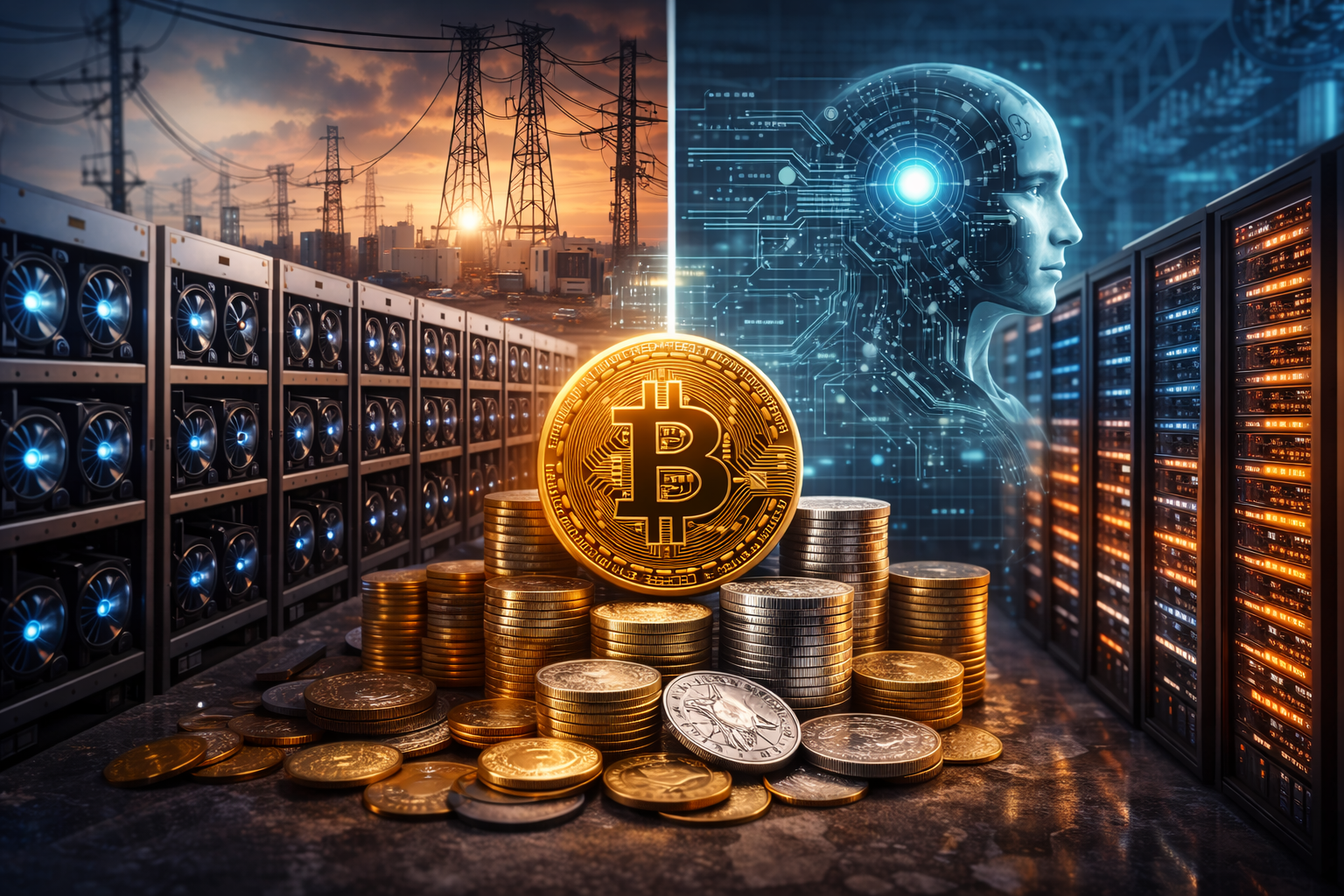
The move signals more than a tactical shift. It reflects a broader evolution underway across energy-intensive digital infrastructure: crypto miners are repositioning themselves as next-generation AI compute providers. For investors, the implications stretch well beyond a short-term stock pop.
From Bitcoin Mining to AI Infrastructure
MARA, long known as one of North America’s largest publicly traded bitcoin miners, built its business model around scale, low-cost energy procurement, and high-efficiency ASIC deployment. But as mining economics tighten following the most recent Bitcoin halving cycle and as institutional AI demand accelerates, the company is repositioning itself toward diversified compute infrastructure.
According to reporting from Investor’s Business Daily, MARA’s new partnership aims to retrofit mining facilities into AI-ready hyperscale data centers — facilities capable of supporting high-density GPU clusters required for large language models, enterprise AI applications, and cloud-based machine learning.
The headline number — 2.5 GW of potential AI-capable capacity — is significant. For context, large hyperscale data center campuses often range between 100–500 megawatts. A 2.5 GW pipeline, even if phased over multiple years, positions MARA among ambitious infrastructure players seeking to capitalize on explosive AI demand.
This strategic pivot arrives amid a wave of cross-sector convergence. Energy infrastructure, crypto mining, AI compute, and high-performance data centers are increasingly overlapping — driven by surging electricity demand from generative AI workloads.
The Macro Backdrop: AI’s Power Hunger
Artificial intelligence is no longer just a software story. It’s an energy story.
According to analysis from firms cited by outlets like Bloomberg and McKinsey, global data center power demand is expected to double over the next several years, fueled largely by AI training and inference workloads. Major hyperscalers and GPU providers are racing to secure long-term power purchase agreements and grid capacity.
Crypto miners, by contrast, already possess:
- Large-scale power contracts
- Established energy infrastructure
- Experience operating high-density compute facilities
- Relationships with utilities in energy-rich regions
In theory, this gives miners like MARA a head start in pivoting toward AI infrastructure.
The market reaction suggests investors are recognizing the optionality embedded in this transition.
Why This Matters for Investors
The story here isn’t simply that MARA is diversifying. It’s that hybrid infrastructure models could outperform pure-play crypto miners or speculative AI startups.
1. Revenue Diversification
Bitcoin mining revenue is inherently cyclical — tied to:
- Bitcoin price volatility
- Network difficulty adjustments
- Block reward halvings
- Energy cost fluctuations
By layering AI data center services onto its infrastructure base, MARA may be able to create:
- Longer-term enterprise contracts
- More predictable cash flows
- Reduced dependence on crypto price swings
For investors, that potential shift from volatile mining revenue toward contracted compute revenue could materially change valuation frameworks.
2. Higher Margins — If Executed Correctly
AI data center economics differ substantially from mining economics. While mining profits are highly sensitive to hash price and Bitcoin volatility, AI infrastructure can command premium pricing — especially amid GPU shortages and constrained hyperscale supply.
However, margins will depend on:
- Capital expenditure discipline
- Hardware procurement strategy
- Long-term enterprise contract visibility
- Power efficiency and cooling optimization
The upside is substantial, but so is the execution risk.
3. Infrastructure Scarcity Is Real
Across North America, grid interconnection queues are lengthening. Securing gigawatt-scale power allocations can take years. If MARA already controls or has access to viable power infrastructure, that may represent a competitive moat in a tightening AI supply chain.
This aligns with broader industry trends where traditional data center operators, energy developers, and digital asset miners are competing for the same megawatts.
Risks Investors Should Not Ignore
While the pivot is compelling, investors must weigh several key risks.
Capital Intensity
Converting mining operations into AI-capable hyperscale facilities is not a plug-and-play transition. AI data centers require:
- Advanced cooling (often liquid or immersion systems)
- GPU racks instead of ASIC miners
- Redundant networking infrastructure
- Security and enterprise-grade compliance frameworks
These upgrades require significant capital expenditures. If not carefully financed, dilution or leverage expansion could pressure shareholder returns.
Contract Visibility
Mining revenue is algorithmic. AI data center revenue is contractual.
Investors should watch closely for:
- Announcements of named enterprise customers
- Multi-year service agreements
- Capacity pre-leasing metrics
Without long-term contracts in place, AI infrastructure plans remain aspirational.
Competitive Landscape
MARA is not alone. Other crypto miners and infrastructure providers are exploring similar transitions. Additionally, established hyperscalers and private equity-backed data center operators already dominate large portions of the AI compute market.
Execution speed and capital discipline will likely determine who captures durable market share.
The Bigger Picture: Crypto Meets AI
This development reflects a larger structural shift.
Over the past year, we’ve seen:
- AI firms seeking dedicated compute capacity
- Energy companies partnering with digital infrastructure firms
- Crypto miners exploring AI hosting as a hedge against halving cycles
In effect, the line between “crypto infrastructure” and “AI infrastructure” is blurring.
If executed successfully, hybrid operators could benefit from:
- AI demand during crypto downturns
- Crypto upside during bull cycles
- Strategic energy arbitrage opportunities
For investors, this cross-sector convergence may create asymmetric opportunity — but only in companies with sound balance sheets and disciplined expansion strategies.
What to Watch Next
Investors evaluating MARA and similar infrastructure plays should focus on several metrics in upcoming quarters:
- Capital Expenditure Guidance – How aggressively is management investing?
- Power Capacity Secured vs. Deployed – Announced gigawatts vs. operational megawatts.
- Enterprise AI Contracts Signed – Are major AI developers or cloud firms involved?
- Balance Sheet Strength – Debt levels, liquidity, and cash runway.
- Bitcoin Exposure – Is the core mining business still generating adequate cash flow?
The stock’s recent rise reflects optimism — but long-term performance will hinge on execution clarity.
Key Investment Insight
Companies bridging crypto and AI infrastructure may outperform pure-play miners or speculative AI software names — particularly if they secure contracted revenue tied to AI compute demand.
However, investors should demand evidence of:
- Sustainable free cash flow generation
- Long-term enterprise commitments
- Disciplined capital allocation
In a market environment increasingly skeptical of unprofitable AI spending sprees, fundamentals matter more than ever.
The surge in MARA shares highlights a pivotal moment for digital infrastructure investing. As AI’s appetite for power accelerates and crypto miners search for stability beyond volatile token cycles, the convergence of these sectors could reshape how investors think about compute, energy, and digital assets.
For daily investor-focused analysis on emerging industries, AI, crypto, and infrastructure megatrends, stay connected with MoneyNews.Today — your trusted source for actionable financial insight.