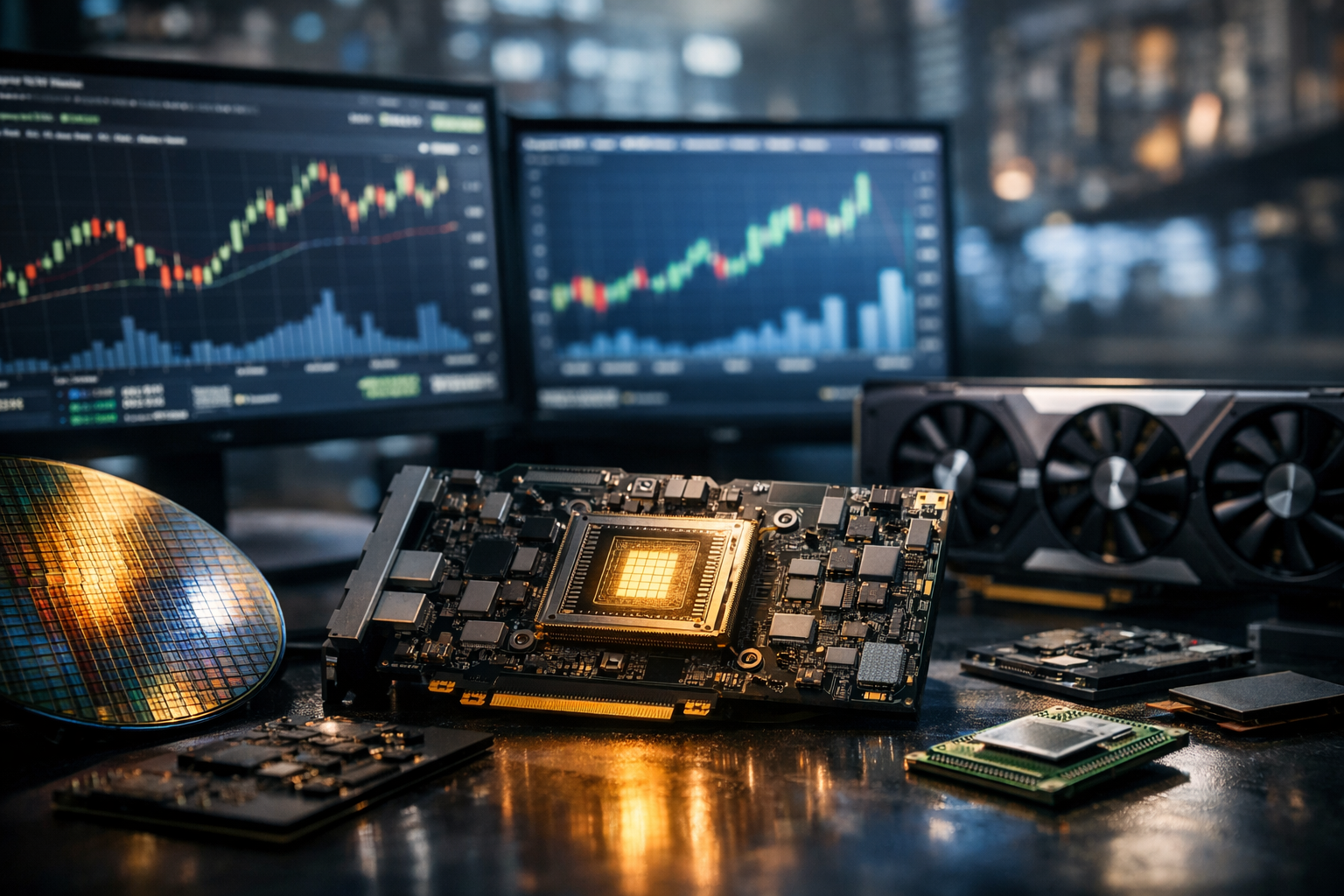
Artificial intelligence has already reshaped software, semiconductors, and energy demand — but the next battleground may not be on Earth at all. Markets are reacting to a bold new thesis emerging across investor circles: computing capacity could ultimately expand into space.
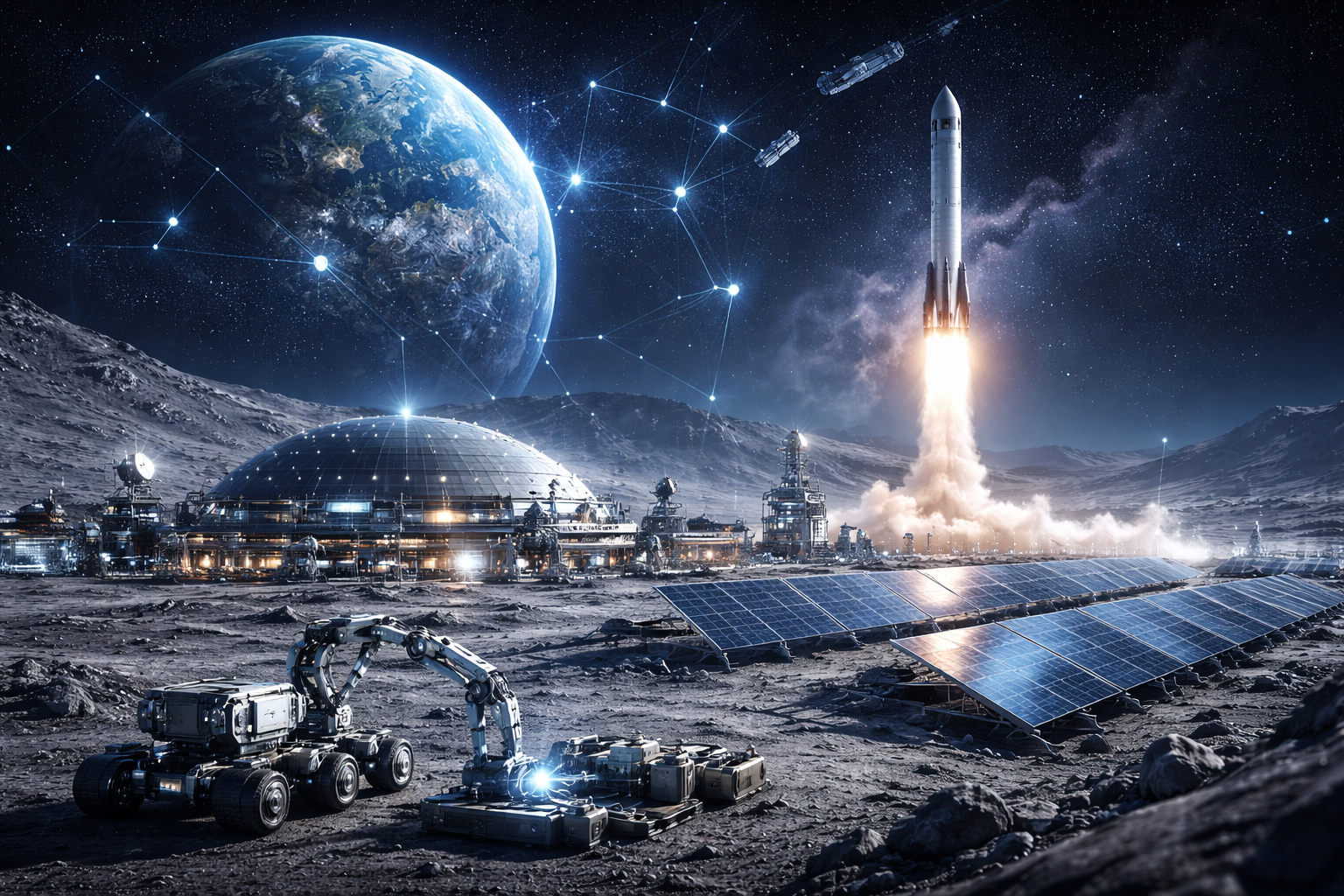
According to a February 11, 2026 market intelligence report, Elon Musk’s xAI is exploring plans to develop a lunar-based satellite and AI manufacturing ecosystem while SpaceX prepares for a potential future public listing. The concept is simple but disruptive — move data processing and high-power infrastructure off-planet, where energy, cooling, and scalability constraints differ dramatically from terrestrial limits.
For investors, the story is less about science fiction and more about capital allocation. The AI boom is increasingly constrained not by demand, but by physics.
The Real Bottleneck of the AI Economy: Energy
The modern AI race is defined by compute. Training advanced models requires massive data centers that consume extraordinary amounts of electricity and generate extreme heat.
According to International Energy Agency and semiconductor industry analyses, advanced AI training clusters can consume power equivalent to small cities. McKinsey estimates global data-center electricity demand could more than double before the end of the decade due largely to AI workloads.
This creates three bottlenecks:
- Power generation capacity
- Cooling efficiency
- Physical space for infrastructure
Space infrastructure offers potential solutions to all three.
Solar energy is continuous in orbit, cooling is naturally efficient in vacuum environments, and expansion is theoretically unlimited. A lunar-based industrial zone could support high-density manufacturing and computing beyond terrestrial grid constraints.
The investment implication: AI demand may shift capital toward infrastructure industries rather than just software companies.
Why a Lunar Factory Changes the AI Investment Thesis
Historically, technology cycles followed a predictable chain:
Semiconductors → Hardware → Software → Applications
AI may extend the chain:
Semiconductors → Data Centers → Energy → Space Infrastructure
In other words, the next phase of AI is becoming an industrial economy rather than a purely digital one.
Bloomberg Intelligence and aerospace industry analysts have repeatedly noted that launch costs have declined dramatically over the past decade, largely due to reusable rocket technology. Lower transport costs make previously impractical orbital infrastructure economically conceivable over a long horizon.
If AI growth continues exponentially, Earth-bound data centers may struggle to scale efficiently. That pushes innovation toward alternative computing environments — including orbital and lunar installations.
Why This Matters for Investors
The market’s initial reaction focuses on SpaceX’s potential IPO, but the deeper opportunity lies across adjacent sectors.
A space-based AI economy would require an entirely new supply chain:
Launch Providers
Regular cargo missions become routine infrastructure logistics rather than rare aerospace events.
Satellite Manufacturing
Demand shifts from communications satellites to computing platforms.
Advanced Semiconductors
Radiation-tolerant and ultra-efficient chips become essential.
Energy Systems
Solar power collection and storage technologies gain strategic importance.
Materials & Robotics
Autonomous construction and remote industrial operations grow rapidly.
This expands the AI trade beyond traditional technology stocks into industrials, materials, and aerospace.
Future Trends to Watch
1) AI Capex Becomes Infrastructure Capex
Spending may increasingly resemble utilities and transportation rather than software investment cycles.
2) Space Economy Integration
Telecommunications satellites were the first commercial space market. Computing infrastructure could be the second — and potentially larger.
3) New Competitive Landscape
Nations and corporations may compete for orbital industrial capacity, introducing geopolitical elements into technology investing.
4) Hybrid Earth-Space Computing
Short-term adoption may involve offloading specific high-power workloads rather than full migration of data centers.
Key Investment Insight
The AI boom is evolving into a resource competition — not just for chips, but for energy and physical capacity.
Investors should monitor companies exposed to:
- launch logistics
- advanced semiconductor manufacturing
- satellite hardware
- power generation and storage
- industrial robotics
Early stages of new infrastructure cycles historically deliver the largest long-term returns because they enable entire future industries.
Technology revolutions often appear speculative at first, but markets tend to reprice once infrastructure economics become clear. As AI demand pushes against physical limits, the boundary between technology and industrial sectors may blur.
Stay with MoneyNews.Today as we track how the next computing revolution expands beyond Earth — and into portfolios.