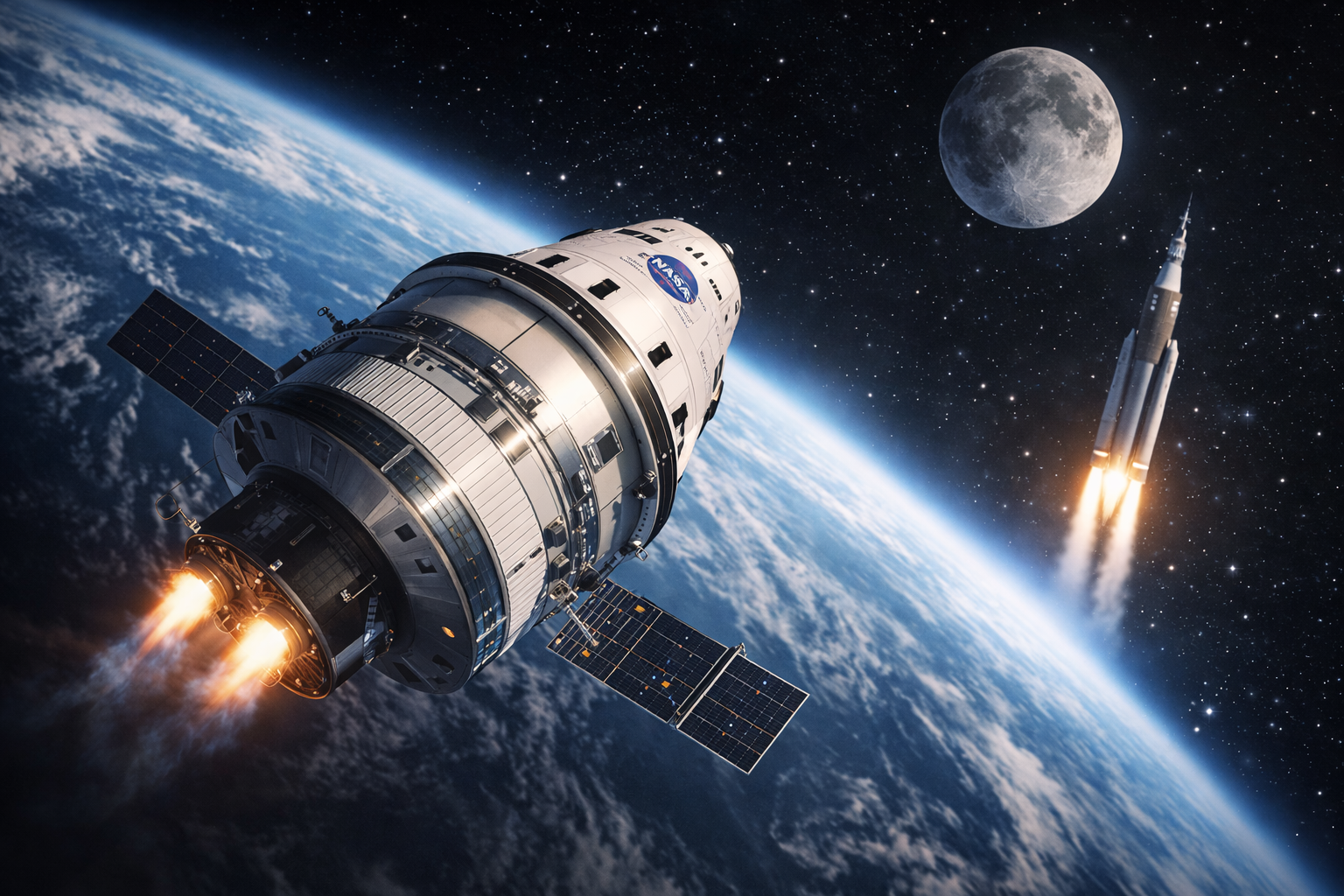
The space economy is back in focus—and this time, it’s not just hype.
As global markets wrestle with inflation uncertainty, geopolitical tensions, and shifting monetary policy, a different kind of long-term growth story is quietly regaining traction. The upcoming Artemis II mission from NASA, highlighted in recent coverage by Reuters (April 9, 2026), is doing more than advancing human spaceflight—it is reigniting investor interest in the multi-trillion-dollar space economy.
For investors looking beyond short-term volatility, this moment may mark the beginning of a new capital cycle in space-related industries, driven by government funding, private sector innovation, and geopolitical competition.
A Mission That Signals More Than Exploration
Artemis II, NASA’s first crewed mission to orbit the Moon in over 50 years, is being positioned as a cornerstone of the broader Artemis program—an initiative designed to establish a sustained human presence on the Moon and eventually enable missions to Mars.
But for markets, Artemis II represents something more significant:
a powerful signal of long-term commitment to space exploration from the U.S. government.
Historically, major space milestones have triggered waves of investment and innovation. The Apollo era, for example, catalyzed advancements in:
- Semiconductor technology
- Materials science
- Telecommunications
Today, the Artemis program is expected to drive similar spillover effects across modern industries, including:
- Satellite infrastructure
- Launch services
- Space-based data and analytics
- Defense and security systems
According to NASA’s own projections and U.S. budget allocations, the Artemis program could involve tens of billions of dollars in sustained funding over the coming decade—a critical tailwind for the entire space ecosystem.
Why This Matters for Investors
The renewed focus on space is not happening in isolation. It intersects with several powerful macro and technological trends that are reshaping global markets.
1. Government Spending as a Catalyst
Space exploration is one of the few sectors where government spending plays a dominant role. With Artemis II capturing public and political attention, the likelihood of continued—and potentially expanded—funding increases significantly.
This has direct implications for:
- Aerospace contractors
- Defense companies
- Technology providers supporting space missions
Historically, government-backed sectors tend to offer:
- Long-term revenue visibility
- High barriers to entry
- Strong pricing power
2. The Rise of the Commercial Space Economy
Over the past decade, the space industry has transitioned from a government-led domain to a hybrid public-private ecosystem.
Private companies such as SpaceX and Blue Origin have dramatically reduced launch costs and accelerated innovation. Meanwhile, publicly traded players like Rocket Lab and Maxar Technologies are expanding capabilities in satellite deployment and geospatial intelligence.
Artemis II reinforces this shift by:
- Creating demand for commercial launch services
- Expanding opportunities for private contractors
- Encouraging venture capital investment in space startups
According to estimates from Morgan Stanley and Bank of America, the global space economy could reach $1 trillion or more by 2040, driven largely by private sector growth.
3. Geopolitical Competition Is Intensifying
Space is no longer just about exploration—it is a strategic domain.
The U.S. is not alone in its ambitions. Countries like China and India are aggressively expanding their space programs, leading to what many analysts describe as a new space race.
This dynamic has several implications:
- Increased defense spending related to space capabilities
- Greater urgency to secure satellite infrastructure
- Heightened demand for space-based surveillance and communication systems
For investors, this translates into structural demand for aerospace and defense-linked companies.
The Expanding Opportunity Set
The modern space economy is far broader than rockets and astronauts. It encompasses a wide range of industries, many of which are already generating significant revenue.
Satellite Infrastructure
Satellites are the backbone of:
- Global communications
- GPS navigation
- Earth observation
Companies involved in satellite manufacturing, deployment, and data services stand to benefit from increased demand driven by both commercial and government clients.
Launch Services and Logistics
Lower launch costs are unlocking new markets, including:
- Small satellite deployment
- Space tourism
- On-orbit servicing
Firms specializing in reusable rockets and efficient launch systems are particularly well-positioned.
Data and Analytics
Space-generated data is becoming increasingly valuable for:
- Agriculture
- Climate monitoring
- Urban planning
- Defense intelligence
This creates opportunities for companies that can analyze and monetize satellite data, often using AI and machine learning.
Defense and Security
As space becomes a contested domain, demand for:
- Satellite defense systems
- Anti-jamming technologies
- Secure communication networks
is expected to rise sharply.
Future Trends to Watch
1. Increased Public Market Participation
While many leading space companies remain private, the success of Artemis II could accelerate:
- IPO activity in the space sector
- SPAC mergers involving space startups
- Greater investor access to space-related assets
This would broaden the investment universe significantly.
2. Integration With AI and Emerging Technologies
The convergence of space and AI is creating new opportunities:
- Autonomous satellite operations
- Real-time data processing
- Advanced navigation systems
Companies operating at this intersection could become key beneficiaries of both trends.
3. Long-Term Infrastructure Buildout
Just as the internet required decades of infrastructure investment, the space economy will depend on:
- Launch facilities
- Orbital platforms
- Lunar and deep-space infrastructure
This creates a multi-decade investment cycle with opportunities across the value chain.
Key Investment Insight
The Artemis II mission is more than a milestone—it is a signal of sustained momentum in the space economy.
For investors, the key is to think beyond headline events and focus on where capital is flowing:
- Private space companies with scalable business models
- Satellite and data infrastructure providers
- Defense-linked aerospace firms benefiting from geopolitical demand
- Technology enablers, including AI and semiconductor companies supporting space applications
At the same time, investors should remain mindful of:
- High capital intensity
- Long development timelines
- Regulatory and geopolitical risks
Space is not a short-term trade—it is a long-duration growth theme.
The Bigger Picture
The resurgence of interest in space reflects a broader shift in how investors think about innovation. In an era where traditional growth sectors are facing constraints, space offers a frontier with:
- Vast untapped potential
- Strong government backing
- Increasing private sector participation
Artemis II is a reminder that some of the most transformative investment opportunities lie not just in digital realms, but in physical frontiers that are only beginning to be explored.
As markets evolve and new opportunities emerge, staying informed is more critical than ever. Follow MoneyNews.Today for daily insights that help you navigate the trends shaping the future of investing.