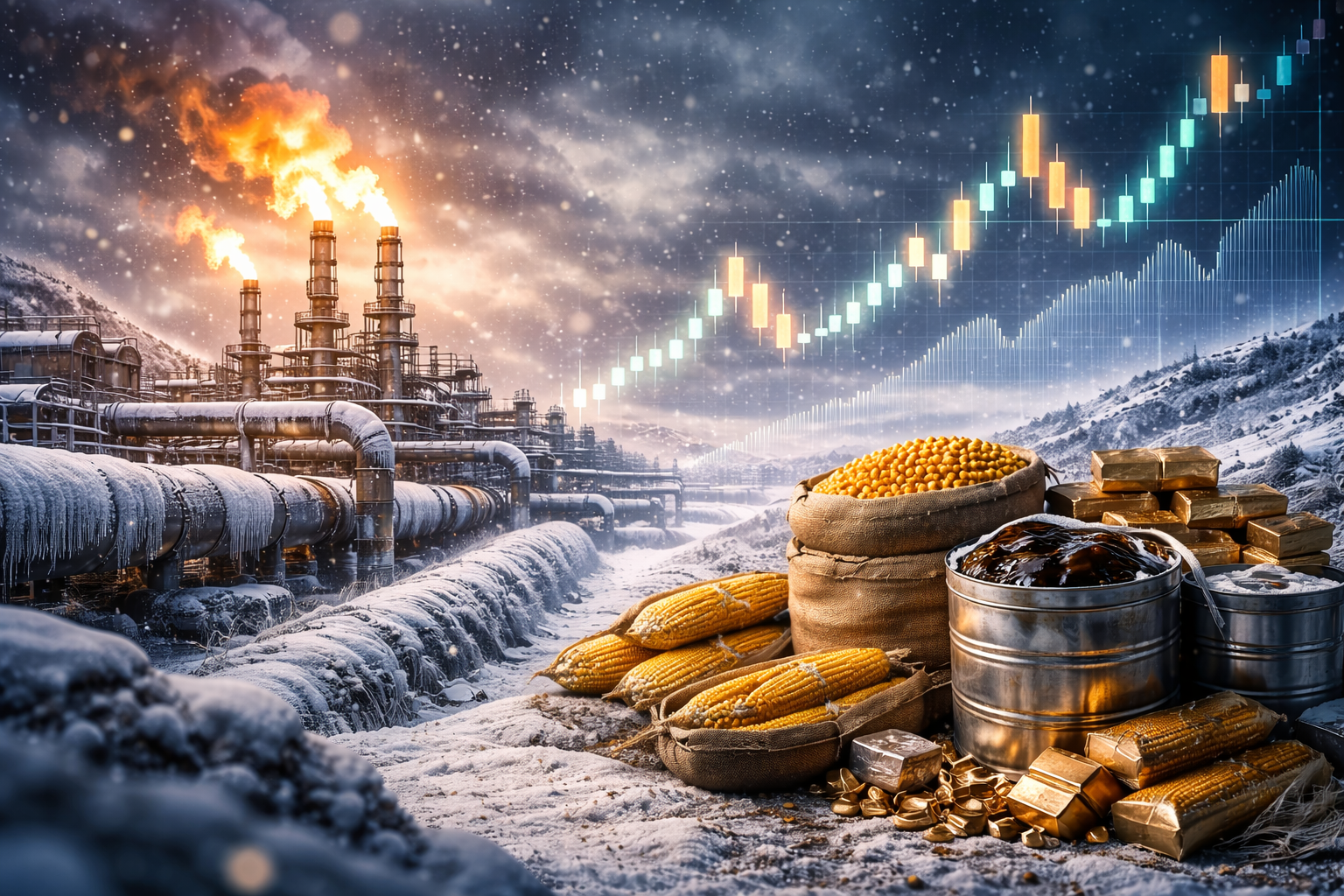
A powerful Arctic blast sweeping across North America has sent shockwaves through energy and commodity markets, igniting one of the sharpest short-term rallies in U.S. natural gas in years. Futures prices have surged roughly 75% in just three trading sessions, climbing to their highest levels since 2022 as heating demand spikes and storage withdrawals accelerate. The move, highlighted in recent Bloomberg market analysis, has rapidly shifted sentiment toward energy and commodity equities, putting weather-driven supply-demand dynamics back at the center of investor attention.
The sudden price jump underscores how vulnerable energy markets remain to extreme weather events, even in an era of expanding production and infrastructure. For investors, the rally is more than a short-term headline—it is a reminder that structural tightness, seasonal patterns, and climate volatility can combine to create powerful, tradeable trends across the broader commodities complex.
Why This Matters for Investors
According to Bloomberg, the cold snap has driven daily U.S. gas consumption to winter-season highs as utilities ramp up power generation and residential heating demand. At the same time, storage levels are being drawn down at a faster-than-expected pace, raising concerns about end-of-winter inventories if frigid conditions persist. This imbalance between surging demand and constrained near-term supply has forced traders to rapidly reprice risk, pushing futures sharply higher.
For equity investors, such moves often translate into renewed interest in energy producers, midstream operators, and commodity-linked exchange-traded funds. Historically, abrupt weather-related spikes in natural gas prices have led to short-term outperformance in exploration and production (E&P) stocks, LNG exporters, and pipeline companies, as higher realized prices improve cash-flow expectations.
The Broader Commodities Ripple Effect
Natural gas is not moving in isolation. Extreme weather events frequently have spillover effects across the wider commodities spectrum. Colder temperatures can boost demand for heating oil, electricity, and even certain industrial metals tied to power generation and infrastructure maintenance. At the same time, transportation disruptions caused by snow and ice can tighten logistics, affecting supply chains for coal, refined fuels, and agricultural products.
Market strategists note that such synchronized moves often revive the “real assets” trade, particularly when investors are already on alert for inflationary pressures or geopolitical supply risks. With global inventories of several key commodities still below long-term averages, weather shocks can amplify volatility and create tactical opportunities across the energy and materials sectors.
Supply Constraints and Structural Factors
While the current rally is being driven by weather, structural factors are also playing a role. Over the past year, capital discipline among U.S. shale producers has limited the pace of production growth, even as LNG export capacity continues to expand. This has made domestic balances more sensitive to demand surges. Bloomberg data show that U.S. LNG exports remain near record levels, effectively linking domestic gas prices more closely to global energy markets.
In addition, the ongoing transition toward cleaner energy has not eliminated the role of natural gas as a critical bridge fuel. Power grids increasingly rely on gas-fired plants to balance intermittent renewable generation, which can further tighten supply during periods of extreme cold or heat. These dynamics suggest that volatility may remain a persistent feature of the market rather than a temporary anomaly.
Future Trends to Watch
Several indicators will help investors assess whether the current surge evolves into a sustained trend or fades as temperatures normalize:
- Storage Reports: Weekly data from the U.S. Energy Information Administration (EIA) will be closely watched for confirmation of accelerated withdrawals and tightening end-of-season stockpiles.
- Weather Forecasts: Extended outlooks from meteorological agencies can quickly shift price expectations if cold conditions are projected to persist or ease.
- LNG Flows: Export volumes and global spot prices will signal whether international demand continues to absorb U.S. supply at elevated levels.
- Equity Performance: Relative strength in energy producers, pipeline operators, and commodity ETFs can indicate whether institutional investors are positioning for a longer-lasting upswing.
Key Investment Insight
The sharp, weather-driven rally in natural gas highlights the tactical appeal of the energy and commodities space in periods of supply stress. In the near term, investors may find opportunities in high-quality natural gas producers, LNG exporters, and diversified energy ETFs that stand to benefit from elevated prices and improved cash-flow expectations. At the same time, disciplined risk management is essential, as weather-related moves can reverse quickly once conditions normalize.
Beyond the immediate trade, the episode reinforces a broader theme: climate volatility is becoming an increasingly important market driver. As extreme weather events grow more frequent, they are likely to inject recurring bouts of price instability into energy and raw-material markets, creating both risks and opportunities for investors positioned in real assets.
For continued coverage of commodities, energy markets, and the forces shaping emerging industry trends, stay connected with MoneyNews.Today—your trusted source for daily, actionable investor insights.