Markets thrive on clarity. This week, they got the opposite.
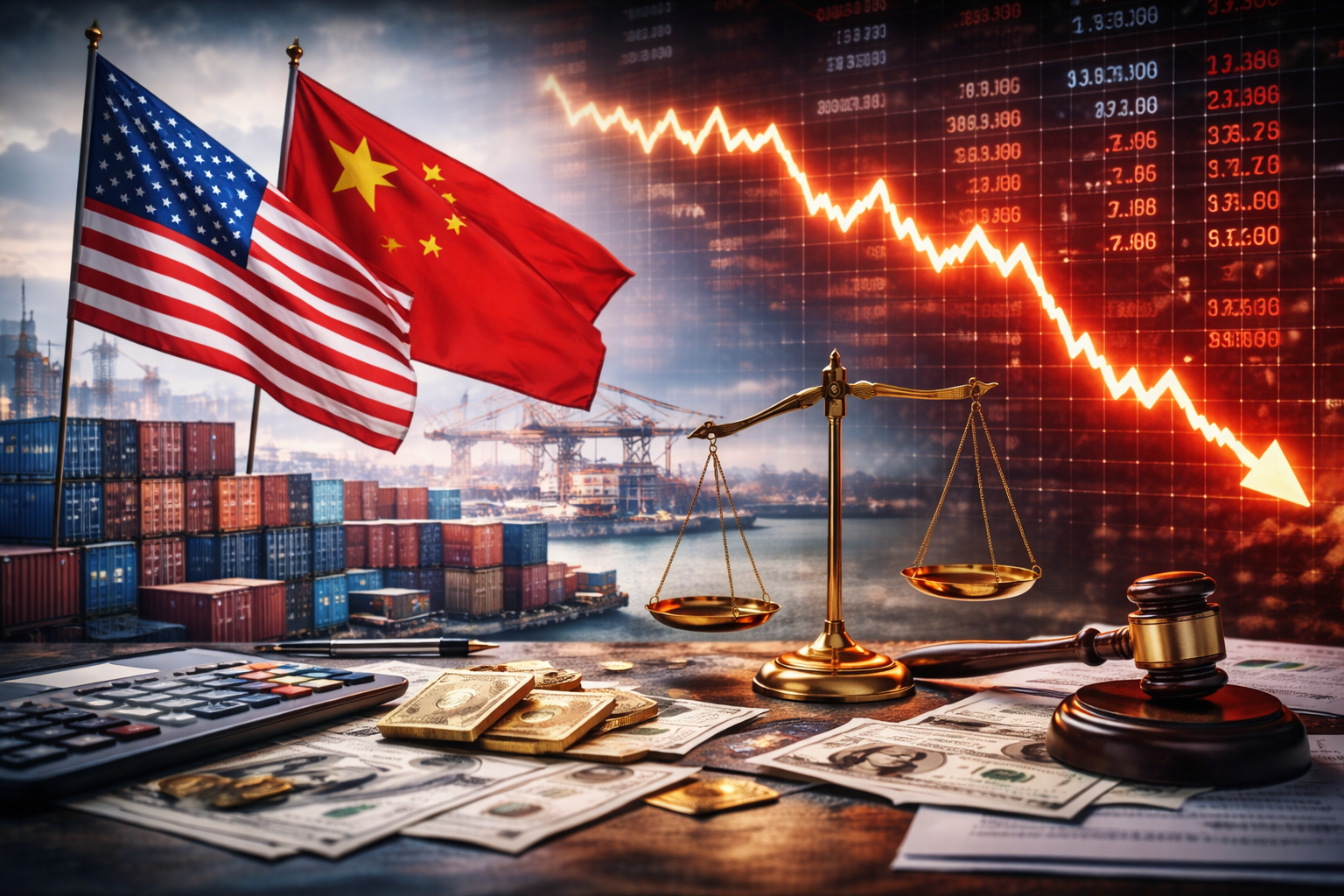
Following a Supreme Court rejection of proposed emergency tariffs, the U.S. administration unveiled a revised global tariff regime at a lower rate — but the policy pivot has done little to calm investor nerves. According to reporting from Reuters and The Guardian (Feb. 24, 2026), the updated tariff framework is adding a fresh layer of uncertainty to international trade policy, sending ripples through equity, bond, and currency markets.
For investors already navigating volatility tied to AI disruption and shifting monetary expectations, trade policy has re-emerged as a central macro driver.
A Policy Shift with Market Consequences
The Supreme Court’s decision to block emergency tariff measures forced policymakers to recalibrate. The administration responded with a new global tariff approach at a reduced level, attempting to preserve leverage in trade negotiations while addressing legal constraints.
While the revised rates are lower, markets are reacting less to the percentage change and more to the unpredictability.
Trade policy influences:
- Corporate supply chain decisions
- Input costs for manufacturers
- Export competitiveness
- Currency valuation dynamics
When the rules shift abruptly, capital markets must rapidly reprice risk.
Equity futures turned volatile following the announcement, while currency markets reflected renewed caution. Trade-sensitive sectors — including industrials, semiconductors, and consumer goods — experienced notable fluctuations as investors reassessed margin outlooks.
Why This Matters for Investors
Trade policy uncertainty is no longer a background issue; it is actively shaping portfolio positioning.
1. Cyclical Sectors Face Margin Risk
Industrials, materials, and multinational consumer brands are particularly exposed to tariff adjustments. Even modest rate changes can impact cost structures and earnings projections.
According to past analyses from major financial institutions such as Goldman Sachs and Morgan Stanley during prior tariff cycles, companies with global manufacturing footprints often experience temporary margin compression when trade barriers rise.
Investors are now revisiting earnings models to incorporate potential cost pass-through limitations and pricing pressures.
2. Currency Volatility Adds Complexity
Tariff policy can influence currency markets by altering trade balances and capital flows. A strengthening U.S. dollar, for example, could pressure exporters while benefiting importers.
Currency swings create additional risk for multinational corporations reporting overseas revenue. Portfolio managers must factor in foreign exchange exposure alongside tariff impacts.
3. Safe-Haven Rotation Accelerates
Periods of geopolitical and policy instability often drive capital toward defensive assets:
- U.S. Treasuries
- Gold
- Defensive equity sectors such as utilities and consumer staples
Recent market movements suggest that investors are hedging against prolonged uncertainty rather than treating the tariff announcement as a short-term headline event.
Markets React in Real Time
The combination of a Supreme Court ruling and executive policy adjustment has amplified sensitivity to Washington-driven headlines.
Historically, markets prefer incremental change over abrupt recalibration. Even when revised tariffs are lower than initially proposed, uncertainty surrounding implementation timelines, retaliatory measures, and negotiation outcomes can sustain volatility.
Investors are closely watching:
- Statements from major trading partners
- Potential countermeasures
- Guidance from corporate earnings calls
Companies with high exposure to cross-border supply chains are likely to face increased scrutiny during upcoming earnings reports.
Future Trends to Watch
The next phase of market reaction will depend on several developments:
• Clarity from Trading Partners
If retaliatory tariffs emerge, cyclical sectors could face renewed pressure.
• Corporate Earnings Guidance
Management commentary on cost absorption versus price pass-through will shape sentiment.
• Federal Reserve Positioning
If trade uncertainty dampens growth expectations, policymakers may adjust tone — influencing rate-sensitive assets.
• Political Developments
Further legal or legislative challenges could prolong uncertainty.
Investors should expect headline-driven swings as policy details evolve.
Key Investment Insight
Trade policy risk is now a critical macro driver. Investors should consider hedging exposure to cyclicals sensitive to tariffs while monitoring geopolitical developments for sudden repricing events.
Strategic considerations include:
- Increasing allocation to defensive sectors during periods of uncertainty.
- Diversifying internationally to mitigate single-country policy risk.
- Evaluating companies with domestic supply chains and limited cross-border exposure.
- Monitoring volatility indices as indicators of market stress.
Periods of policy turbulence often reward disciplined risk management over aggressive positioning.
The Bigger Picture
Trade policy has returned to the forefront of market-moving forces, alongside AI disruption and monetary policy shifts. While the revised tariff regime attempts to balance economic and political priorities, the transition phase is likely to sustain elevated volatility.
Markets can adapt to higher tariffs. What they struggle with is unpredictability.
For investors, this environment reinforces the importance of scenario planning and diversified allocation strategies. Trade dynamics will continue influencing sector rotation, earnings expectations, and currency movements throughout 2026.
Stay with MoneyNews.Today for clear, data-driven insights that help you navigate policy-driven market shifts with confidence and perspective.