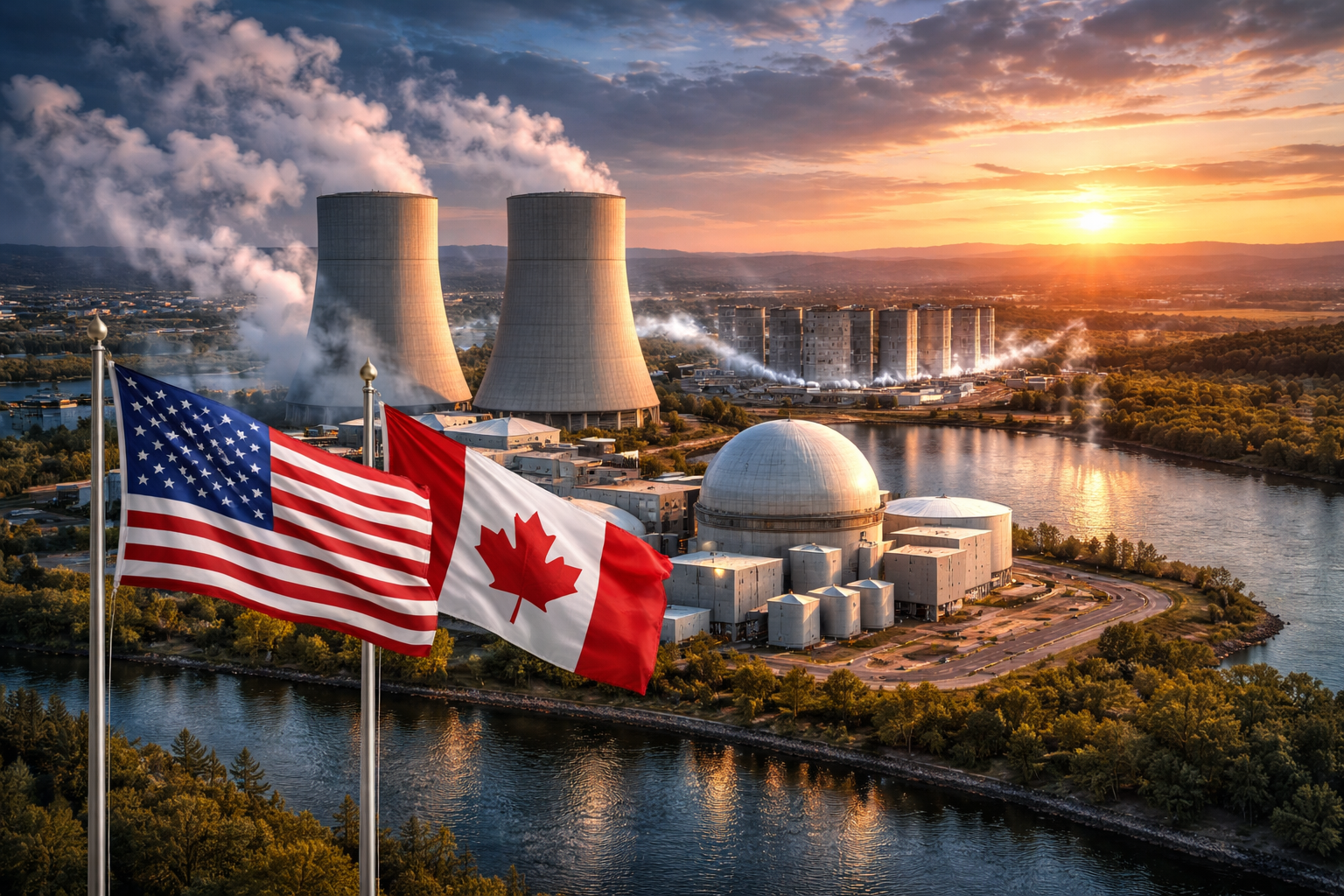
A powerful shift is underway in the global energy landscape—and it’s being driven by an unlikely catalyst: artificial intelligence.
As AI infrastructure expands at an unprecedented pace, the demand for reliable, carbon-free energy is surging. Data centers powering advanced AI models are consuming vast amounts of electricity, forcing governments and corporations to rethink long-term energy strategies. Against this backdrop, nuclear energy—once sidelined in favor of renewables—is making a decisive comeback across North America.
From Washington to Ottawa, policymakers are accelerating investments in next-generation nuclear technologies, while private capital is rapidly flowing into emerging startups focused on small modular reactors (SMRs). For investors, this convergence of energy security, decarbonization, and technological demand is creating a compelling new frontier.
The Return of Nuclear: A Strategic Energy Pivot
The United States and Canada are leading a renewed push toward nuclear energy as part of their long-term clean energy strategies. According to recent reporting from Reuters and the Financial Times, both countries are prioritizing the development and deployment of small modular reactors (SMRs)—a new class of nuclear technology designed to be safer, more flexible, and more cost-efficient than traditional large-scale reactors.
Unlike conventional nuclear plants, SMRs can be:
- Built faster and at lower upfront cost
- Deployed in remote or industrial locations
- Scaled incrementally to match demand
Governments see SMRs as a critical solution to two pressing challenges:
- Decarbonization Goals: Achieving net-zero emissions targets without sacrificing grid reliability
- Energy Security: Reducing dependence on foreign energy sources and volatile fossil fuel markets
The policy momentum is significant. In the U.S., federal support includes tax incentives, funding programs, and regulatory streamlining for advanced nuclear projects. Canada, meanwhile, has positioned itself as a global leader in SMR deployment, with several pilot projects already underway.
AI Is Driving a New Energy Demand Cycle
One of the most underappreciated drivers of the nuclear revival is the explosive growth of artificial intelligence.
Companies like Microsoft and Amazon are rapidly expanding data center capacity to support AI workloads. These facilities require continuous, high-density power, something intermittent renewable sources like wind and solar struggle to provide on their own.
This has created a critical gap in the energy mix—one that nuclear is uniquely positioned to fill.
Why Nuclear Fits the AI Era:
- Baseload Power: Provides consistent electricity 24/7
- Low Carbon Emissions: Aligns with ESG and climate mandates
- Scalability: SMRs can be deployed near data centers or industrial hubs
According to industry estimates cited by the Financial Times, global data center electricity consumption could double within the next decade, largely driven by AI applications. This trend is forcing tech companies and governments alike to secure long-term, stable energy sources—bringing nuclear back into focus.
Capital Is Flowing Into SMRs and Nuclear Innovation
The policy shift is being matched by a surge in private investment.
Venture capital firms, institutional investors, and strategic corporate backers are increasingly funding nuclear startups focused on next-generation reactor designs. Companies like NuScale Power and TerraPower are at the forefront of this movement, developing advanced SMR technologies with enhanced safety features and lower costs.
Key investment trends include:
- Public-Private Partnerships: Governments collaborating with private firms to accelerate deployment
- Strategic Funding Rounds: Billions being raised for reactor development and commercialization
- Corporate Energy Deals: Tech companies exploring direct partnerships with nuclear providers
Reuters reports that investor interest in nuclear has risen sharply over the past year, reflecting growing confidence in its long-term viability as a clean energy solution.
Why This Matters for Investors
The nuclear revival is more than just an energy story—it’s a multi-sector investment opportunity with long-term implications.
1. A New Growth Cycle in Energy Infrastructure
Decades of underinvestment in nuclear energy are being reversed. This creates opportunities across the entire value chain, from construction and engineering to fuel supply and maintenance.
2. Uranium Demand Is Set to Rise
As nuclear capacity expands, so too will demand for uranium—the primary fuel used in reactors. Supply constraints and limited new mining projects could tighten the market, potentially driving prices higher.
3. Strategic Importance Is Increasing
Nuclear energy is becoming a matter of national security. This increases the likelihood of sustained government support, subsidies, and favorable regulatory environments.
4. ESG Reclassification Is Changing Sentiment
Once controversial, nuclear is increasingly being recognized as a clean energy source within ESG frameworks. This shift is opening the door for institutional capital that previously avoided the sector.
Future Trends to Watch
The trajectory of nuclear energy in North America will depend on several key developments:
🔋 1. SMR Commercialization Timelines
Investors should monitor when pilot projects transition into full-scale commercial deployment. Successful execution will be a major catalyst for the sector.
⚙️ 2. Cost Competitiveness
While SMRs promise lower costs, achieving economies of scale will be critical. Any breakthroughs in manufacturing efficiency could significantly boost adoption.
🌍 3. Global Expansion
North America is leading the charge, but demand for nuclear energy is global. Export opportunities for SMR technology could drive additional growth.
🧾 4. Regulatory Approvals
Streamlined licensing processes will be essential for accelerating deployment. Delays could impact timelines and investor sentiment.
⚡ 5. Integration with Renewables
Nuclear is increasingly being positioned as a complement to renewable energy, rather than a competitor. Hybrid energy systems could become a dominant model.
Credible Signals from the Market
Recent reporting from Reuters and the Financial Times highlights several important data points:
- Multiple SMR projects in the U.S. and Canada are progressing through advanced development stages
- Government funding and incentives for nuclear energy are increasing year-over-year
- Private capital inflows into nuclear startups have accelerated, particularly in 2025–2026
In addition, industry organizations and policy groups are emphasizing the role of nuclear in achieving long-term climate targets, further reinforcing its strategic importance.
Key Investment Insight
For investors, the nuclear resurgence presents a clear opportunity—but one that requires a long-term perspective.
Strategic Considerations:
- Focus on the Supply Chain:
Beyond reactor developers, look at companies involved in uranium mining, fuel processing, and infrastructure development. - Monitor Early Movers:
Firms leading in SMR technology and deployment are likely to capture first-mover advantages. - Watch Policy Signals:
Government support will be a key driver of growth. Policy shifts can significantly impact valuations and project timelines. - Think Long-Term:
Nuclear projects have long development cycles, but once operational, they generate stable, predictable returns.
In short, this is not a short-term trade—it’s a structural investment theme tied to the future of energy and technology.
The revival of nuclear energy in North America marks a pivotal moment for both the energy sector and the broader investment landscape. Driven by the dual forces of AI-driven electricity demand and global decarbonization efforts, nuclear is re-emerging as a cornerstone of the modern energy mix.
As governments and private capital align behind SMRs and next-generation technologies, the sector is entering a new phase of growth—one that could reshape energy markets for decades to come.
For investors, the opportunity lies in identifying the right entry points across this evolving ecosystem—from uranium supply chains to advanced reactor developers.
Stay ahead of the latest market-moving trends with MoneyNews.Today—your trusted destination for daily investor insights, emerging industry analysis, and actionable financial intelligence.