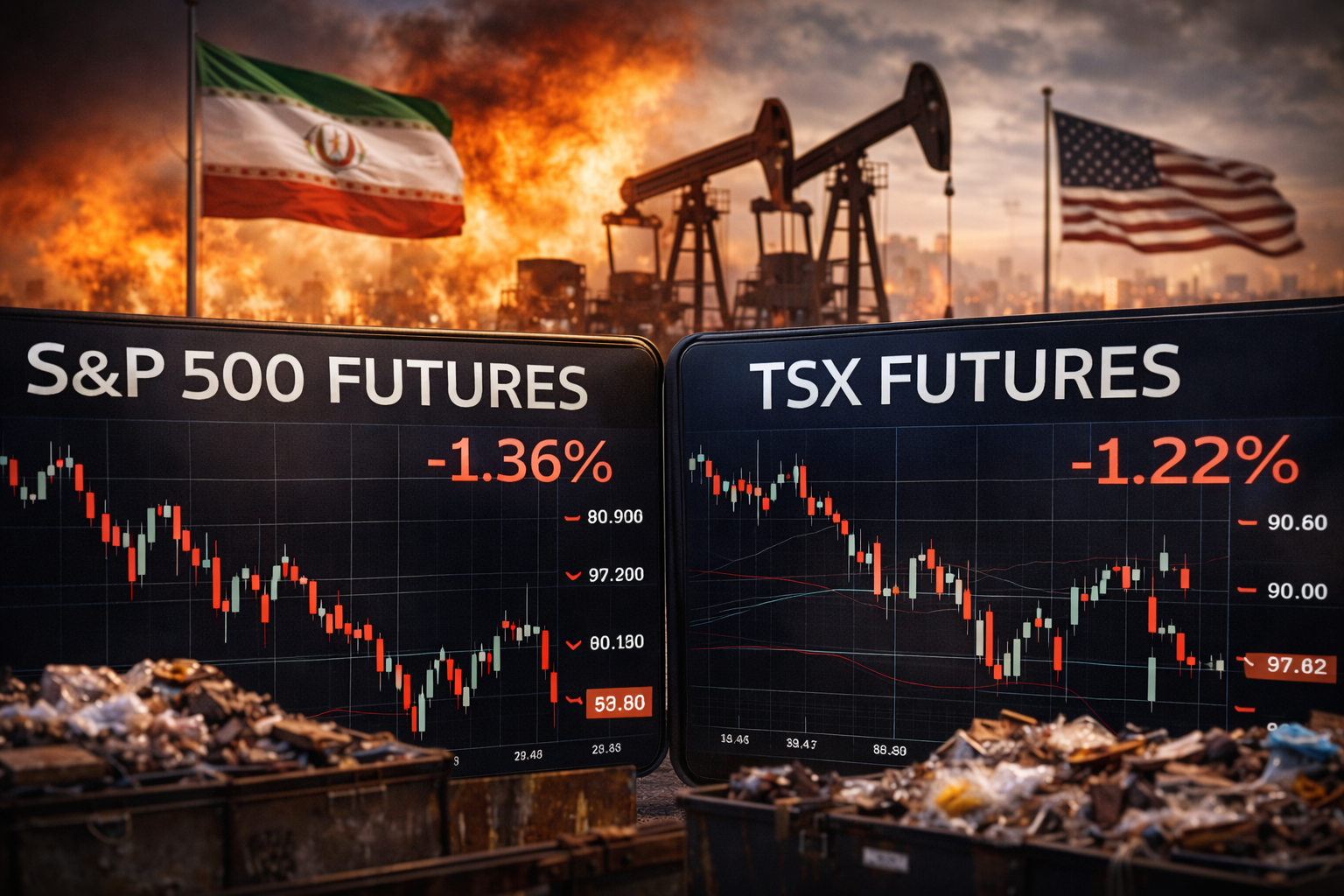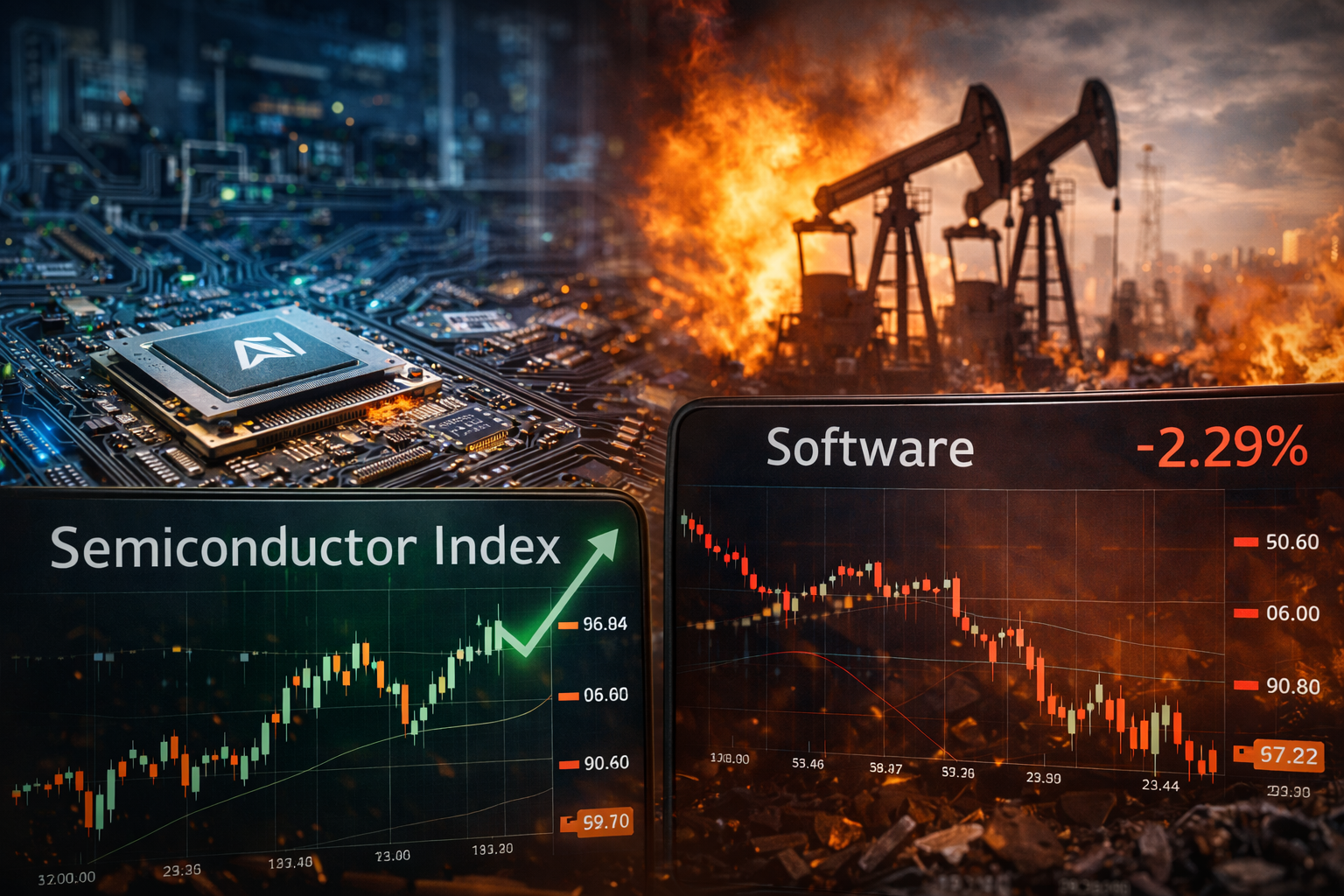
The technology sector is no longer moving as a single trade—and markets are adjusting fast.
A sharp surge in oil prices following escalating geopolitical tensions has collided with one of the strongest structural trends in years: relentless demand for artificial intelligence. The result? A growing divergence within tech stocks, where some names are powering higher while others are quietly losing momentum.
According to Reuters (April 13, 2026), investors are increasingly rotating within the sector—favoring AI infrastructure plays while pulling back from software and other segments vulnerable to rising costs and macro pressure.
For investors, this marks a critical turning point. The era of “buy all tech” is over. What comes next is far more selective—and potentially more rewarding for those positioned correctly.
A Market Split Beneath the Surface
At first glance, the tech sector may still appear resilient. But beneath the surface, performance dispersion is widening.
On one side are companies tied directly to AI infrastructure—those enabling the compute, storage, and power needed to run next-generation models. On the other are traditional software and platform businesses, many of which are now facing margin pressure and slower growth expectations.
This divergence is being driven by two powerful forces:
- Macro pressure: Rising oil prices are feeding inflation concerns, which could keep interest rates higher for longer
- Structural demand: AI adoption continues to accelerate, driving sustained investment in infrastructure
The intersection of these forces is reshaping how capital flows within the tech sector.
Why This Matters for Investors
This shift is not just tactical—it’s structural. Understanding it is key to navigating the next phase of the tech cycle.
1. AI Infrastructure Is Becoming the New Core Trade
Companies building the backbone of AI are emerging as the clear winners in the current environment.
This includes:
- Semiconductor manufacturers
- Data center operators
- Cloud infrastructure providers
Firms like NVIDIA and Advanced Micro Devices continue to benefit from insatiable demand for high-performance chips, while hyperscalers like Microsoft are investing heavily in expanding their AI capabilities.
The key advantage here is revenue visibility. These companies are not just selling products—they are enabling a multi-year infrastructure buildout with long-term demand tailwinds.
2. Software Faces Margin Pressure
In contrast, many software companies are facing a more challenging environment.
Rising costs—particularly in energy and infrastructure—are beginning to impact margins. At the same time, higher interest rates are putting pressure on valuations, especially for growth-oriented firms.
This creates a double headwind:
- Cost inflation reduces profitability
- Valuation compression limits upside
While AI integration offers opportunities for software firms, not all companies are positioned to monetize it effectively in the near term.
3. Macro Is Back in the Driver’s Seat
For much of the past year, tech stocks were largely driven by innovation narratives, particularly around AI. But the recent oil shock is a reminder that macroeconomic forces still matter.
Higher oil prices can lead to:
- Increased inflation expectations
- Tighter monetary policy
- Reduced consumer and enterprise spending
This environment tends to favor companies with strong balance sheets, pricing power, and essential services—characteristics more commonly found in infrastructure plays than in speculative growth names.
The Role of Energy in the Tech Trade
One of the most underappreciated dynamics in today’s market is the link between energy and technology.
AI is an energy-intensive industry. Training and running large-scale models requires enormous amounts of electricity, making energy costs a critical factor in the economics of AI.
As oil and energy prices rise:
- Data center operating costs increase
- Infrastructure investments become more expensive
- Margins for energy-intensive businesses come under pressure
At the same time, companies that can secure stable, low-cost energy sources gain a competitive advantage.
This creates a new dimension in tech investing—where energy strategy becomes a differentiator.
Credible Signals From the Market
Reuters reporting on April 13 highlights the uneven performance across tech stocks, with investors rotating toward AI-linked names and away from broader software plays.
This aligns with broader market data showing:
- Continued strength in semiconductor indices
- Increased capital expenditure from hyperscalers
- Slower growth expectations for certain software segments
Meanwhile, Bloomberg and industry analysts have pointed to rising infrastructure costs as a key factor influencing investor sentiment.
Together, these signals suggest that the current rotation is not a short-term anomaly—it’s part of a larger structural shift.
Future Trends to Watch
As the tech sector continues to evolve, several key trends will shape its trajectory.
AI Becomes the Dominant Investment Theme
AI is no longer just one of many growth drivers—it is becoming the central theme around which the tech sector is organized.
This will likely lead to:
- Continued capital concentration in AI leaders
- Increased competition for infrastructure resources
- Higher barriers to entry for new players
Greater Performance Dispersion
The gap between winners and losers within tech is expected to widen.
Companies with clear AI monetization strategies and strong infrastructure positioning will outperform, while others may struggle to keep pace.
Integration of Energy and Technology
The relationship between energy and tech will become increasingly important.
Investors should watch for:
- Partnerships between tech firms and energy providers
- Investments in renewable and alternative energy sources
- Innovations in energy efficiency
Valuation Discipline Returns
After years of growth-driven valuations, investors are becoming more selective.
This shift favors companies with:
- Strong earnings visibility
- Sustainable margins
- Clear competitive advantages
Risks Investors Should Consider
While the current rotation presents opportunities, it also comes with risks:
- Overconcentration: Heavy investment in a narrow set of AI leaders could increase vulnerability to sector-specific shocks
- Execution risk: Not all infrastructure investments will deliver expected returns
- Macro uncertainty: Further geopolitical escalation could amplify volatility
A balanced approach remains essential.
Key Investment Insight
The tech sector is entering a new phase—one defined by selectivity, not broad-based growth.
The current environment rewards:
- Companies with direct exposure to AI infrastructure
- Businesses with strong pricing power and cost control
- Firms capable of navigating both technological and macro challenges
At the same time, investors should be cautious with segments that are vulnerable to margin compression and valuation pressure.
This is a market where where you are positioned within tech matters more than ever.
The Bigger Picture
The convergence of an oil shock and accelerating AI demand is reshaping the tech landscape in real time.
What we are seeing is not just a temporary rotation, but a deeper transformation in how the sector operates—and how investors allocate capital within it.
As technology becomes increasingly intertwined with energy, infrastructure, and macroeconomic forces, the lines between sectors are beginning to blur.
For investors, the opportunity lies in recognizing these shifts early—and positioning accordingly.
Stay with MoneyNews.Today for daily, expert-driven insights into the trends redefining global markets and shaping the future of investing.