Global markets were already navigating inflation uncertainty and shifting central bank expectations—but a sudden geopolitical escalation has dramatically changed the equation overnight.
Oil prices surged more than 7% following reports of U.S. plans for a potential blockade tied to rising tensions with Iran, sending shockwaves across energy markets and rapidly spilling into metals and mining. What began as an energy story is quickly evolving into a broader commodity repricing event, with implications for inflation, industrial costs, and global supply chains.
According to Reuters (April 13, 2026), the sharp move in oil is being interpreted as a potential supply shock, forcing markets to reassess not only near-term energy availability but also the outlook for critical commodities tied to industrial growth.
For investors, this moment may mark the early stages of something bigger: a renewed geopolitical commodity supercycle.
A Shock That Moves Beyond Oil
Energy markets are often the first responders to geopolitical risk—but they are rarely the last.
The current surge in oil prices reflects immediate concerns around supply disruption in one of the world’s most strategically important regions. However, the ripple effects extend far beyond crude.
Historically, sustained increases in oil prices tend to:
- Raise production and transportation costs globally
- Feed into broader inflation expectations
- Trigger capital flows into hard assets
This dynamic is now beginning to unfold again, with metals markets showing early signs of repricing.
Why This Matters for Investors
The significance of this development lies not just in the magnitude of the oil move, but in what it signals about the broader market environment.
1. Commodities Are Re-Entering a Geopolitical Cycle
For much of the past decade, commodities were driven primarily by demand cycles and macroeconomic conditions. Today, geopolitics is reasserting itself as a dominant force.
The current situation highlights how quickly supply-side risks can reshape market dynamics.
Key implications include:
- Increased volatility across commodity markets
- Higher risk premiums for resource assets
- Greater sensitivity to geopolitical developments
This shift is particularly important for metals and mining, where supply chains are often geographically concentrated and vulnerable to disruption.
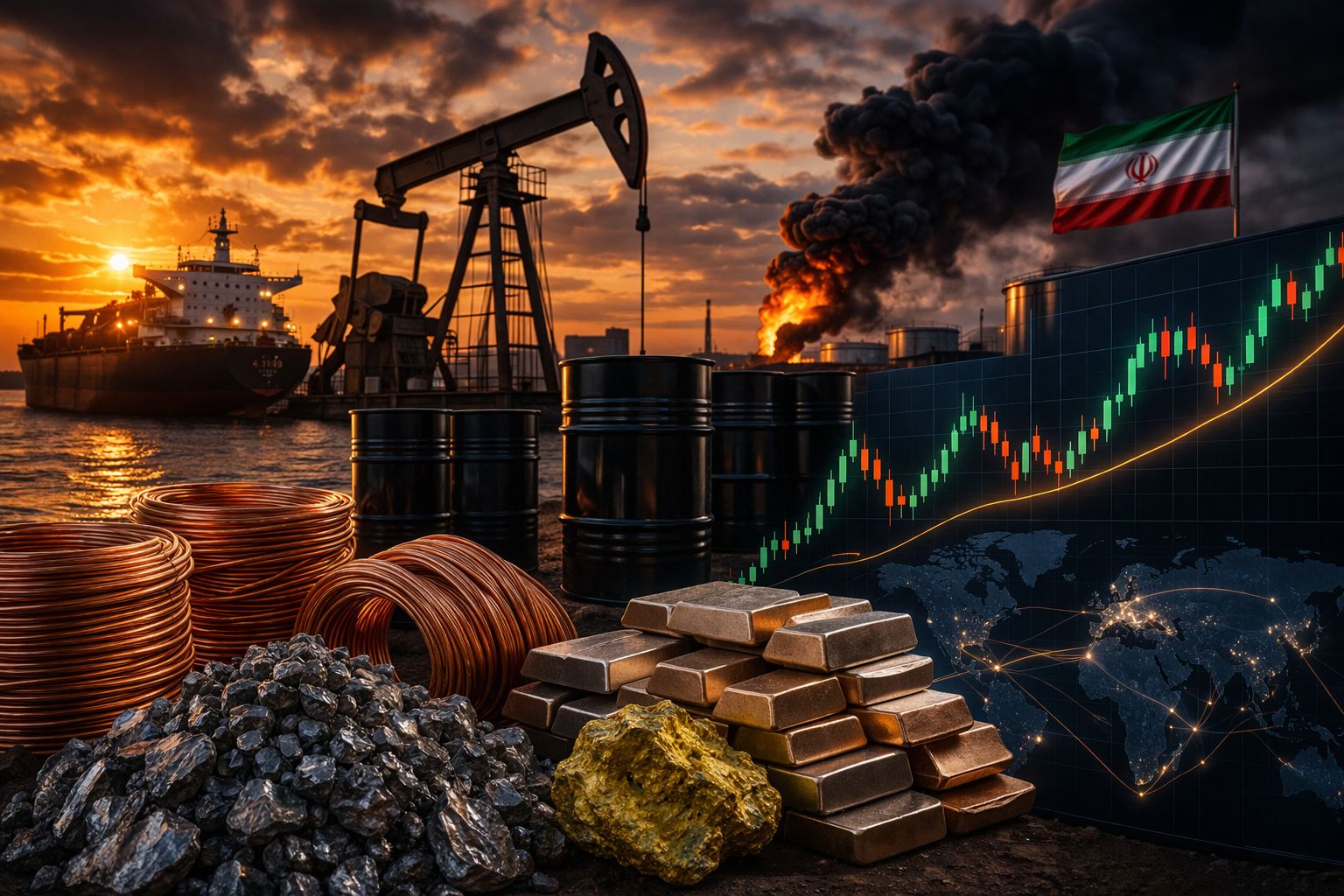
2. Metals Are the Second-Order Trade
While oil leads the initial move, metals typically follow as the economic impact spreads.
Rising energy costs increase the cost of mining and processing, while inflation expectations drive investor demand for hard assets.
Key metals to watch include:
- Copper (a proxy for global economic activity and electrification trends)
- Uranium (linked to energy security and nuclear expansion)
- Critical minerals (essential for batteries, AI infrastructure, and defense technologies)
These commodities are not just cyclical—they are increasingly strategic assets in a world shaped by energy transition and geopolitical competition.
3. Inflation Dynamics Are Shifting Again
One of the most immediate consequences of higher oil prices is their impact on inflation.
Energy costs feed directly into:
- Consumer prices
- Industrial input costs
- Transportation expenses
This creates a feedback loop that can complicate central bank policy and influence interest rate expectations.
For metals and mining companies, higher commodity prices can boost revenues—but rising costs and macro uncertainty must also be factored in.
The Supply Chain Factor
A critical element of the current market reaction is the vulnerability of global supply chains.
Many key commodities are sourced from regions with geopolitical risk, including:
- Middle Eastern energy markets
- African and South American mining operations
- Asian processing and refining hubs
Disruptions in any part of this chain can have cascading effects, amplifying price movements and increasing volatility.
The latest developments underscore the importance of supply security, which is becoming a central theme in both government policy and corporate strategy.
Credible Signals From the Market
Reuters reporting on April 13 confirms that oil prices experienced a sharp spike following the geopolitical escalation, with markets reacting quickly to the potential for supply disruption.
At the same time, analysts are beginning to reassess the outlook for commodities more broadly, noting that:
- Energy shocks often precede broader commodity rallies
- Investor positioning in commodities remains relatively light
- Structural demand drivers—such as electrification and AI—are still intact
This combination of short-term shock and long-term demand creates a powerful setup for the sector.
Future Trends to Watch
As the situation develops, several key trends will determine how metals and mining markets evolve.
Prolonged Geopolitical Tensions
If tensions persist, supply risks could remain elevated, supporting higher commodity prices over an extended period.
Capital Flows Into Hard Assets
In times of uncertainty, investors often rotate into tangible assets. Commodities and mining stocks may benefit from increased allocation as a hedge against inflation and geopolitical risk.
Strategic Resource Nationalism
Governments are increasingly prioritizing domestic access to critical resources. This could lead to:
- Export restrictions
- Increased regulation
- Greater investment in domestic mining and processing
Energy Transition Acceleration
Ironically, higher fossil fuel prices may accelerate investment in alternative energy sources, boosting demand for metals like copper, lithium, and uranium.
Risks Investors Should Consider
While the outlook for commodities may be improving, several risks remain:
- Short-term volatility: Rapid price swings can create uncertainty and trading risks
- Demand slowdown: Higher energy costs could weigh on global economic growth
- Policy intervention: Governments may step in to stabilize markets or control prices
Investors should approach the sector with a balanced perspective, considering both upside potential and downside risks.
Key Investment Insight
The current environment suggests that commodities are entering a geopolitical supercycle phase, where supply risks and strategic importance drive market behavior.
For investors, this creates a multi-layered opportunity:
- Energy leads the initial move
- Metals follow as second-order trades
- Critical minerals gain importance in long-term structural trends
Positioning for this shift means focusing on:
- Companies with strong resource bases
- Producers with low-cost operations
- Firms exposed to strategic commodities
This is not just a short-term trade—it may be the beginning of a longer-term trend.
The Bigger Picture
The overnight repricing of commodity markets is a reminder of how quickly global dynamics can shift.
What started as a geopolitical development has evolved into a market-wide event, influencing everything from energy prices to inflation expectations to industrial costs.
For investors, the challenge is not just to react, but to understand the broader implications—and identify where opportunities are emerging.
Metals and mining, long overlooked in favor of high-growth sectors, are once again stepping into the spotlight.
Stay with MoneyNews.Today for daily, in-depth analysis of the trends shaping global markets and uncovering the opportunities that matter most to investors.