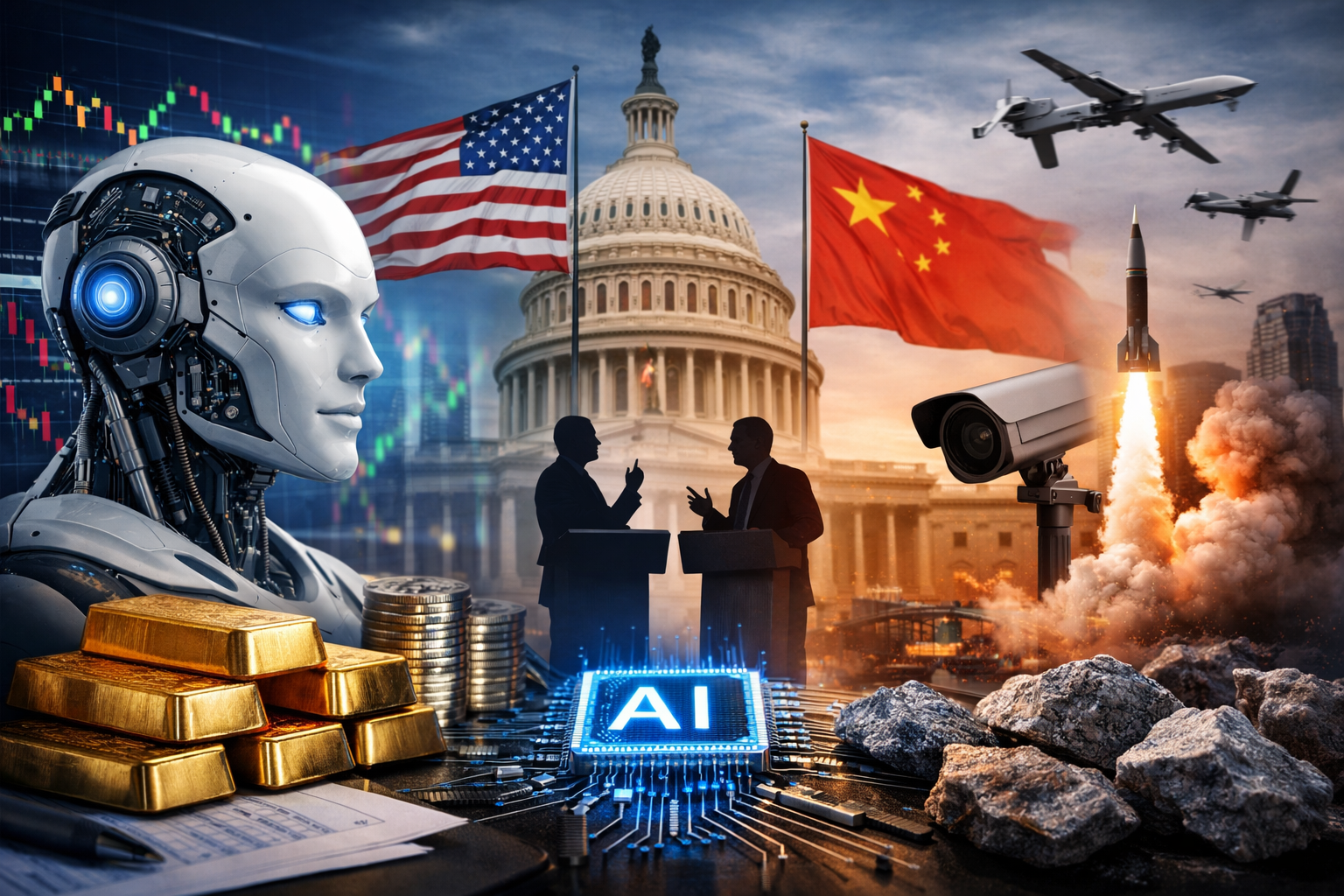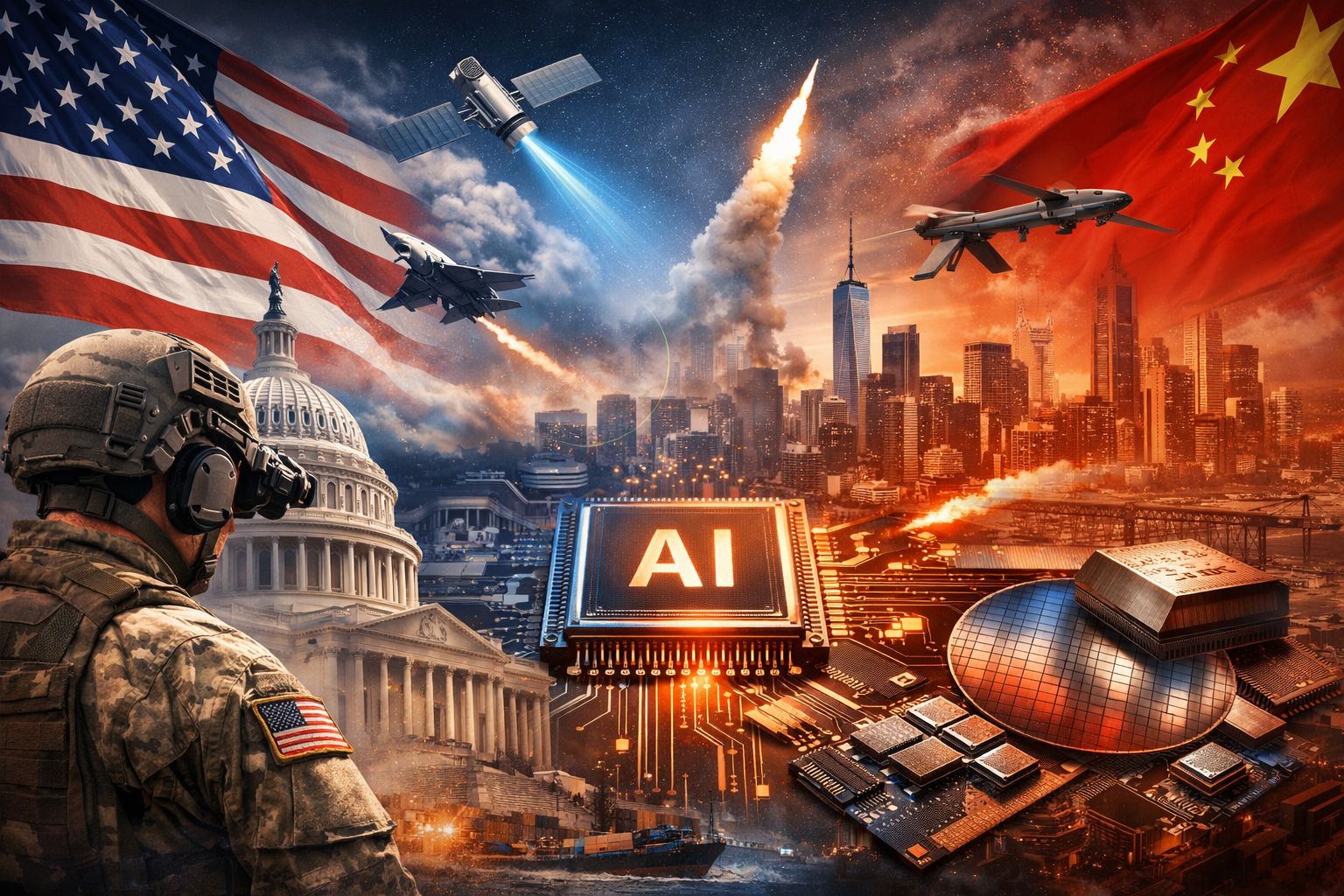
Artificial intelligence has emerged as the next front in geopolitical competition, and the United States is recalibrating its strategic approach in response to intensifying challenges from China. In a policy commentary published March 30, 2026, the Information Technology and Innovation Foundation (ITIF) outlined a comprehensive national strategy to “slow China’s advance” in critical technology industries—including semiconductors, AI, aerospace, and other sectors deemed essential to national power.
This moment is pivotal for investors: technology innovation is no longer driven solely by market demand and commercial incentive structures—it has become a core component of national security and economic diplomacy. Understanding how public policy intersects with corporate strategy is now essential for positioning portfolios that aim to capture long‑term structural growth while navigating heightened geopolitical risk.
National Power Industries: A New Policy Paradigm
The ITIF report emphasizes that the concentration of advanced tech capabilities in a single nation can directly influence global power dynamics. Technologies once viewed through a productivity lens—like AI models, advanced chips, and aerospace systems—are now regarded as strategic assets capable of shaping national leverage.
Essentially, the report reframes technology competition as a “techno‑economic war.” It asserts that if the United States and its allies do not implement robust industrial and innovation policies, China could dominate many of the industries underpinning future economic and military strength.
This perspective aligns with broader shifts in how policymakers describe U.S.–China relations: no longer simply commercial competitors, both nations are seen as vying for technological supremacy that underlies economic influence and defense capabilities.
Why This Matters for Investors
1. Technology Policy Is Now National Security Policy
Unlike previous decades—when the U.S. pursued market liberalization and globalization as default strategies—today’s approach squarely positions technology leadership as a matter of national survival. The ITIF report outlines actionable policy directions that include not only supporting domestic R&D, but also limiting Chinese knowledge acquisition, imports, and technology transfer.
For investors, this shift has profound implications:
- Regulatory pressure may increase on technology exports, especially those with dual‑use applications (civilian and military).
- Companies with strong intellectual property protections and diversified supply chains could benefit relative to those heavily dependent on China‑centric production or sales.
- Firms that operate in compliance‑intensive sectors—such as advanced semiconductors or secure AI systems—may see both risk and opportunity as governments tighten oversight.
2. Supply Chains Are Strategic Assets
In past investment cycles, supply chains were understood primarily through a cost‑optimization frame. Now, supply chain resilience and geographic diversification have assumed geopolitical significance. The ITIF strategy encourages reducing reliance on China for critical components while strengthening regional ecosystems—especially across the U.S., Mexico, and Canada.
This highlights two investor themes:
- North American integration of production, especially in semiconductors and advanced manufacturing, may benefit from policy incentives.
- Companies investing in multi‑regional supply chain footprints may be better positioned than those with China‑dependent logistics.
3. Export Controls and Competitive Access
Export controls have been a principal tool in U.S. policy toward China for several years—especially in semiconductors and high‑end compute resources. However, the ITIF report suggests that controls alone are not sufficient; a broader strategy that includes active competition in global markets is needed to maintain U.S. economic leverage.
For investors, this raises considerations such as:
- Whether export limitations on certain technologies will shrink TAM (total addressable market) for U.S. tech companies.
- The extent to which companies can mitigate such risks through technology innovation, licensing strategies, and market diversification.
Tech Competition Beyond Borders: Global Market Access
Another cornerstone of the ITIF recommendations is that combatting China’s “innovation mercantilism” requires claiming global market share rather than retreating from strategic markets.
This implies:
- Export‑Import financing tools may be leveraged more aggressively to support U.S. tech exports.
- Political support may be mobilized to help American companies win contracts in emerging markets previously dominated by Chinese suppliers.
- Defense and technology sectors might be interconnected through foreign military sales and dual‑use export programs.
For technology investors, this suggests that global expansion strategies—especially in emerging economies and allied markets—could become an undervalued driver of long‑term growth.
Sector Winners and Risks
Winners
AI and Secure Compute Platforms
Companies that focus on secure, explainable, and enterprise‑grade AI applications could benefit from increased government and corporate demand for trustworthy systems that align with regulatory expectations.
Semiconductors and Advanced Hardware
While export controls and geopolitical risk complicate the landscape, firms that maintain competitive design IP and diversified manufacturing capabilities are likely to stay relevant—and may even receive government support or incentives as part of strategic industrial policy.
Supply Chain Solutions
Providers that enhance visibility, resiliency, and diversification in global supply networks—particularly those integrating North American production—may capture heightened interest.
Risks
China‑Dependent Exposure
Firms with significant dependency on Chinese manufacturing or revenue could face:
- Market access limitations
- Competitive displacement from Chinese tech (which continues to improve its capabilities)
- Regulatory escalation affecting cross‑border operations
This aligns with broader geopolitical assessments—such as warnings from advisory bodies that China’s open‑source AI ecosystem could pose competitive threats even under export restrictions.
Policy Volatility
As national economic power strategies evolve, regulatory volatility could intensify. Strategic initiatives may help long‑term competitiveness but introduce near‑term uncertainty.
Future Trends to Watch
🔹 Industrial Policy as Investment Policy
Expect continued policy shaping around national tech priorities—especially on export controls, R&D incentives, and supply chain support.
🔹 Defense‑Tech Convergence
Dual‑use technologies (e.g., AI in defense, secure communications) may receive preferential policy support, expanding markets for firms at the intersection of commercial tech and strategic systems.
🔹 North American Technology Bloc
Efforts to build a coordinated North American technology and production ecosystem could benefit integrated players and reduce geopolitical reliance on competitors.
🔹 Evolving Export Controls
As semiconductor export controls tighten or expand, hardware players will need to navigate shifting regulatory environments.
Actionable Investment Takeaways
1. Prioritize Diversification and Supply Chain Resilience
Invest in companies with multi‑regional supply networks to mitigate geopolitical disruption risks.
2. Focus on Strong Intellectual Property Portfolios
Firms with dominant IP positions—particularly in AI, chip design, and secure software—are better insulated from competitive displacement.
3. Monitor Policy Developments Actively
Regulatory shifts can rapidly reprice risk and opportunity; active monitoring of industrial and tech policy is essential.
4. Consider North American Strategic Opportunities
Companies leveraging regional synergies in manufacturing and innovation may benefit from policy support and competitive differentiation.
As technology becomes a key determinant of geopolitical strength, investors must expand their analysis beyond traditional market metrics to include industrial policy, global supply chains, and strategic alignment with national competitiveness goals. Staying informed on these evolving dynamics is crucial for navigating risk and capitalizing on opportunities in the technology landscape of tomorrow.
Stay updated with MoneyNews.Today for authoritative analysis, strategic insights, and timely coverage at the intersection of markets, innovation, and geopolitics.