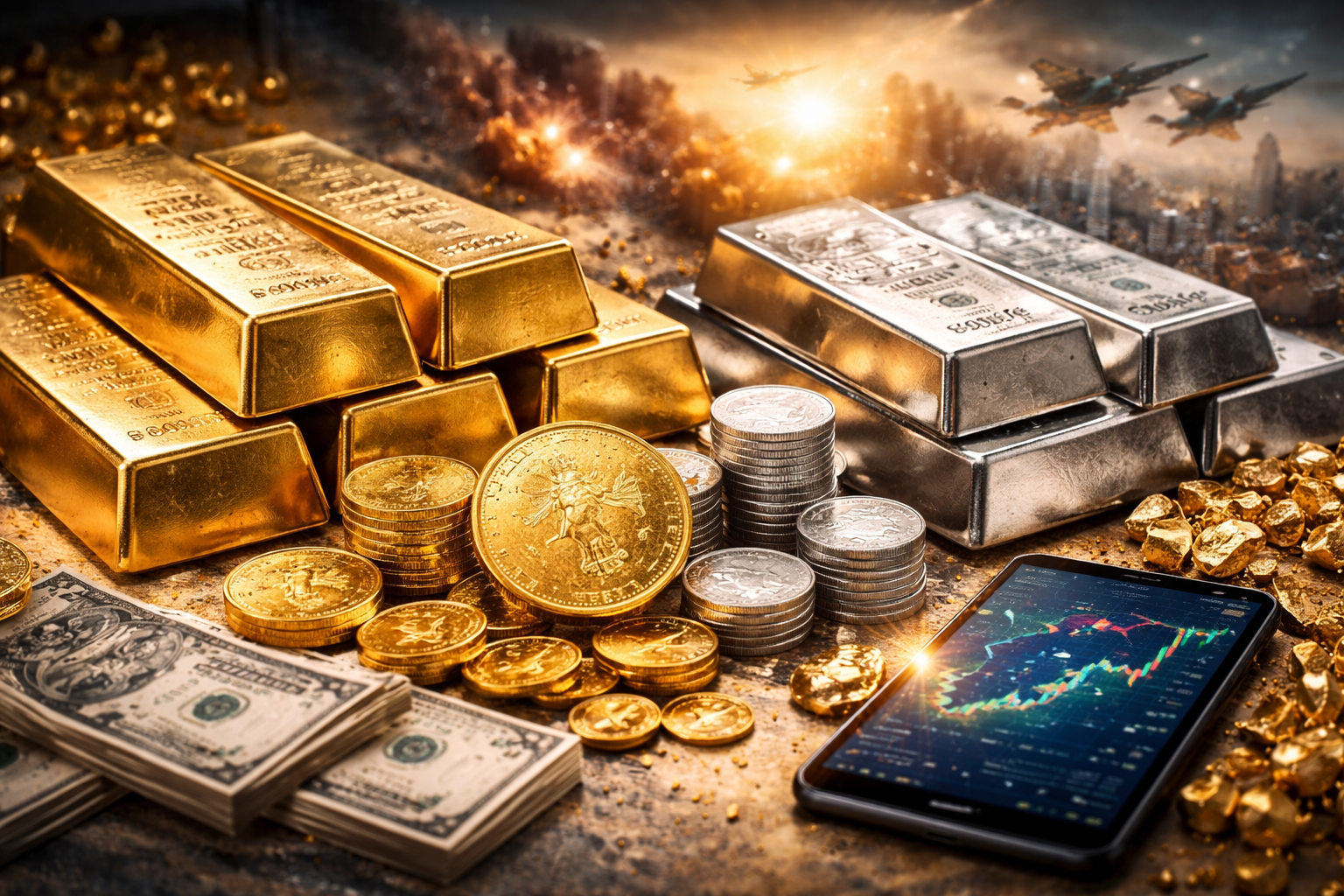
As equity markets digest mixed earnings, shifting interest-rate expectations, and rising geopolitical tension, one asset class is quietly reasserting its traditional role as a portfolio anchor: precious metals. Gold and silver prices have climbed to multi-year highs in recent sessions, fueled by a softer U.S. dollar, steady central-bank buying, and renewed investor demand for hedges against macro and political uncertainty. According to Reuters and global market data providers, the rally underscores a broader rotation toward real assets as investors seek protection from volatility in currencies, equities, and geopolitics.
With conflicts, trade frictions, and policy uncertainty dominating headlines, the move into gold and silver is not merely tactical—it reflects a structural reassessment of risk.
Why This Matters for Investors
Gold has historically served as a store of value during periods of financial stress, inflation risk, and geopolitical instability. The current environment checks all three boxes. Reuters notes that safe-haven flows have intensified as investors react to tensions in key regions, questions over global growth, and expectations that major central banks may begin easing policy later this year. A weaker dollar has further supported precious metals by making them cheaper for non-U.S. buyers.
Silver, often viewed as both a monetary and industrial metal, has joined the rally. Demand from electronics, solar energy, and electric-vehicle supply chains is combining with investment flows, creating a dual-support dynamic that analysts say could keep prices elevated even if economic growth slows.
From a portfolio perspective, the resurgence of precious metals is a reminder that diversification across asset classes remains essential. As correlations between equities and bonds fluctuate, gold and silver are once again demonstrating their value as non-correlated hedges.
The Macro Forces Driving the Rally
1. Geopolitical Risk and Safe-Haven Flows
Reuters commentary highlights that escalating geopolitical uncertainty has prompted institutional investors to increase allocations to bullion and related exchange-traded funds. Historically, periods of heightened global tension—whether driven by conflicts, trade disputes, or political instability—have coincided with stronger demand for gold as a risk-off asset.
2. Central Bank Buying
Data from the World Gold Council show that central banks have been net buyers of gold for several consecutive years, seeking to diversify reserves away from traditional currencies. This structural demand provides a long-term floor under prices and reinforces gold’s role as a strategic reserve asset.
3. Currency and Interest-Rate Dynamics
A softer U.S. dollar and expectations of eventual rate cuts have improved the relative attractiveness of non-yielding assets such as gold. While real yields remain a key variable, even a modest decline in interest-rate expectations can have an outsized impact on precious-metal prices.
Mining Stocks and Leverage to Metal Prices
The rally in bullion is also drawing attention to the equity side of the sector. Historically, gold and silver mining stocks have offered leveraged exposure to rising metal prices, though with higher volatility and operational risk. According to analysts cited by Bloomberg, margins for major producers improve significantly when gold prices remain above key cost thresholds, potentially translating into stronger cash flows, dividend growth, and balance-sheet repair.
For investors, this creates a spectrum of options:
- Physical-backed ETFs for direct exposure to spot prices.
- Large-cap miners for dividend income and operational stability.
- Junior and exploration companies for higher-risk, higher-reward potential tied to new discoveries and development projects.
Future Trends to Watch
1. Monetary Policy Shifts:
Any clear signal from the Federal Reserve or other major central banks toward easing could further weaken the dollar and support precious metals. Conversely, a resurgence in inflation without policy accommodation could also reinforce gold’s appeal as a store of value.
2. Industrial Demand for Silver:
The energy transition and growth in solar installations continue to drive structural demand for silver. According to industry forecasts, green-energy applications could account for a rising share of global silver consumption over the coming decade.
3. M&A Activity in Mining:
Sustained high metal prices often lead to consolidation as major producers seek to replenish reserves. This can create valuation uplifts for well-positioned mid-tier and junior miners.
Key Investment Insight
The current rally in gold and silver is not solely a short-term reaction to headlines; it reflects deeper concerns about geopolitical stability, currency resilience, and long-term purchasing power. For investors, maintaining or increasing strategic exposure to precious metals—through ETFs, diversified mining equities, or a combination of both—can serve as an effective hedge and a source of portfolio diversification.
In an environment where macro risks remain elevated and correlations across traditional asset classes are shifting, precious metals are once again proving their relevance. Staying informed on trends in bullion markets, central-bank policy, and mining-sector fundamentals will be critical for navigating the months ahead. For timely analysis and daily insights across commodities and global markets, rely on MoneyNews.Today as your trusted source for investor-focused intelligence.