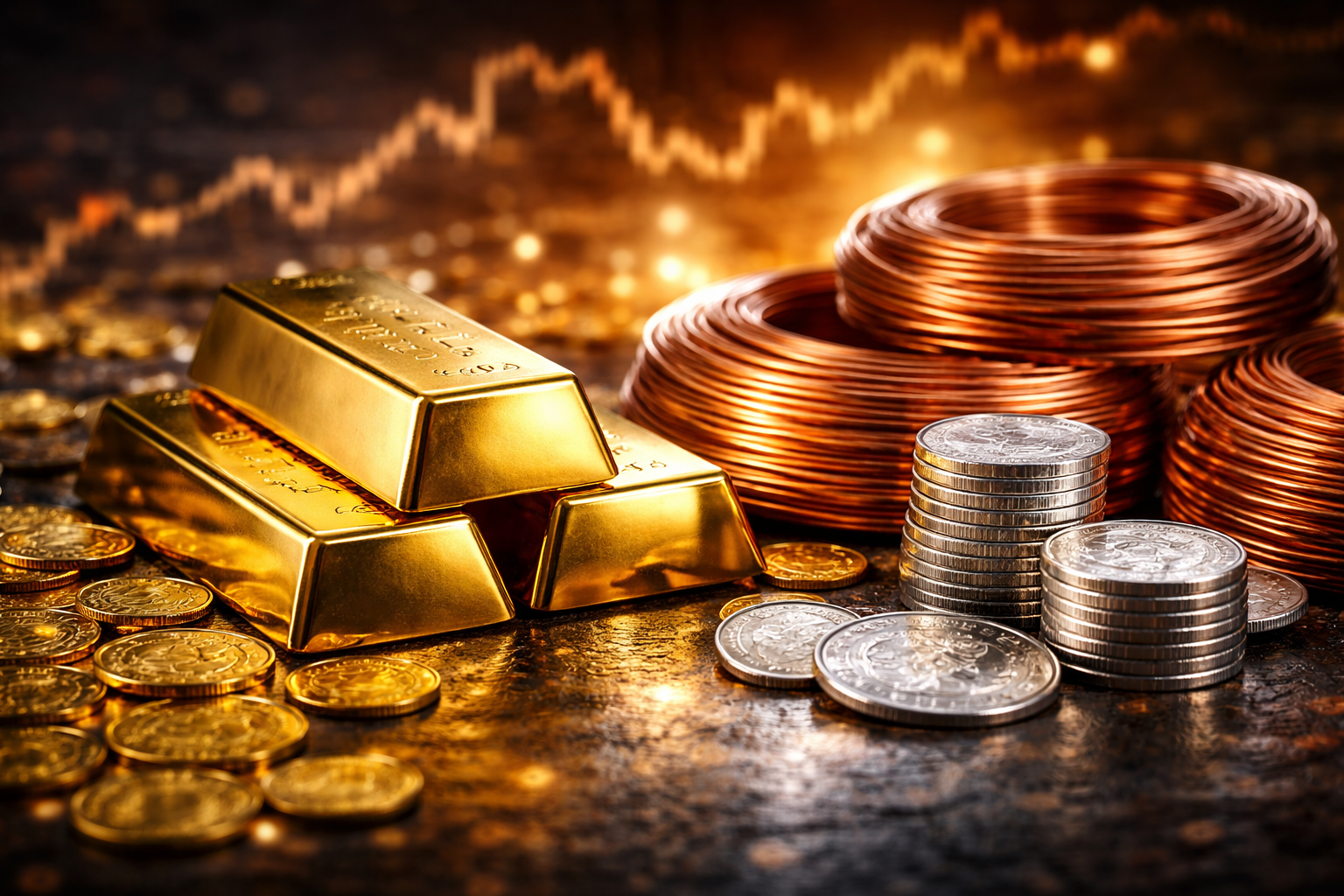
Gold and copper are closing 2025 with undeniable momentum, cementing precious and industrial metals as one of the market’s most closely watched investment themes heading into the new year. After years of cyclical swings, metals have staged a powerful rally — fueled by inflation concerns, supply constraints, and accelerating industrial demand tied to electrification and energy transition trends.
For investors, the message is becoming clearer: metals are no longer just defensive hedges or cyclical trades — they are increasingly strategic assets in a changing global economy.
A Strong Finish to a Defining Year
According to The Economic Times, supported by data from Investing.com, gold and copper prices surged through much of 2025, outperforming many traditional asset classes. Gold benefited from persistent inflation risks, geopolitical uncertainty, and central bank accumulation, while copper rallied on expectations of long-term demand tied to electric vehicles, renewable energy, and grid infrastructure.
Copper — often viewed as a bellwether for global growth — reflected renewed confidence in industrial demand despite slowing growth in some major economies. Analysts cited by Economic Times note that electrification trends alone could significantly tighten copper supply over the next decade, reinforcing bullish long-term price expectations.
Why This Matters for Investors
The metals rally is not just about price appreciation — it reflects deeper structural shifts. Years of underinvestment in mining have constrained supply, while demand continues to grow across multiple fronts, from clean energy to defense and infrastructure.
Gold’s appeal has also evolved. Beyond serving as a traditional safe haven, gold is increasingly seen as a hedge against fiscal expansion, currency debasement, and geopolitical fragmentation. Central banks — particularly in emerging markets — have continued to increase gold reserves, providing a steady source of demand.
For investors, this combination of structural demand and constrained supply creates a compelling backdrop — though not without risks.
Supply Constraints Are Becoming a Defining Theme
One of the most important factors shaping metals markets is supply discipline. According to industry data referenced by Investing.com, new mining projects face longer development timelines due to regulatory hurdles, environmental concerns, and capital intensity.
In copper, this has translated into declining ore grades and rising production costs, limiting the industry’s ability to respond quickly to higher prices. Gold miners face similar challenges, with fewer large discoveries and rising operational expenses.
These constraints suggest that even modest increases in demand can have outsized effects on prices — a dynamic investors should closely monitor heading into 2026.
Mining Equities Follow, but with Volatility
Mining stocks have largely tracked the rise in underlying metal prices, though performance has varied widely by company and geography. Well-capitalized producers with strong balance sheets and low-cost operations have outperformed, while higher-cost or highly leveraged players lagged.
Analysts quoted by Economic Times caution that mining equities tend to amplify both gains and losses in commodity cycles. While higher metal prices improve margins, sharp pullbacks can occur if macro sentiment shifts or if prices move too far ahead of fundamentals.
This volatility underscores the importance of selectivity and risk management for investors considering exposure to the sector.
Future Trends to Watch in 2026
Several developments are likely to influence metals markets in the year ahead:
- Monetary Policy Shifts: Potential interest rate cuts in 2026 could weaken the dollar and support precious metals.
- Energy Transition Demand: Copper, nickel, and other industrial metals stand to benefit from electrification and infrastructure spending.
- Geopolitical Risk: Ongoing global tensions may sustain demand for gold as a portfolio hedge.
- Capital Discipline in Mining: Limited new supply could keep prices elevated even during periods of slower growth.
Together, these factors suggest metals may remain a central investment theme rather than a short-term trade.
Key Investment Insight
Metals and mining equities may offer valuable inflation protection and portfolio ballast, particularly as markets navigate late-cycle dynamics and geopolitical uncertainty. However, after steep rallies in 2025, investors should be prepared for periods of consolidation or pullbacks.
A balanced approach — combining exposure to physical metals, diversified miners, and selective producers — may help investors participate in long-term upside while managing volatility as 2026 approaches.
As global markets adjust to shifting economic and geopolitical realities, MoneyNews.Today will continue delivering timely, data-driven insights to help investors stay ahead of major trends shaping commodities, equities, and the broader financial landscape.