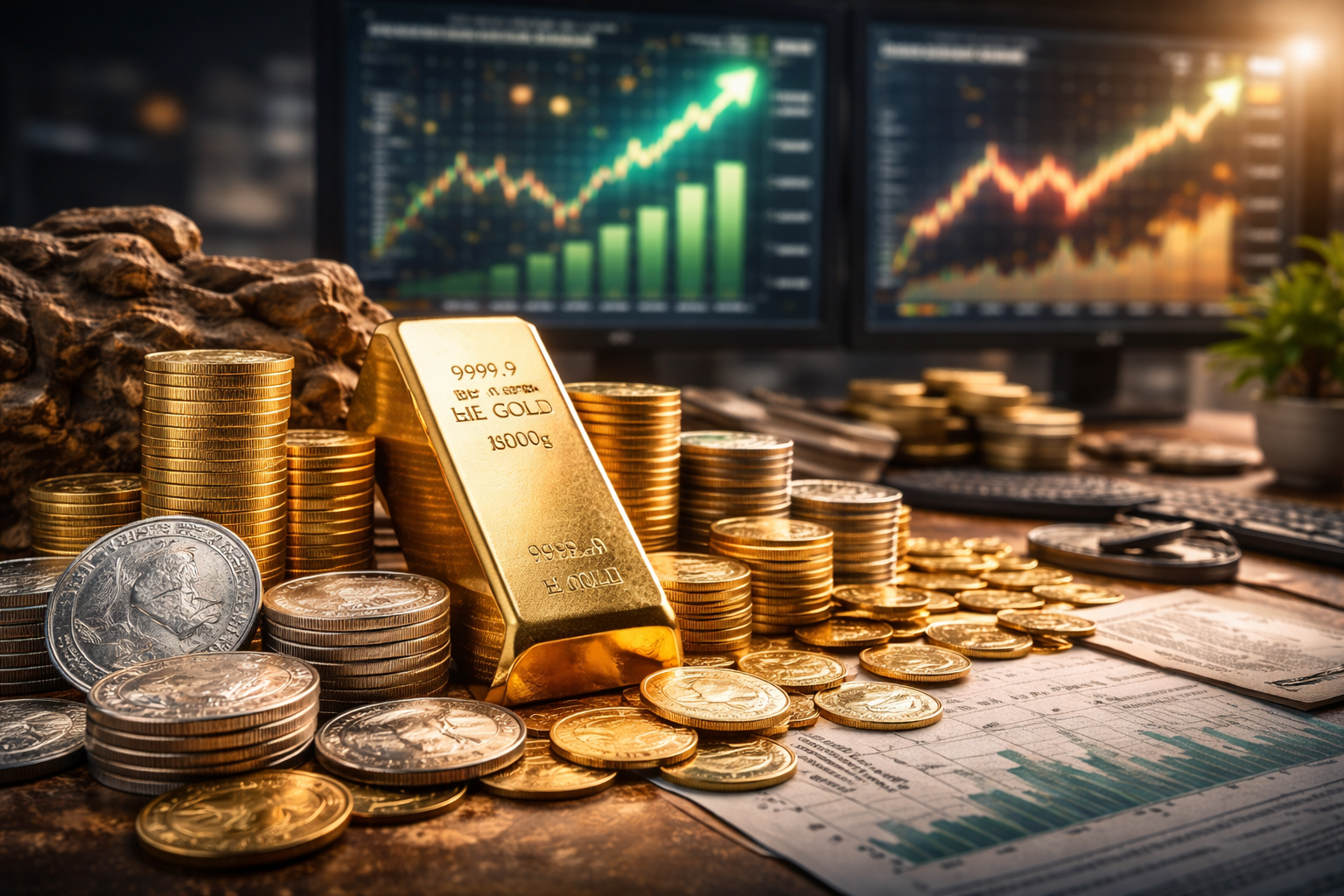
As volatility ripples through equity markets and geopolitical tensions resurface, investors are rediscovering an old ally: gold.
While major U.S. indices have faced pressure from shifting AI sentiment and earnings recalibrations, bullion prices are on track for a monthly gain. According to the latest global commodities coverage from Reuters, safe-haven demand has strengthened amid concerns over tariffs, geopolitical flashpoints, and cross-asset capital rotation. At the same time, select industrial and minor metals have demonstrated resilience, reinforcing the metals and mining sector’s role as a defensive pillar.
For portfolio managers navigating uncertainty, precious metals are once again proving their strategic value.
Gold’s Defensive Appeal Returns
The appeal of Gold during periods of uncertainty is well documented. Historically, the metal has served as a hedge against inflation, currency debasement, and geopolitical instability. February’s price strength reflects many of those same drivers.
Markets are grappling with:
- Elevated geopolitical risks in key global regions
- Trade policy tensions and tariff rhetoric
- Volatility in technology and growth stocks
- Persistent inflation uncertainty
As risk appetite moderates, investors have rotated toward assets perceived as stores of value. Gold-backed exchange-traded funds have seen renewed interest, and futures positioning suggests institutional demand is strengthening.
Unlike equities, gold’s performance does not depend on earnings growth or dividend payouts — making it attractive during periods of valuation stress.
Beyond Gold: Silver and Industrial Metals Show Strength
The resilience is not limited to gold alone. Silver, which straddles both precious and industrial demand, has also held firm. Silver benefits from safe-haven flows while maintaining exposure to manufacturing and renewable energy trends.
Meanwhile, certain base metals have demonstrated stability despite broader market fluctuations. Infrastructure spending, electrification projects, and AI-driven data center construction continue to support demand for copper and related materials.
This dual dynamic — defensive demand alongside structural industrial consumption — has strengthened the overall metals narrative.
Mining Stocks Offer Leverage to Metal Prices
Equity investors have additional avenues to express a metals thesis through mining companies. Major gold producers often provide leveraged exposure to bullion prices due to operating margins expanding as metal prices rise.
Mining equities can also benefit from cost discipline and capital return programs. After years of shareholder pressure, many large mining firms have prioritized balance sheet repair, dividend stability, and selective expansion.
However, mining stocks carry operational and geopolitical risks distinct from holding physical metals or ETFs. Production disruptions, regulatory changes, and cost inflation can impact profitability.
Investors should weigh these dynamics carefully.
Why This Matters for Investors
The broader investment landscape is characterized by heightened uncertainty. Equity markets are adjusting to evolving expectations around AI spending and interest rates. Meanwhile, inflation remains above long-term targets in several developed economies.
In such environments, portfolio diversification becomes critical.
Metals offer:
- Inflation hedging potential
- Low correlation to equities in stress periods
- Protection against currency volatility
- Exposure to structural demand themes
Importantly, metals allocations do not necessarily signal pessimism. Rather, they reflect prudent risk management within diversified portfolios.
Inflation Expectations and Real Yields
One of the most significant drivers of gold prices is real interest rates — the yield on government bonds adjusted for inflation.
When real yields decline or remain subdued, gold becomes more attractive relative to fixed-income assets. Investors closely monitor Federal Reserve policy signals and inflation data releases to assess this balance.
If inflation proves stickier than anticipated, safe-haven demand could strengthen further. Conversely, sharply rising real yields may temper gains.
Understanding this macro interplay is essential for positioning.
Geopolitical and Trade Risks Add Support
Recent tariff discussions and geopolitical tensions have amplified safe-haven flows. Markets tend to react quickly to uncertainty in global trade frameworks, as tariffs can disrupt supply chains and corporate earnings.
Gold often benefits during such episodes because it is not directly tied to any single economy’s performance. In times of policy unpredictability, investors gravitate toward assets perceived as neutral and durable.
This geopolitical overlay adds another dimension to the metals rally.
Future Trends to Watch
Investors evaluating metals exposure should monitor several forward indicators:
- Central bank gold purchases: Sustained buying by sovereign institutions supports long-term demand.
- ETF flow trends: Institutional allocations can drive near-term price momentum.
- Industrial demand metrics: Copper and silver consumption tied to infrastructure and energy transition projects.
- Dollar strength: A weaker U.S. dollar typically benefits commodity prices.
If volatility persists in equity markets, metals may continue to outperform relative to risk assets.
Key Investment Insight
Metals can serve as a strategic hedge within diversified portfolios — particularly when equities struggle and inflation expectations rise.
Practical considerations for investors include:
- Allocating a measured percentage of portfolios to gold ETFs or physical exposure.
- Considering diversified mining equities for leveraged upside potential.
- Monitoring macroeconomic data that influence real yields and currency trends.
- Avoiding overconcentration; metals should complement, not replace, growth exposure.
The goal is balance — capturing upside potential while mitigating downside risk.
In a market environment defined by shifting capital flows and macro uncertainty, precious metals are reclaiming relevance. Investors who integrate defensive assets thoughtfully can enhance portfolio resilience without abandoning long-term growth opportunities.
For daily analysis of commodities, equity trends, and macro developments shaping global markets, stay connected with MoneyNews.Today — your trusted source for actionable investor intelligence.