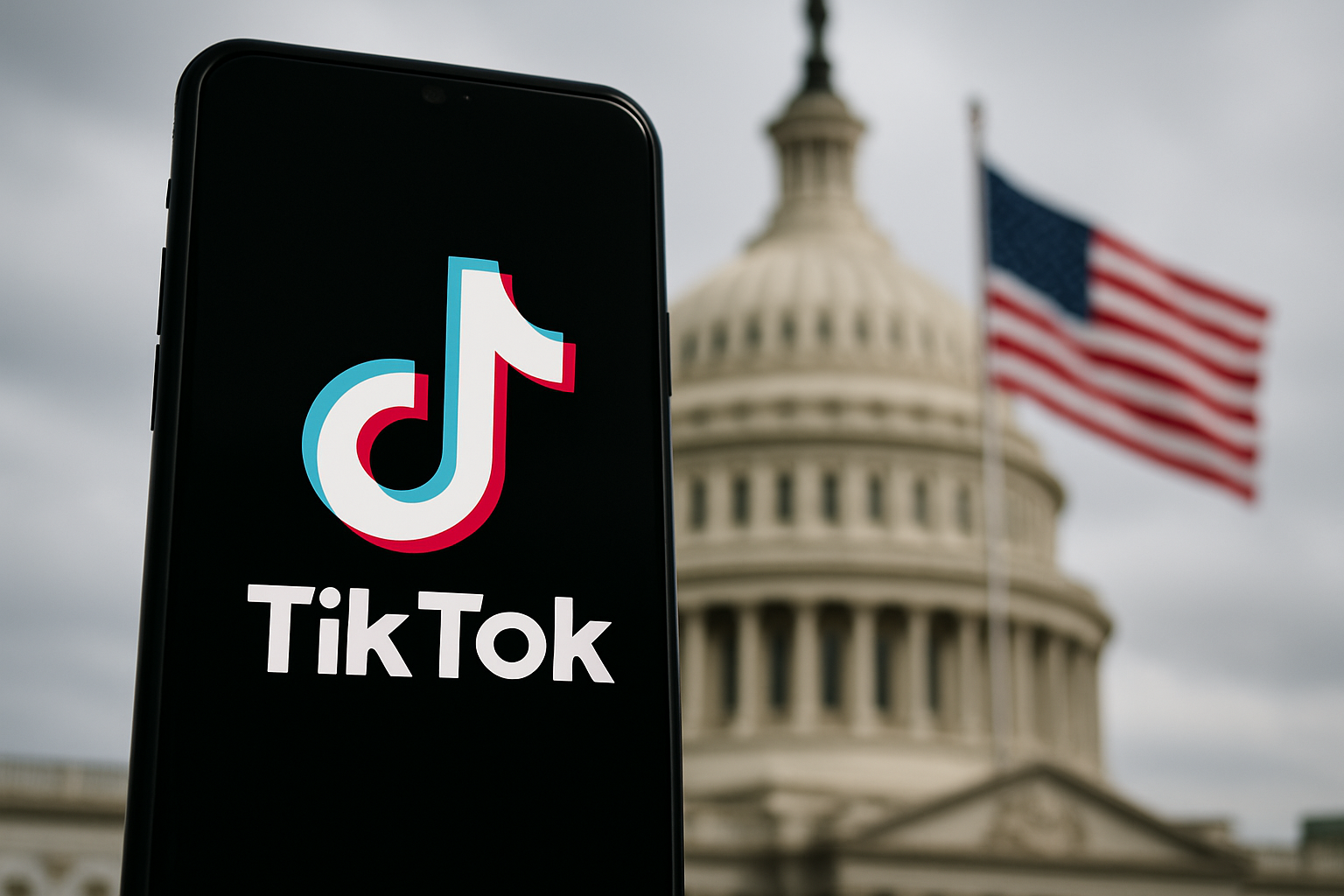
Uncertainty in Washington is once again rippling through the tech sector, this time centered on the long-running push to force ByteDance to divest TikTok’s U.S. operations. Fresh scrutiny emerged after U.S. Senator Ed Markey formally demanded that the White House clarify why the 2024 divestiture law remains unresolved—renewing fears that regulatory volatility may weigh on global technology valuations. At a moment when markets are already sensitive to geopolitical tension and national-security-related tech restrictions, investors are watching this confrontation closely.
The issue has surged back into the spotlight after Reuters reported that Markey is pressing the administration for answers around algorithm leasing, Chinese regulatory approval, data-privacy risk, and the transparency of any proposed deal. The core question: Can TikTok legally operate in the U.S. without ByteDance’s control of its core algorithm, and can Beijing permit a transfer or license of that technology? For investors, the renewed scrutiny is more than political drama—it signals regulatory headwinds that could cascade across the broader tech sector.
A Renewed Flashpoint in U.S.–China Tech Tensions
TikTok has long been a symbol of the deepening rivalry between the U.S. and China over digital influence, data privacy, and emerging technologies. The 2024 law mandated ByteDance to divest its U.S. operations or face a nationwide ban. But whether a sale is feasible—and whether China’s cybersecurity regulators would approve the transfer of TikTok’s algorithm—has remained an open question.
According to Reuters, Senator Markey wants detailed answers about whether the White House has assessed national-security risks tied to any licensing arrangement, whether ByteDance has continued algorithmic oversight, and whether the process has adequately addressed users’ data-privacy protections.
Analysts at Brookings and the Center for Strategic and International Studies (CSIS) have noted that any attempt to split the platform from its parent company presents unprecedented technological and legal challenges. TikTok’s algorithm is widely regarded as one of the most advanced consumer-AI engines in the market—precisely why regulators view it as a national-security asset.
Why This Matters for Investors
1. Tech With China Exposure Faces Elevated Policy Risk
The ongoing uncertainty underscores a critical investment theme: policy-risk premiums are rising for companies operating at the intersection of U.S. national security and Chinese technology.
Social-media platforms, AI companies, semiconductor players, and cloud providers with China ties could experience valuation pressure as regulatory scrutiny intensifies. This includes U.S. firms relying on Chinese supply chains and Chinese companies listed on U.S. exchanges.
2. Market Volatility Around Regulation Is Increasing
Previous TikTok regulatory developments have triggered short-term volatility in social-media stocks. Meta, Snap, and Alphabet have historically reacted to news involving potential TikTok restrictions, since platform disruptions can shift ad-market share rapidly.
Investors should expect elevated volatility until clarity emerges on algorithm licensing, ownership structure, and potential litigation outcomes.
3. National-Security Tech Restrictions Are Accelerating
The TikTok case is part of a broader pattern:
- The U.S. has expanded export controls on advanced AI chips (reported by Bloomberg earlier this year).
- New cybersecurity reviews have been applied to foreign data-center operators.
- Congress is considering additional measures targeting Chinese-linked bio-tech, cloud, and quantum-computing firms.
This changing landscape could impact valuations across tech subsectors tied to data, consumer behavior, artificial intelligence, and cross-border cloud operations.
Future Trends to Watch
Regulatory Precedents for Algorithm Ownership
If TikTok’s algorithm cannot be transferred or licensed under U.S. rules or Chinese law, it could create a legal precedent for how social-media algorithms are treated globally—impacting companies such as Meta, Alphabet, Tencent, and ByteDance itself.
Expansion of Foreign-Ownership Reviews
Expect more CFIUS involvement in reviewing corporate structures related to data, AI, and social-media influence. Investors with exposure to multinational tech firms should monitor these developments closely.
Ad Market Realignment
If TikTok faces operational constraints, the advertising landscape could shift. Snap, Meta, and YouTube have historically benefited from TikTok uncertainty, particularly in short-form content.
Rising Demand for “Sovereign AI” and Localized Algorithms
Nations may push for domestically controlled algorithmic systems—opening new markets for cloud providers, AI-infrastructure builders, and sovereign digital-platform operators.
Key Investment Insight
The latest pressure from Senator Markey signals heightened regulatory momentum—an important indicator for investors assessing U.S.–China tech exposure. Portfolio strategies should account for elevated policy risk, particularly in companies tied to cross-border algorithms, consumer data, and social-media platforms. Defensive positioning, diversification across less geopolitically sensitive segments of tech, and closer monitoring of regulatory developments may be prudent approaches.
As the political landscape continues to shift, staying informed is critical. For ongoing coverage of tech regulation, market risks, and global investor insights, continue following MoneyNews.Today for trusted, timely, and data-driven reporting.