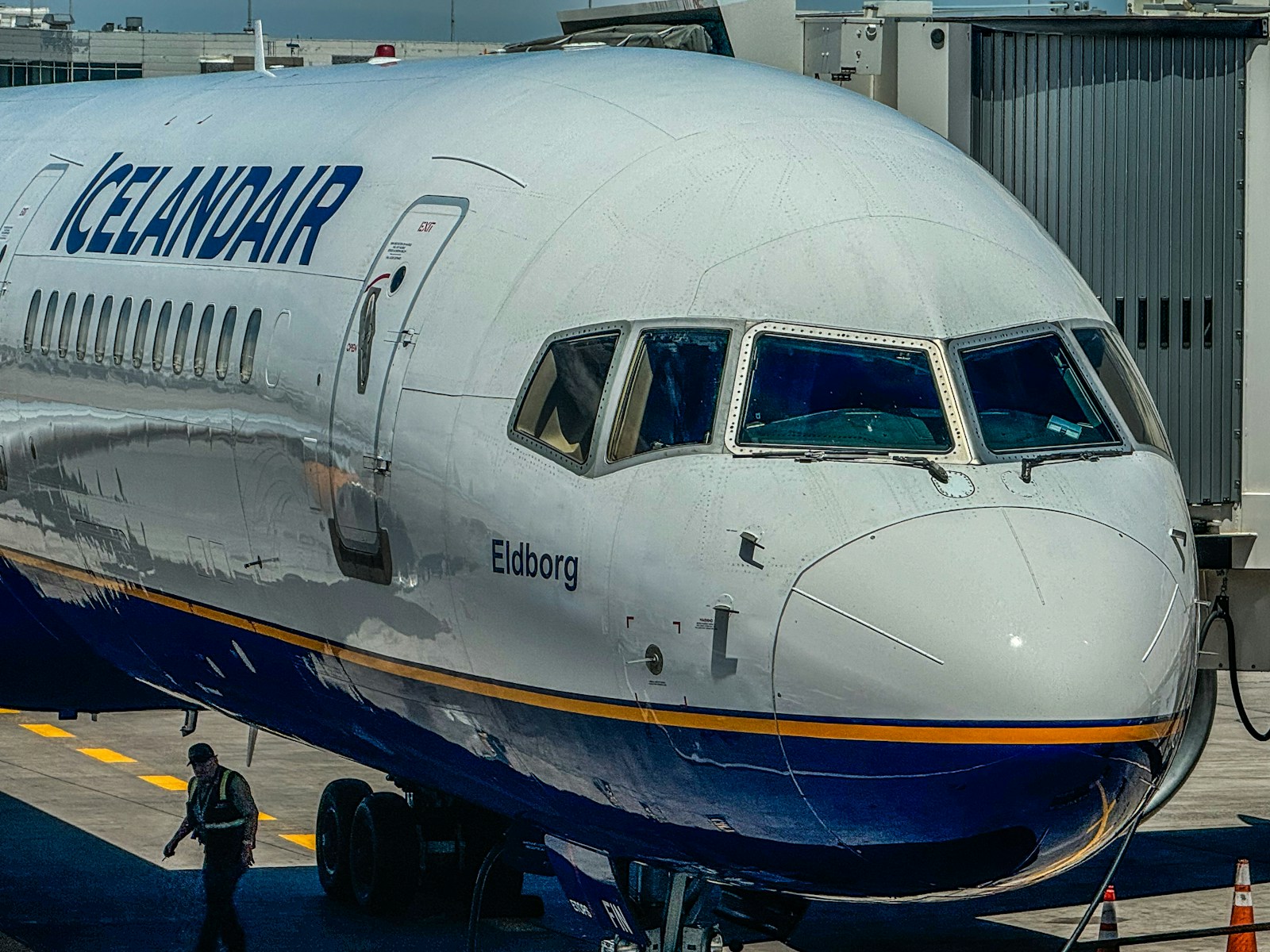
Syntholene Energy Corp. (TSX.V: ESAF; FSE: 3DD0) has announced the signing of a non-binding Expression of Interest (EOI) with Icelandair, Iceland’s flagship airline, outlining potential demand for synthetic sustainable aviation fuel (eSAF) over a ten-year period. The agreement signals Icelandair’s interest in purchasing approximately 20,000 tonnes, or roughly 25 million liters, of eSAF annually, subject to scaled production capacity and competitive pricing.
While the EOI does not establish binding commercial terms, it represents a notable point of engagement between an emerging synthetic fuel developer and a legacy international airline navigating increasingly stringent decarbonization requirements. According to Syntholene, the contemplated volume would amount to approximately 250 million liters of eSAF over the life of the agreement.
The announcement comes as airlines globally face mounting regulatory pressure to reduce lifecycle emissions, particularly within the European Union. Under the ReFuelEU Aviation regulation, airlines operating in the EU and European Economic Area are required to progressively blend sustainable aviation fuel into their fuel mix, beginning with a 2% mandate in 2025 and rising to 6% by 2030. Longer-term targets escalate further to 20% by 2035 and up to 70% by 2050.
Icelandair CEO Bogi Nils Bogason highlighted the role of scalable supply and cost competitiveness in enabling the transition. “The transition to sustainable aviation fuel will only happen if production is scaled up and competitive pricing ensured,” Bogason said, noting that collaboration with fuel producers is central to meeting both environmental objectives and regulatory mandates.
For Syntholene, the EOI is positioned as a form of early commercial validation as it advances its synthetic fuel production pathway. The company is focused on producing eSAF using renewable power, green hydrogen, and captured carbon dioxide, a process commonly referred to as power-to-liquid. Synthetic aviation fuel is considered a “drop-in” fuel, meaning it can be used in existing aircraft engines without modification, a key factor for near- and medium-term adoption.
According to data cited by the company, the European Union Aviation Safety Agency (EASA) published a 2024 market reference price for eSAF averaging €7,695 per tonne, or approximately €6.16 per liter. To help bridge the cost gap between conventional jet fuel and eSAF, the EU has also introduced a subsidy of up to €6 per liter for airlines purchasing eSAF to meet mandated blending levels.
Syntholene CEO Dan Sutton identified Iceland as a strategic region for the company’s development efforts. “Iceland is one of our key regions as we work with leaders across their energy sector to deliver local production of synthetic fuels for their domestic and future export markets,” Sutton said. The company has previously disclosed that it has secured 20 megawatts of dedicated energy in Iceland to support an upcoming demonstration facility and future commercial scale-up.
The broader market context underscores growing interest in sustainable aviation fuel across the airline industry. S&P Global reports that more than 60 airlines worldwide have set explicit SAF targets for 2030, reflecting both regulatory compliance needs and longer-term corporate decarbonization strategies.
Industry forecasts point to rapid growth in the e-fuels and SAF markets, albeit from a relatively small base. DataM Intelligence projects the global eFuel sector could grow from approximately US$8.5 billion in 2025 to around US$215 billion by 2032, driven by government support, large-scale investments in power-to-liquid technologies, and partnerships between energy producers and transportation companies. Separately, MarketsandMarkets estimates the sustainable aviation fuel market could expand from roughly US$2.06 billion in 2025 to over US$25 billion by 2030.
Syntholene describes its production approach as targeting significantly lower costs than competing synthetic fuel technologies, leveraging proprietary integrations of hydrogen production and fuel synthesis powered by thermal energy. The company’s stated objective is to develop a modular, scalable platform capable of producing ultrapure synthetic jet fuel at industrial scale.
It is important to note that the EOI with Icelandair is non-binding, and no pricing or final commercial terms have been agreed. Any future fuel purchase arrangement would be subject to additional negotiations and the execution of a definitive agreement. As outlined in the company’s forward-looking statements, the realization of these plans depends on multiple factors, including technical performance, financing, regulatory compliance, and successful scale-up.
Nevertheless, the announcement highlights the growing intersection between airline demand signals and emerging synthetic fuel producers as the aviation sector works toward meeting long-term emissions reduction goals.
DISCLAIMER: The author, Rebecca Kerswell, is a contractor for Syntholene Energy Corp and has been compensated to raise awareness of the company among investors for a term of 6 months. This article is intended for informational and educational purposes only and does not constitute investment advice or a recommendation to buy or sell any securities. Readers should always conduct their own due diligence and consult with a licensed financial advisor before making investment decisions.