Ticker: ESAF | Exchange: TSX Venture
Syntholene Energy has entered the public markets with its debut on the TSX Venture Exchange under the ticker ESAF, positioning itself as what it says is the first publicly traded pure-play synthetic fuel company globally. For investors tracking the evolution of alternative fuels and decarbonization in hard-to-electrify sectors, the listing offers an early look at a niche that could become increasingly relevant over the next decade.
In a recent interview, CEO Dan Sutton outlined how the company views its opportunity, why aviation is its initial focus, and why management believes now is the right time to scale the business in the public eye.
A Large Market With Structural Constraints
Global demand for liquid fuels remains immense, estimated at more than 4 trillion liters per year, which is the whole liquid fuel market, including fossil, representing roughly a $1.3 trillion dollars is. The “alternative fuel” market includes biofuels and synthetic fuels. Within that context, sustainable aviation fuel (SAF) has become one of the most discussed — and constrained — segments.
Most SAF currently comes from biofuels, which rely on agricultural crops or waste oils. Those feedstocks are finite, expensive, and often compete with food or land use. Sutton argues this scarcity is one of the main bottlenecks preventing airlines from meeting rising regulatory and emissions targets.
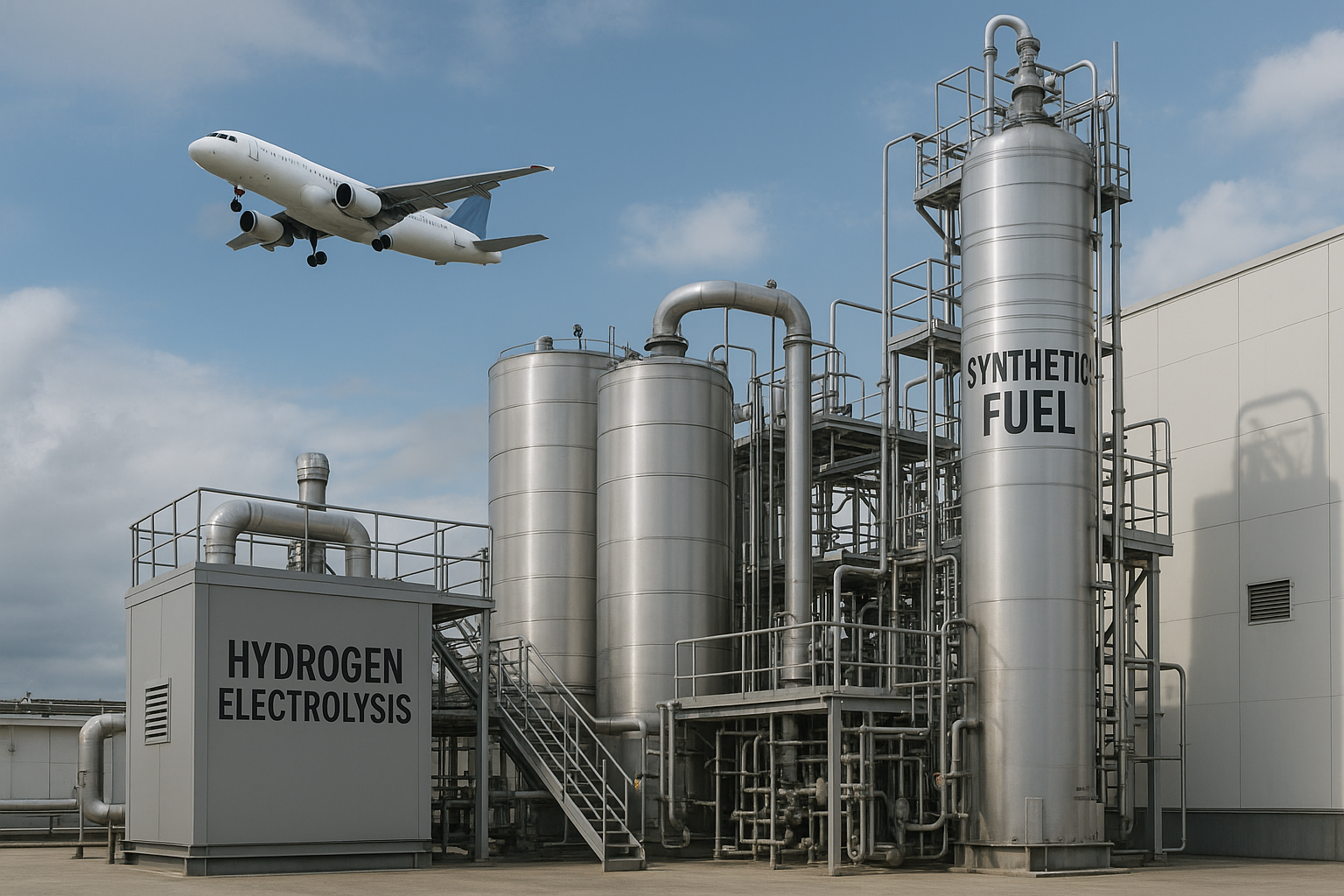
Syntholene’s approach is different. Rather than relying on biological inputs, the company uses a synthetic process combining hydrogen and carbon to create what it describes as “molecularly pure” liquid hydrocarbons. The fuel is designed to be a drop-in replacement for conventional fossil fuels, without requiring changes to existing aircraft, engines, or infrastructure.
Technology Integration as the Core Advantage
Management attributes much of Syntholene’s claimed cost advantage — estimated at roughly 70% lower than competing synthetic fuel technologies — to recent maturation across its supply chain rather than to a single breakthrough invention.
The company combines:
- High-temperature electrolysis, a process that has moved from pilot to commercial readiness over the past decade, and
- Advanced fuel synthesis reactors have improved in efficiency and scalability.
According to Sutton, Syntholene’s proprietary element lies in how these systems are integrated and paired with low-cost energy sources. While the technology has so far been validated at lab scale, the company is now moving toward demonstration facilities, with commercial scale-up envisioned over the coming years.
Why Aviation Comes First
Aviation is widely viewed as one of the hardest sectors to electrify due to the physics of energy density and thrust requirements. Unlike passenger vehicles, jet turbines cannot realistically run on batteries at scale with current technology.
At the same time, regulatory pressure is increasing. In Europe, airlines are already required to blend a minimum percentage of sustainable aviation fuel into their operations — 2% this year, rising to 6% by 2030, and 70% by 2050. The European Union has also introduced subsidies to help offset the higher cost of SAF, effectively supporting both demand and supply.
Sutton argues synthetic fuels could help airlines meet these mandates without sacrificing performance or facing the supply constraints associated with biofuels, while also offering lower lifecycle emissions relative to conventional jet fuel.
Path to Cost Competitiveness
According to the company, synthetic fuels can reach cost parity with fossil fuels at sufficient industrial scale — often cited around gigawatt-level production facilities. While Syntholene is still several steps away from that scale, management believes ongoing improvements in electrolysis, hydrogen production, and system integration could push costs lower over time.
Sutton emphasized that this remains a forward-looking objective rather than a current reality, noting that near-term priorities are demonstration projects, validation, and incremental scale-up.
Strategic Backers and the Decision to Go Public
Syntholene is backed by early-stage and strategic investors, including Inventa Capital, whose principals have previously been involved in the development of public resource and energy companies. Management sees those relationships as valuable, particularly in navigating project financing and infrastructure build-outs.
As for timing, Sutton framed the public listing as both an opportunity and a statement. Being early to the public markets, he said, allows the company to build awareness and capital access alongside what it views as a broader maturation of synthetic fuel technologies.
Investor Takeaway
Syntholene Energy’s public debut gives investors exposure to a very early-stage company operating in a potentially large but technically complex market. The opportunity is tied closely to regulatory trends in aviation, continued declines in hydrogen and clean energy costs, and the company’s ability to execute on scale-up.
At the same time, risks remain significant, including technology validation, capital intensity, long development timelines, and competition as more players enter the synthetic fuel space. For now, ESAF represents a speculative window into how alternative fuels may evolve rather than a proven commercial solution.
Disclaimer:
This article is for informational and educational purposes only and does not constitute investment advice, an offer, or a recommendation to buy or sell any securities. All opinions expressed are those of the speaker or company cited. Investors should conduct their own due diligence or consult a qualified financial advisor before making investment decisions.