When trade tensions rise, capital rarely stands still — it rotates.
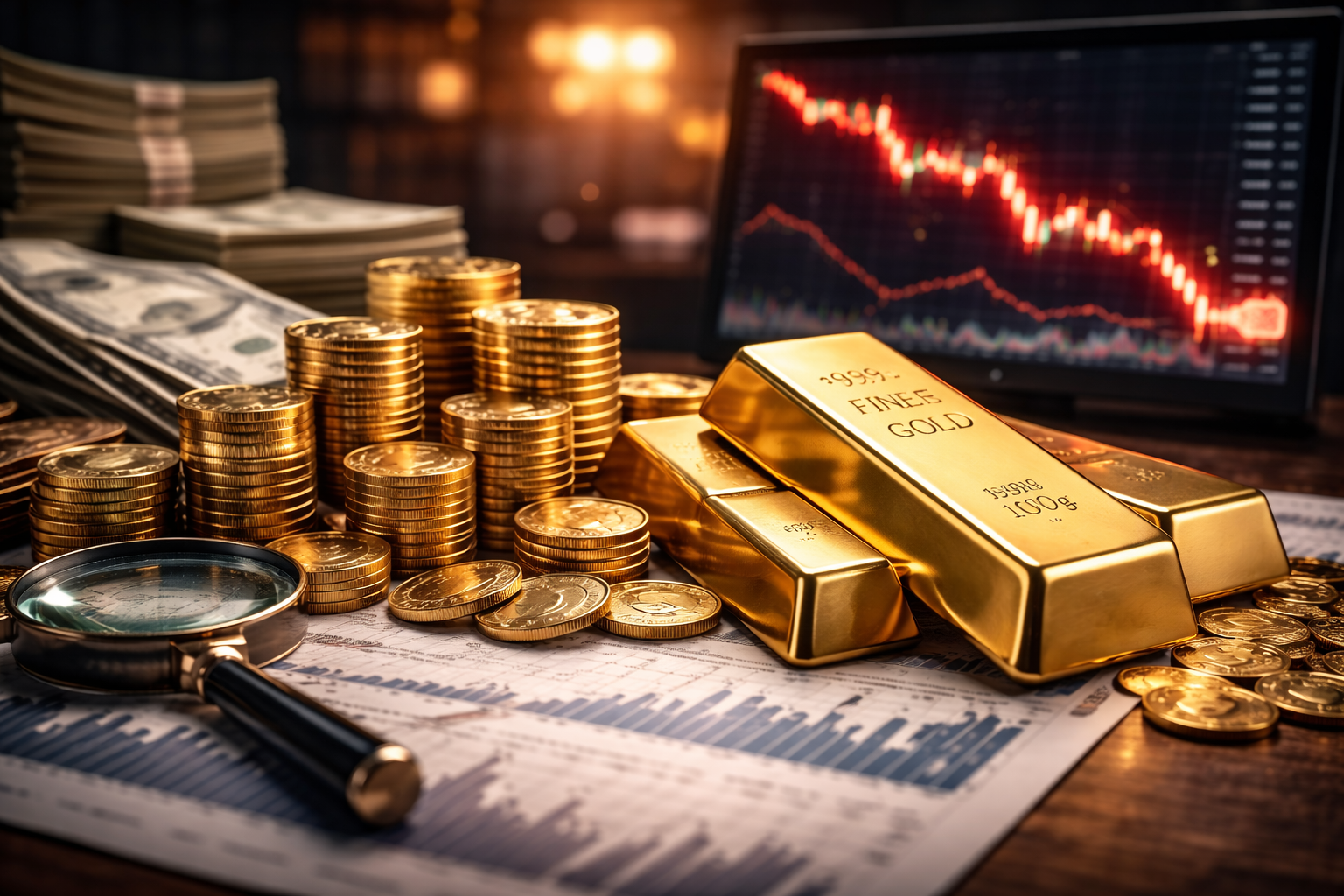
As tariff uncertainty resurfaces and geopolitical rhetoric intensifies, investors are pivoting toward traditional safe-haven assets. Gold prices have climbed amid renewed macro stress, while risk-sensitive assets such as cryptocurrencies and high-growth equities have pulled back. Recent reporting from Reuters and market analysis highlighted in The Times point to a clear shift in sentiment: preservation over speculation.
For metals and mining investors, this rotation is more than a short-term reaction — it may signal the beginning of a broader defensive phase across global markets.
Gold Reasserts Its Defensive Role
Gold has historically acted as a hedge against economic uncertainty, currency volatility, and geopolitical instability. In the current environment, tariff headlines and shifting policy signals are driving renewed interest in bullion and gold-backed assets.
As equity indices wobble and crypto markets face volatility, flows into precious metals ETFs and mining equities have increased. Analysts note that when macro uncertainty rises, gold often benefits from three converging forces:
- Risk aversion in equities
- Potential inflationary implications of tariffs
- Currency market volatility
Tariffs can raise input costs and consumer prices, potentially stoking inflation expectations. Even if central banks maintain policy discipline, investors often seek hard assets during periods of policy unpredictability.
Why This Matters for Investors
The current market reaction highlights several critical themes:
1. Capital Rotation Is Underway
Recent weakness in growth stocks and digital assets suggests investors are de-risking portfolios. Defensive sectors and commodities have shown relative resilience.
2. Macro Stress Supports Precious Metals
Gold’s appeal strengthens when geopolitical tension coincides with economic uncertainty. Unlike corporate equities, bullion carries no earnings risk and no direct exposure to trade policy.
3. Mining Equities May Offer Leverage to Gold Prices
Gold mining companies typically exhibit amplified price movement relative to underlying bullion. When gold rises steadily, well-capitalized producers can see margin expansion.
However, investors must differentiate between high-quality producers and speculative exploration companies. Operational efficiency, cost control, and geopolitical exposure remain key variables in mining equity performance.
The Broader Commodity Impact
While gold garners the most attention, tariff-related uncertainty can ripple across other metals markets. Industrial metals such as copper and aluminum may face demand fluctuations tied to global trade volumes.
If tariffs dampen economic growth expectations, industrial commodity prices could soften. Conversely, supply chain adjustments or localized shortages could create temporary price distortions.
This divergence underscores the importance of selective commodity exposure. Precious metals often thrive during macro stress, while industrial metals depend more heavily on growth trajectories.
Future Trends to Watch
Central Bank Demand
Central bank purchases of gold have remained elevated in recent years. Continued accumulation could provide structural price support.
Real Interest Rates
Gold prices tend to move inversely to real yields. Monitoring inflation-adjusted bond yields can offer insight into future bullion direction.
ETF Inflows
Fund flow data provides early evidence of institutional positioning shifts. Sustained inflows into gold-backed ETFs may indicate longer-term allocation changes.
Trade Policy Clarity
Should tariff tensions ease, capital could rotate back toward growth and cyclical sectors, potentially moderating gold’s rally.
Key Investment Insight
Commodities like gold often benefit during macro stress. In periods of policy uncertainty, precious metals can serve as a portfolio stabilizer.
Investors may consider:
- Allocating a portion of portfolios to gold or gold-backed ETFs as a hedge.
- Evaluating high-quality mining companies with strong balance sheets and low production costs.
- Avoiding overconcentration in speculative mining ventures.
- Maintaining diversification across asset classes to manage volatility.
Importantly, gold is not a growth engine — it is a risk-management tool. Its role is to offset instability elsewhere in a portfolio.
Markets move in cycles, and capital flows follow confidence. As tariff headlines dominate discussions and risk assets fluctuate, gold’s resurgence reminds investors of its enduring defensive appeal.
Whether this marks a short-term rotation or the start of a prolonged defensive cycle will depend on policy clarity and macro stabilization in the weeks ahead.
Stay informed on shifting capital trends and commodity opportunities with MoneyNews.Today — delivering daily investor intelligence across metals, markets, and macro developments.