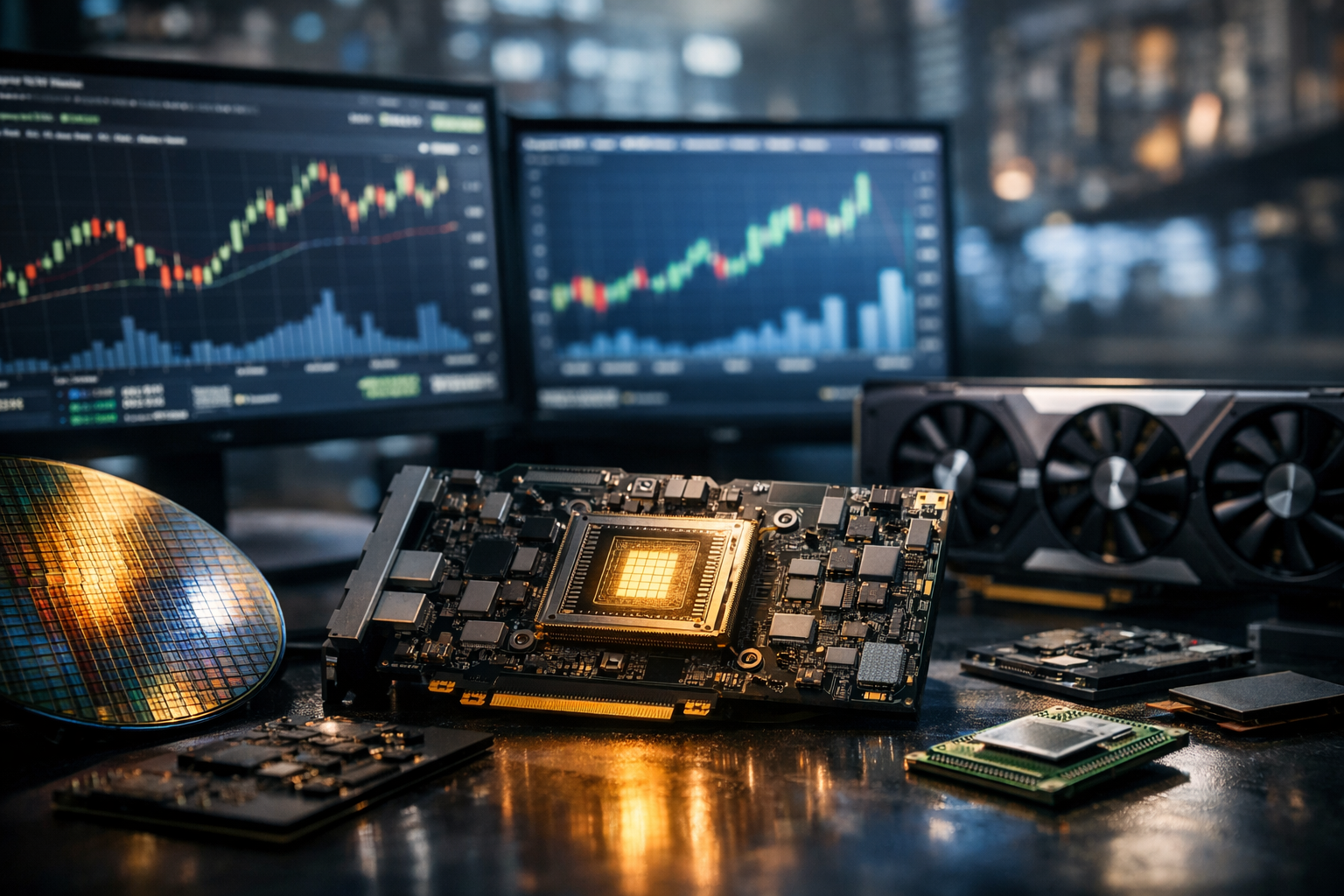
Global equity markets opened the week under pressure as renewed tariff headlines and geopolitical uncertainty triggered a classic “risk-off” rotation. Technology stocks, which have led much of the market’s advance over the past year, were among the hardest hit, pulling major U.S. indices lower. Yet beneath the surface of the selloff, a notable divergence emerged: while broad tech benchmarks weakened, select artificial intelligence and infrastructure-related names continued to attract strong buying interest.
This split performance is reinforcing a critical message for investors in 2026—“technology” is no longer a single trade. The market is increasingly distinguishing between mature, globally exposed tech giants sensitive to macro and policy risk, and AI leaders with structural growth drivers and visible capital spending tailwinds.
Why This Matters for Investors
According to Bloomberg and Reuters market data, the Nasdaq and major technology ETFs declined alongside broader equities as tariff concerns and geopolitical tensions raised fears of slower global growth and higher costs for multinational firms. Historically, large-cap technology companies with complex international supply chains have been particularly vulnerable during periods of trade uncertainty, as seen during previous U.S.-China tariff cycles.
At the same time, analysts at Goldman Sachs and Morgan Stanley note that the AI investment cycle remains one of the strongest secular growth stories in global markets. Hyperscalers and enterprises continue to deploy significant capital toward data centers, specialized chips, and cloud-based AI services, creating a powerful demand backdrop that is largely independent of short-term macro swings.
For investors, the divergence underscores the importance of separating cyclical tech exposure from structural AI leadership.
Broad Tech Under Pressure
Mega-cap technology stocks, which derive a large share of revenue from overseas markets, bore the brunt of the risk-off move. Concerns that renewed tariffs could disrupt supply chains, raise component costs, and pressure margins weighed on sentiment. According to estimates from the Semiconductor Industry Association and the U.S. Bureau of Economic Analysis, technology hardware and electronics remain among the most globally integrated sectors, making them particularly sensitive to policy shifts.
In addition, valuation has become a key consideration. After strong multi-year gains, many large tech names are trading at premiums to historical averages, leaving them more exposed to pullbacks when uncertainty rises. Strategists at JPMorgan have pointed out that during volatility spikes, investors often reduce exposure to high-duration growth assets and rotate toward either defensives or more earnings-visible opportunities.
AI and Infrastructure: A Different Story
In contrast, companies directly tied to the build-out of AI infrastructure showed relative strength. Data center operators, cloud service providers, and chipmakers focused on high-performance computing continued to benefit from robust order books and long-term contracts.
McKinsey estimates that global spending on AI-related infrastructure—including servers, networking, and power systems—could exceed $1 trillion cumulatively by the end of the decade. Microsoft, Amazon, Google, and Meta have all reaffirmed elevated capital expenditure plans, citing surging demand for AI training and inference workloads. These commitments provide revenue visibility for suppliers and partners across the AI ecosystem.
Equity analysts at Bank of America and Bernstein have highlighted that earnings growth in AI infrastructure remains driven by multi-year secular trends rather than short-term economic cycles. This helps explain why select AI-linked stocks were able to outperform even as broader tech indices declined.
Market Structure and Investor Positioning
Another factor supporting AI leadership is institutional positioning. Data from EPFR and CoinShares-style fund flow trackers show that while some investors reduced overall equity exposure during the risk-off move, allocations to thematic AI and digital infrastructure funds remained relatively resilient. This suggests that long-term investors continue to view AI as a core strategic allocation rather than a tactical trade.
Meanwhile, options market activity cited by the Chicago Board Options Exchange indicates higher implied volatility for broad tech indices compared with select AI leaders, reflecting greater uncertainty around macro-sensitive segments of the sector.
Future Trends to Watch
Several developments could shape the next phase of technology market performance:
- Capital Spending Guidance: Updates from major cloud and platform companies on AI-related investment will be key indicators of demand strength.
- Earnings Differentiation: As reporting season progresses, investors will focus on which tech firms can translate AI adoption into revenue and margin expansion.
- Policy Developments: Trade negotiations and tariff decisions remain critical variables for globally exposed hardware and consumer electronics firms.
- Valuation Discipline: Relative performance may increasingly hinge on earnings visibility and free-cash-flow generation rather than narrative alone.
Key Investment Insight
The current market environment highlights that technology stocks no longer move in lockstep. While broad indices may struggle during periods of geopolitical stress and tariff uncertainty, companies at the center of the AI infrastructure and software adoption cycle continue to benefit from powerful secular tailwinds.
For investors, the priority is differentiation: focus on firms with clear AI-driven revenue growth, strong balance sheets, and long-term contracts, while being cautious with richly valued, macro-sensitive tech names lacking near-term earnings catalysts. In a risk-off world, selectivity—not blanket exposure—has become the defining strategy.
For daily analysis of market-moving technology trends and the forces shaping the digital economy, stay connected with MoneyNews.Today, your trusted source for timely and actionable investor insights.