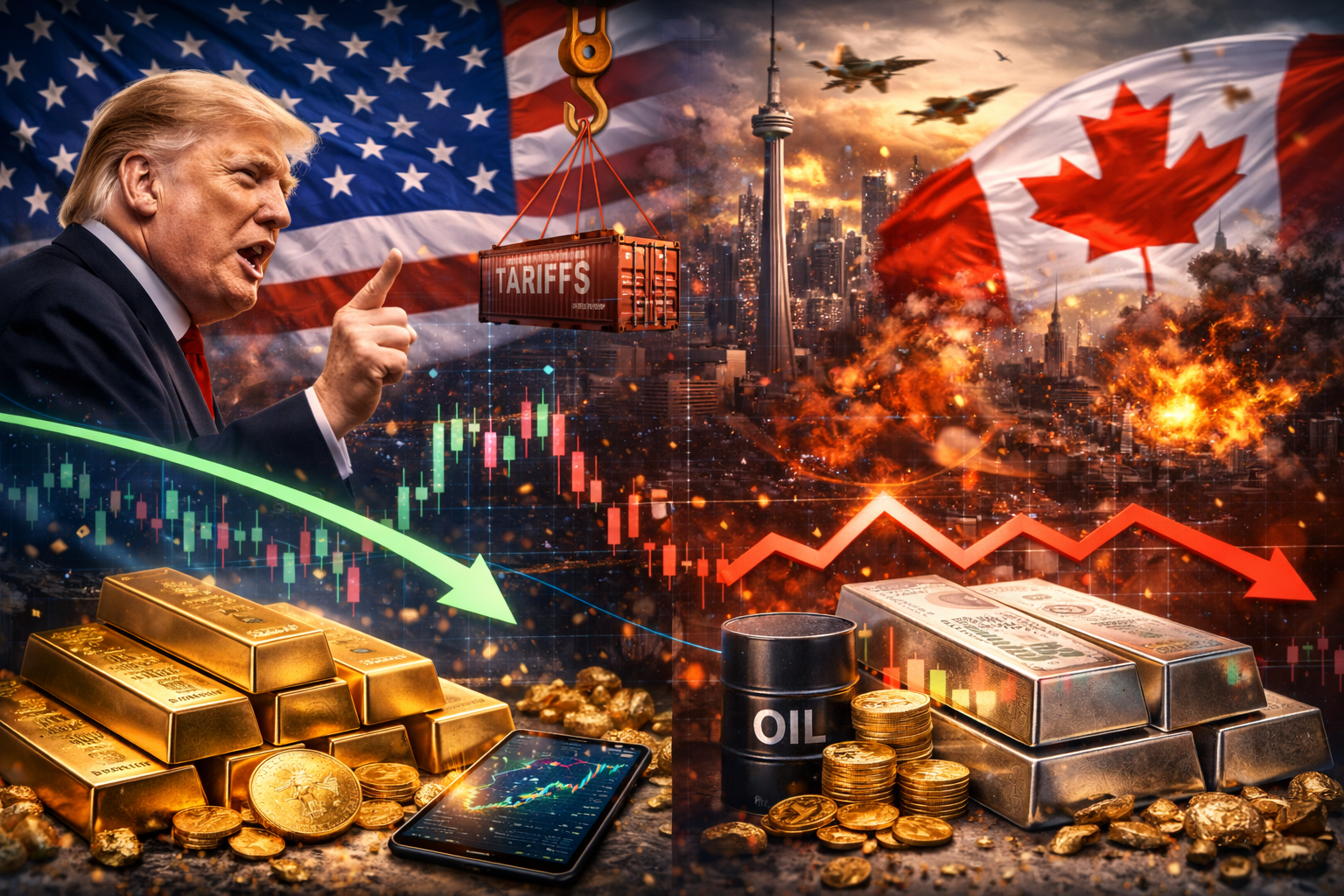
Global markets are once again being steered as much by politics as by fundamentals. Renewed trade rhetoric from U.S. leadership and persistent geopolitical uncertainty are injecting volatility into equities, currencies, and commodities, while in Canada, a widening divide in investor confidence is signaling uneven expectations for growth and financial stability in 2026. According to Reuters and Yahoo Finance (via Reuters), these political and macro forces are shaping capital flows and risk appetite across North America, making policy headlines as market-moving as earnings reports.
For investors, the message is clear: political risk is no longer a background factor—it is a primary driver of sector performance and portfolio positioning.
Why This Matters for Investors
Trade policy and geopolitical signals influence everything from corporate supply chains and input costs to currency valuations and central bank strategy. Reuters reports that renewed tariff threats and strategic posturing by the U.S. administration have revived concerns over global trade fragmentation, particularly in manufacturing, technology hardware, and commodities. Markets have responded with bouts of risk-off sentiment, benefiting safe-haven assets while pressuring export-oriented equities.
In Canada, the macro picture is becoming more nuanced. A recent RBC investor confidence poll, cited by Yahoo Finance, shows a sharp split in outlook for 2026. While some investors remain optimistic about economic resilience supported by commodities and stable banking fundamentals, others are increasingly cautious, citing global political uncertainty, housing market risks, and the potential spillover effects of U.S. trade policy.
This divergence in sentiment underscores how political narratives can translate into uneven sector performance, even within the same market.
U.S. Trade Policy and Global Market Ripples
Trade rhetoric from Washington has historically had an outsized impact on global risk assets. Tariff threats and negotiations can quickly alter expectations for corporate earnings, particularly in sectors with complex cross-border supply chains such as:
- Technology hardware and semiconductors, where components often cross borders multiple times before final assembly.
- Automobiles and industrials, which are sensitive to tariffs on steel, aluminum, and finished goods.
- Agriculture and energy, where export access and pricing are closely tied to trade agreements and geopolitical alliances.
Analysts at Bloomberg have noted that even the prospect of renewed trade restrictions can prompt multinational firms to delay capital spending and adjust sourcing strategies, weighing on near-term growth outlooks. Currency markets also react swiftly, with safe-haven flows into the U.S. dollar and Japanese yen during periods of heightened tension, while emerging-market currencies and trade-sensitive economies face pressure.
Canada: A Market Caught Between Optimism and Caution
Canada’s economy, with its heavy exposure to commodities and financial services, is particularly sensitive to global political and trade developments. The RBC poll highlighted by Reuters-linked coverage reveals a split in investor expectations:
- Optimists point to strong demand for energy, metals, and critical minerals, which could support earnings for resource producers and government revenues.
- Pessimists focus on external risks, including potential U.S. trade measures, slowing global growth, and the impact of high household debt on domestic consumption.
This divide is already visible in market behavior. Energy and mining stocks have benefited from geopolitical risk premiums, while interest-rate-sensitive sectors such as real estate and consumer discretionary have shown more volatility.
Future Trends to Watch
1. Trade Negotiations and Tariff Signals:
Any concrete policy moves or բանակց during the coming months could quickly reprice sectors exposed to global supply chains. Investors should track official statements and policy drafts, not just headlines.
2. Geopolitical Hotspots and Safe-Haven Flows:
Ongoing tensions tend to favor assets such as gold, the U.S. dollar, and high-quality government bonds, while increasing volatility in equities and emerging markets.
3. Shifts in Canadian Investor Sentiment:
If confidence continues to diverge, capital may rotate toward defensive sectors—utilities, pipelines, and dividend-paying financials—while more cyclical industries could face valuation pressure.
Key Investment Insight
Political and geopolitical dynamics are now a core component of market risk assessment. Trade policy shifts can quickly alter earnings outlooks, currency trends, and sector leadership, while investor sentiment—such as the growing split seen in Canada—can drive rotation between cyclical and defensive assets. A diversified approach that includes exposure to commodities, selective exporters, and traditional safe havens may help mitigate politically driven volatility.
In an era where policy headlines can move markets as powerfully as economic data, staying informed is a competitive advantage. For daily, in-depth coverage of global politics, macro trends, and their impact on financial markets, follow MoneyNews.Today—your trusted source for timely, investor-focused insight.