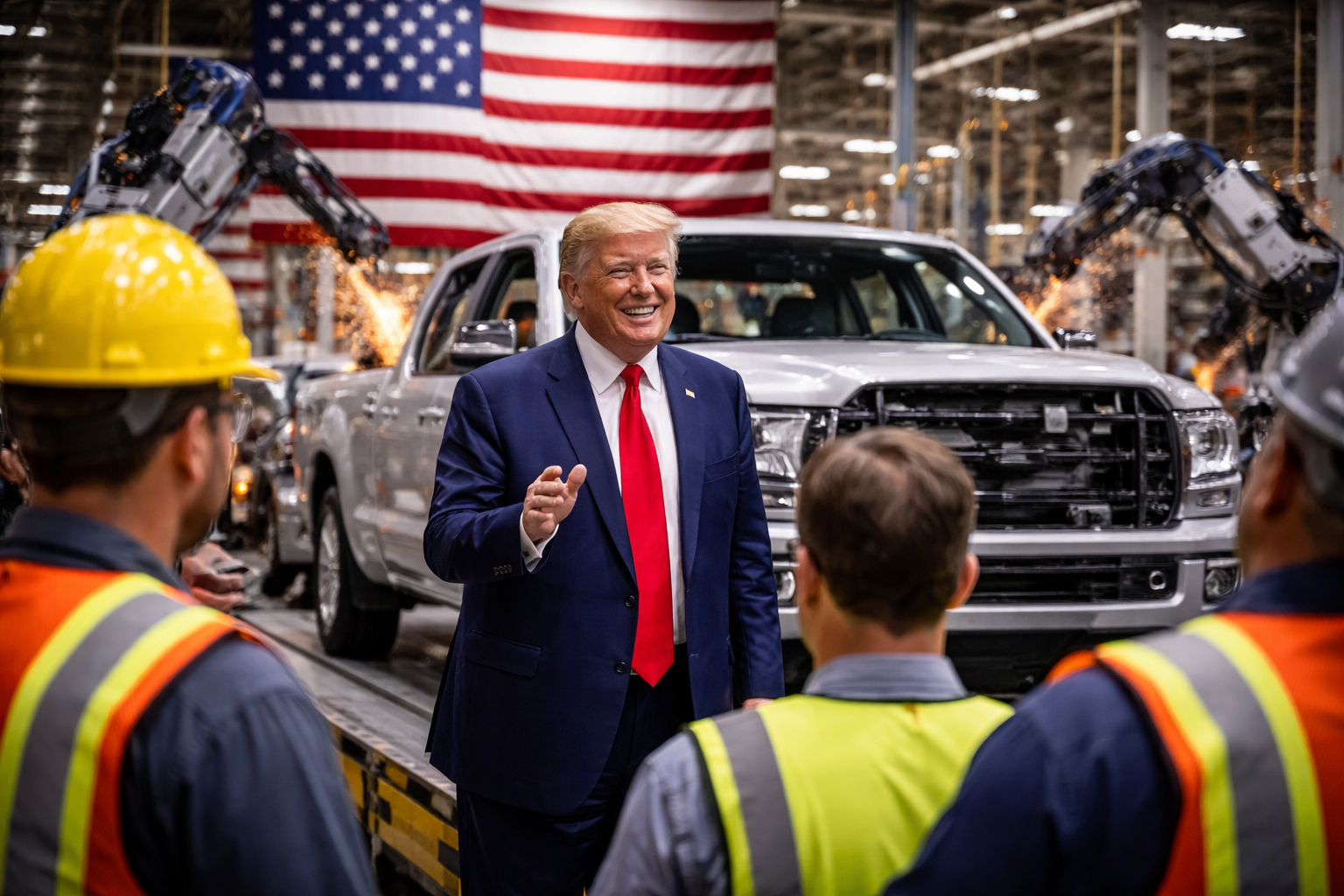
U.S. manufacturing has returned to the center of the investment conversation after President Donald Trump’s high-profile visit to Detroit, where he renewed calls to revive domestic production and strengthen America’s industrial base. The visit comes at a critical moment for markets: factory employment has softened, auto production is under pressure, and investors are weighing whether policy-driven reshoring efforts can offset cyclical headwinds.
According to Reuters, Trump’s Detroit appearance was aimed at reinforcing his administration’s focus on manufacturing competitiveness, particularly in the automotive sector — a cornerstone of U.S. industrial output and a key barometer for broader economic health.
Manufacturing Policy Meets Market Reality
The political push to bring manufacturing jobs back to the U.S. has been a recurring theme, but recent data suggests the sector is facing near-term challenges. Reuters reports that U.S. factory employment has declined in recent months, with auto manufacturing among the hardest hit. Higher borrowing costs, uneven consumer demand, and ongoing supply-chain adjustments have all contributed to the slowdown.
For investors, this disconnect between policy ambition and current economic data is critical. While long-term industrial investment incentives can support capital spending, employment trends often lag and reflect short-term demand conditions. Markets are now attempting to price both narratives simultaneously.
Auto Giants in Focus: Ford and GM
Detroit’s “Big Three” automakers remain at the center of this debate. Shares of Ford Motor Co. and General Motors have shown mixed performance as investors assess the cost of electrification, labor agreements, and the pace of U.S. vehicle demand.
On one hand, government-backed incentives for domestic manufacturing and electric vehicle production could provide long-term support. On the other, margins remain under pressure as automakers balance investment in new technologies with legacy production challenges.
Analysts cited by Reuters note that while reshoring initiatives may strengthen supply-chain resilience, they do not immediately translate into higher profitability. For equity investors, this means auto stocks may remain volatile, reacting to both policy headlines and quarterly earnings performance.
Why This Matters for Investors
Manufacturing is deeply interconnected with multiple segments of the equity market — from industrial machinery and raw materials to logistics and technology. A sustained rebound in domestic production could benefit a wide range of companies, including equipment manufacturers, industrial automation providers, and specialty materials firms.
However, weak employment data serves as a cautionary signal. Historically, manufacturing job declines often coincide with broader economic slowdowns, which can weigh on cyclical equities. According to historical data from the U.S. Bureau of Labor Statistics, factory employment trends tend to lag shifts in demand, making them a useful — though imperfect — indicator of economic momentum.
For investors, the key question is whether policy-driven investment can stabilize the sector before cyclical pressures deepen.
Reshoring and Supply Chains: A Long-Term Theme
Despite near-term softness, the strategic case for reshoring remains intact. Geopolitical tensions, supply-chain disruptions, and national security concerns have all reinforced the importance of domestic manufacturing capacity.
Consulting firms such as McKinsey have highlighted that companies are increasingly prioritizing resilience over pure cost efficiency, a shift that could support U.S. industrial investment over the next decade. Federal incentives tied to infrastructure, clean energy, and advanced manufacturing further strengthen this outlook.
From an investment perspective, the beneficiaries may extend beyond automakers. Industrial automation firms, robotics providers, and advanced materials producers stand to gain as manufacturers modernize facilities to remain competitive.
Future Trends to Watch
Several developments will shape investor sentiment toward U.S. manufacturing stocks in the months ahead. Labor market data will remain critical, particularly any signs that factory employment stabilizes or rebounds. Capital expenditure trends among major manufacturers will also offer clues about confidence levels.
Additionally, investors should watch how automakers execute on electric vehicle strategies amid shifting consumer demand and competitive pressure from global rivals. Policy announcements alone are unlikely to move markets without evidence of improved fundamentals.
Key Investment Insight
The renewed political focus on U.S. manufacturing highlights a powerful long-term theme, but near-term risks remain elevated. Investors may find opportunities in industrial and auto supply-chain equities positioned to benefit from reshoring and infrastructure spending, while remaining cautious about cyclical exposure tied to weakening employment trends.
Stay ahead of market-moving developments with MoneyNews.Today, your trusted source for daily investor insights on U.S. equities, policy shifts, and economic trends shaping the stock market.