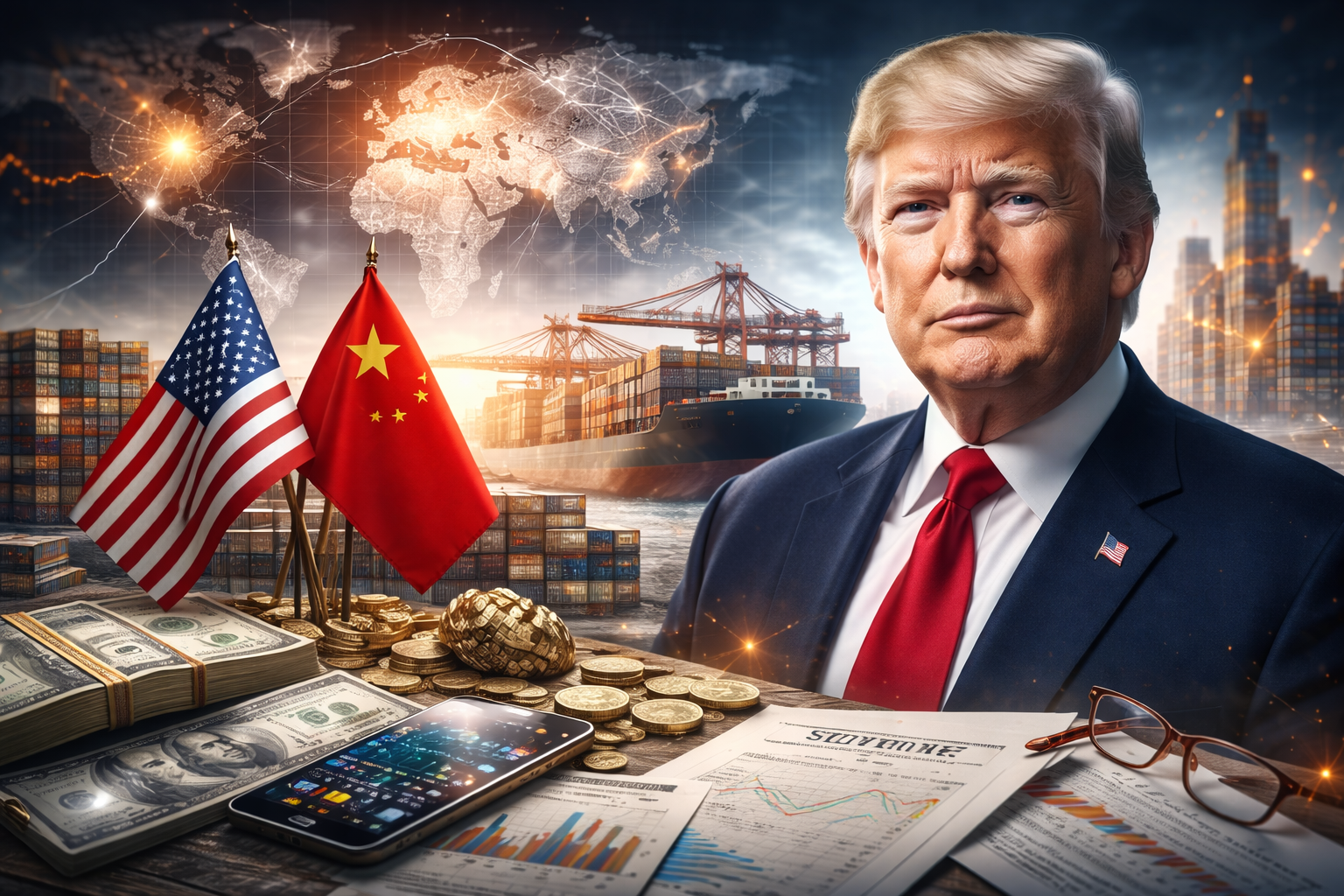
Global markets are once again recalibrating to the political dimension of risk. President Donald Trump’s second term has reintroduced a familiar but potent variable into investor decision-making: aggressive trade policy, shifting geopolitical alliances, and an unpredictable policy cadence that continues to ripple through equities, currencies, and commodities.
As highlighted in recent geopolitical analysis from Zawya, tariff cycles, strategic trade negotiations, and assertive foreign-policy positioning are not just political headlines — they are material inputs into global asset pricing. For investors navigating an already complex macro environment, policy risk is quickly becoming one of the most influential market drivers.
Why Trump’s Policy Agenda Matters to Markets
Markets tend to prefer stability and predictability, yet Trump’s trade-first agenda thrives on disruption. From renewed tariff threats to the reshaping of bilateral trade relationships, policy decisions are directly affecting global supply chains, corporate margins, and currency flows.
During Trump’s first term, trade tensions were closely correlated with spikes in market volatility. In his second term, investors are drawing on that historical playbook — pricing in higher risk premiums, particularly for trade-sensitive sectors such as manufacturing, technology hardware, autos, and commodities.
According to Zawya’s analysis, global investors are increasingly factoring geopolitical outcomes into portfolio construction, recognizing that policy shocks can override traditional fundamentals in the short to medium term.
Trade Policy and Supply Chain Realignment
One of the most lasting impacts of Trump-era policy has been the acceleration of supply chain restructuring. Tariffs and trade restrictions have pushed companies to diversify manufacturing footprints, relocate production, or increase domestic sourcing — often at higher cost.
This realignment is creating both risks and opportunities. Companies exposed to cross-border trade friction may face margin pressure, while those positioned to benefit from onshoring, nearshoring, or strategic infrastructure investment may see tailwinds.
Bloomberg has previously noted that supply chain diversification is no longer a temporary adjustment but a structural shift. For investors, this means sector exposure matters more than ever, particularly in industries reliant on global logistics and raw material flows.
Why This Matters for Investors
Political risk is now deeply intertwined with macro risk. Trump’s policy direction is influencing not only trade but also inflation expectations, currency stability, and capital flows. Tariffs can act as de facto taxes, raising input costs and complicating central banks’ efforts to manage inflation.
Currency markets are especially sensitive. Shifts in trade policy can drive volatility in foreign exchange as investors reassess growth prospects and capital allocation across regions. Emerging markets, in particular, tend to be more vulnerable to abrupt changes in U.S. trade stance.
For equity investors, the implications are equally significant. Policy uncertainty can compress valuation multiples, increase earnings volatility, and amplify sector dispersion — rewarding selectivity while punishing broad, indiscriminate exposure.
Commodities and Geopolitics: A Volatile Mix
Trump’s trade and foreign policy posture also has direct implications for commodity markets. Tariffs, sanctions, and geopolitical tensions can disrupt supply flows, driving price volatility in energy, metals, and agricultural products.
Analysts cited across global financial media have noted that commodities often serve as both beneficiaries and casualties of geopolitical risk. For example, metals tied to infrastructure and defense may see demand support, while agricultural exports can face sudden headwinds from trade restrictions.
This environment reinforces the need for investors to understand not just demand fundamentals, but also the policy backdrop shaping supply and pricing dynamics.
Future Trends to Watch
Several developments will determine how Trump’s policy agenda continues to influence markets:
- Tariff announcements and reversals: Even signaling effects can move markets rapidly.
- Trade negotiations: Outcomes with major partners can reshape sector outlooks overnight.
- Geopolitical escalation or détente: Shifts in global alliances may impact energy and currency markets.
- Corporate responses: Capital spending and supply chain decisions offer insight into long-term impacts.
Monitoring these signals can help investors anticipate volatility rather than react to it.
Key Investment Insight
Trump’s trade and policy moves remain powerful catalysts for market volatility. Investors should treat policy developments as active risk factors — not background noise — and align portfolios accordingly. Diversification across geographies, currencies, and asset classes, combined with selective exposure to sectors benefiting from supply chain realignment, can help manage downside risk while capturing opportunity.
In an environment where politics and markets are increasingly intertwined, disciplined risk management is as important as growth strategy.
Stay ahead of global macro shifts with MoneyNews.Today, your trusted source for daily investor insights, geopolitical analysis, and market intelligence shaping today’s financial landscape.