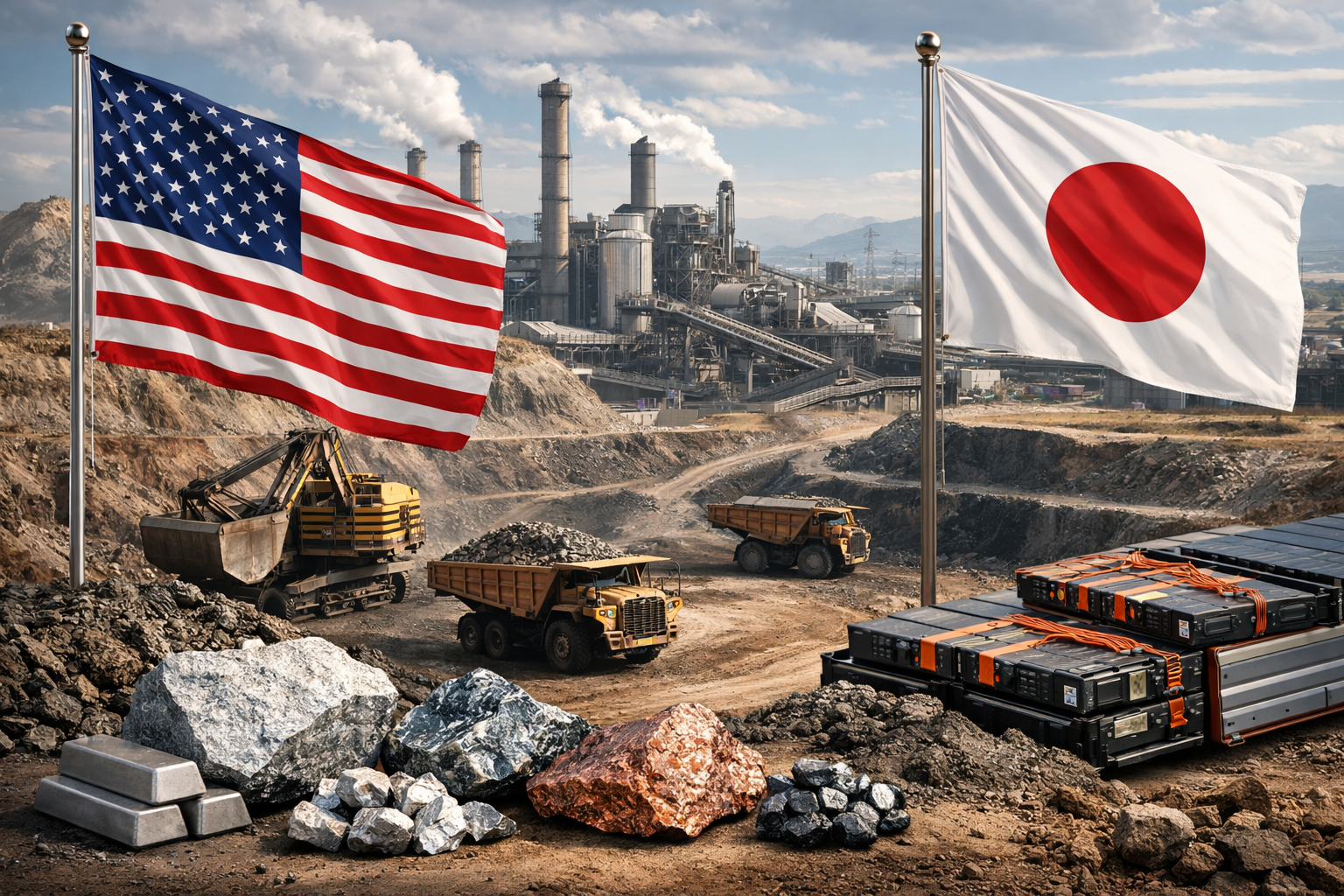
The global race for critical minerals is intensifying—and investors are taking notice. In a move that underscores the growing strategic importance of resource security, the United States and Japan are advancing a major agreement to jointly develop and secure supplies of key minerals, including lithium, copper, and rare earth elements.
The initiative, reported by Reuters on March 17, 2026, highlights a powerful shift in global economic strategy: critical minerals are no longer just commodities—they are geopolitical assets. As demand surges from electric vehicles (EVs), semiconductors, and defense technologies, governments are stepping in to reshape supply chains that have long been dominated by China.
For investors, this is more than a policy headline—it’s a structural market shift with long-term implications across mining, energy, and advanced manufacturing.
The Strategic Push for Resource Independence
At the core of the U.S.-Japan agreement is a shared goal: reducing reliance on China for critical minerals that underpin modern technologies.
China currently dominates large portions of the global supply chain, particularly in rare earth processing and refining. This concentration has raised concerns among Western economies about supply disruptions, pricing power, and geopolitical leverage.
The new agreement aims to address these risks by:
- Expanding mining projects in North America
- Strengthening processing and refining capacity
- Encouraging joint investment in resource development
This effort aligns with broader U.S. industrial policy initiatives focused on reshoring supply chains and enhancing economic resilience.
Why Critical Minerals Matter More Than Ever
Critical minerals are essential to some of the fastest-growing sectors in the global economy.
Electric Vehicles and Battery Storage
Lithium and nickel are key components of EV batteries, while copper is vital for electrical systems. As EV adoption accelerates, demand for these materials is expected to rise sharply.
Semiconductors and Electronics
Rare earth elements are used in a wide range of electronic components, from smartphones to advanced computing systems.
Defense and Aerospace
Critical minerals are also essential for military technologies, including missile systems, radar, and advanced communication equipment.
This broad applicability makes them strategically indispensable—and increasingly valuable.
A New Phase of Geopolitical Competition
The U.S.-Japan agreement reflects a broader trend: the intersection of geopolitics and resource economics.
Governments are no longer passive participants in commodity markets. Instead, they are actively shaping supply chains through:
- Trade agreements
- Investment incentives
- Strategic partnerships
This shift is transforming the metals and mining sector into a key battleground for economic and geopolitical influence.
According to Reuters, the agreement is expected to include coordinated investment strategies and policy alignment, further strengthening ties between the two nations while countering China’s dominance.
Implications for North American Mining
One of the most immediate impacts of this agreement will be felt in North America.
The United States and Canada are home to significant untapped reserves of critical minerals. However, developing these resources has historically faced challenges, including:
- Regulatory hurdles
- Environmental concerns
- High capital requirements
The new partnership could accelerate project development by providing:
- Increased funding
- Streamlined permitting processes
- Greater policy support
This creates a favorable environment for mining companies operating in the region, particularly those focused on lithium, copper, and rare earths.
Why This Matters for Investors
The growing emphasis on critical minerals presents a range of opportunities—and risks—for investors.
1. Structural Demand Growth
Unlike cyclical commodities, demand for critical minerals is being driven by long-term trends such as electrification, digitalization, and decarbonization.
2. Policy-Driven Markets
Government policies are playing an increasingly important role in shaping supply and demand dynamics, creating both tailwinds and uncertainties.
3. Supply Constraints
Bringing new mining projects online takes time, often years or even decades. This lag between supply and demand can lead to price volatility and potential shortages.
Winners Across the Value Chain
While mining companies are the most obvious beneficiaries, the impact of this trend extends across the entire value chain.
Upstream: Mining and Exploration
Companies involved in extracting raw materials stand to benefit from increased demand and higher prices.
Midstream: Processing and Refining
Processing capacity is a critical bottleneck, particularly for rare earths. Investments in this area could generate significant returns.
Downstream: Manufacturing and Technology
Industries that rely on critical minerals—such as EV manufacturers and semiconductor companies—may benefit from more secure and diversified supply chains.
Risks to Consider
Despite the strong investment case, there are several risks investors should keep in mind:
Execution Risk
Mining projects are complex and capital-intensive, with significant potential for delays and cost overruns.
Regulatory and Environmental Challenges
Stricter environmental standards and permitting requirements can impact project timelines and profitability.
Geopolitical Uncertainty
While the U.S.-Japan agreement aims to reduce risk, global tensions could still disrupt supply chains.
Future Trends to Watch
As the critical minerals landscape evolves, several key trends are likely to shape its future:
Increased Global Competition
Other countries may pursue similar agreements, intensifying competition for resources.
Technological Innovation
Advances in recycling and alternative materials could influence demand dynamics.
Strategic Stockpiling
Governments may increase stockpiling of critical minerals to mitigate supply risks.
ESG Considerations
Sustainability and ethical sourcing will play an increasingly important role in investment decisions.
Key Investment Insight
The U.S.-Japan agreement marks a turning point in the critical minerals market, highlighting the growing importance of resource security in a rapidly changing world.
Investors should consider focusing on:
- Mining companies with strong asset bases in politically stable regions
- Firms involved in processing and refining, where capacity is limited
- Supply chain players that enable the production and distribution of critical materials
At the same time, diversification across commodities and regions can help manage risk in this evolving landscape.
A Defining Theme for the Next Decade
The push to secure critical minerals is more than a short-term trend—it is a defining theme for the next decade of global economic development. As governments and corporations compete to control the building blocks of modern technology, the metals and mining sector is moving to the center of the investment landscape.
For investors, understanding these dynamics will be essential to identifying opportunities and managing risks in the years ahead.
Stay informed on the latest developments in critical minerals, global supply chains, and investment trends with MoneyNews.Today—your trusted source for daily investor insights.