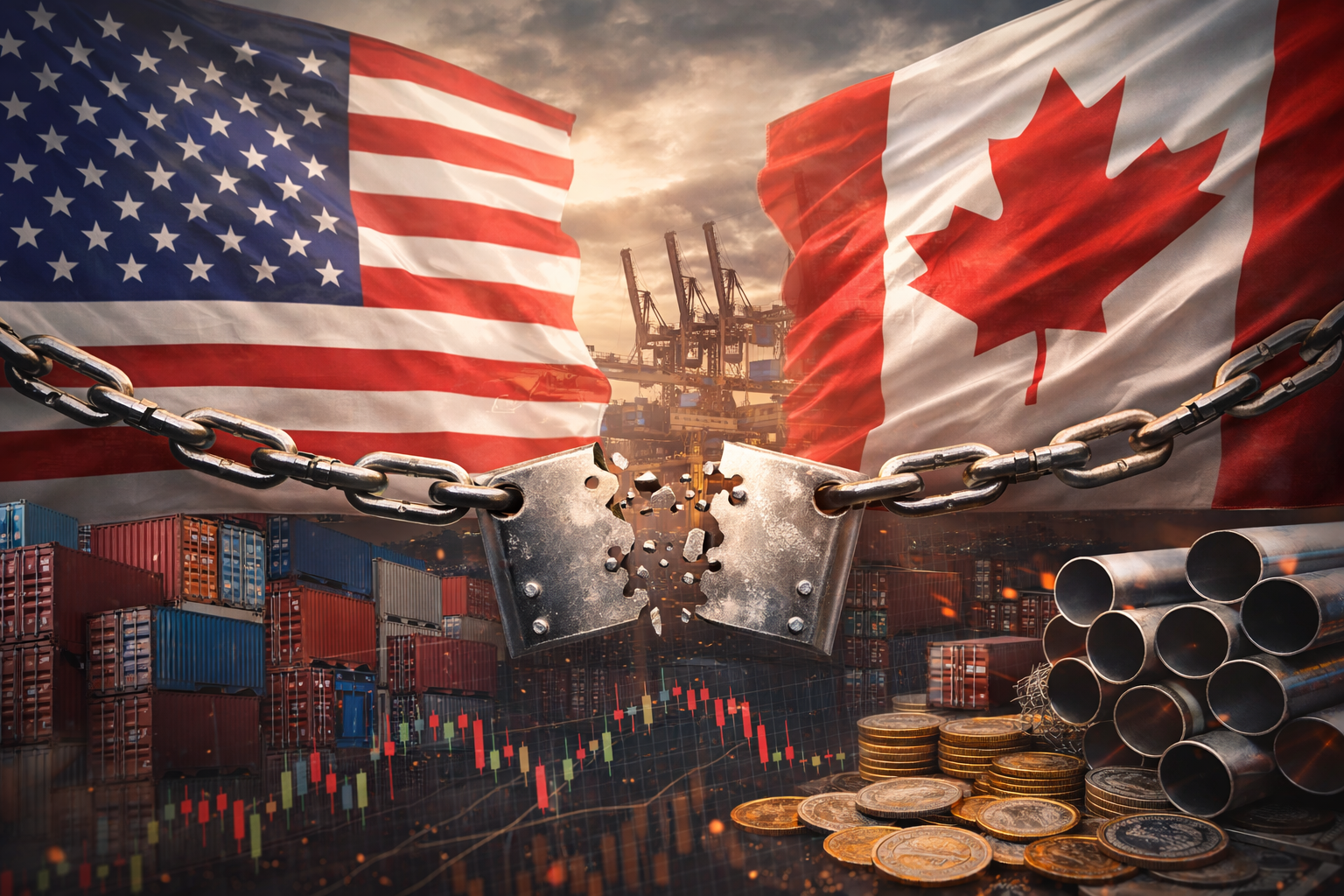
Investors may be watching inflation, interest rates, and earnings season—but North America’s trade tensions are quietly becoming one of the most underestimated market risks of 2026.
The ongoing U.S.–Canada–Mexico trade conflict, sparked by broad tariff actions introduced in 2025, continues to ripple through supply chains, corporate planning, and investor sentiment. While markets have largely absorbed the headlines over time, the underlying economic impact remains very real: higher costs, shifting sourcing strategies, and increased uncertainty for industries that depend on cross-border trade.
According to a widely cited Wikipedia overview of the 2025–2026 United States trade war with Canada and Mexico, the dispute has remained unresolved in key areas, creating a persistent political overhang that could influence investment decisions throughout the year.
For investors, the issue is no longer whether tariffs exist—it’s how long they last, how aggressively they expand, and which sectors are most exposed.
Trade Conflict: Why Markets Still Care
Trade wars often begin as political messaging, but they frequently end up reshaping economic reality.
The U.S. and Canada share one of the world’s most interconnected trading relationships. Goods, raw materials, and industrial components move across the border daily. When tariffs disrupt that flow, the effects are not limited to one sector—they spread across manufacturing, transportation, consumer pricing, and commodity markets.
Even small trade restrictions can create outsized consequences because modern supply chains are optimized for efficiency, not disruption. A single tariff on industrial parts can raise production costs across an entire product line.
That is why the trade conflict remains a major “X-factor”: it is difficult to price in, politically sensitive, and capable of changing rapidly.
Why This Matters for Investors
The most important takeaway is that trade risk is not evenly distributed.
Some companies can absorb tariffs through pricing power or flexible sourcing. Others operate on tight margins and are vulnerable to even modest cost increases. As a result, investors must think beyond broad market headlines and focus on sector-level exposure.
Key areas impacted include:
1. Automotive and Parts Supply Chains
The North American auto industry is deeply integrated, with parts often crossing borders multiple times before a final vehicle is assembled. Tariffs disrupt that model by increasing costs at every stage.
Even if tariffs target only certain materials, automakers may face margin compression, production delays, and reduced competitiveness.
2. Manufacturing and Industrial Goods
Industrial firms that rely on cross-border raw materials—steel, aluminum, machinery parts—can face cost volatility that impacts earnings guidance and long-term capital planning.
These industries tend to be highly sensitive to both tariff changes and political negotiations.
3. Commodities and Energy Flows
Trade policy also affects commodity pricing. Canada is a major exporter of natural resources, and disruptions can impact energy-related companies, mining firms, and commodity-linked currencies.
For investors, this means tariff policy can influence both equity markets and FX exposure.
Business Sentiment and Corporate Decision-Making Are Shifting
One of the most important effects of trade conflicts is not always visible in stock prices immediately—it shows up in corporate behavior.
When trade policy becomes unstable, companies respond by:
- delaying capital investment
- shifting production to alternative regions
- increasing inventory buffers (raising costs)
- renegotiating supplier contracts
- cutting earnings forecasts due to uncertainty
This shift can slow economic momentum even if consumer demand remains stable. Investors should pay attention to corporate commentary during earnings calls, especially when executives cite “trade uncertainty” as a factor in forward guidance.
Over time, these decisions can reshape competitiveness across industries.
Future Trends to Watch
While markets have grown somewhat desensitized to tariff headlines, several developments could quickly bring trade risk back into focus.
1. Escalation Risk
The biggest market threat is not existing tariffs—it is the possibility of expanded restrictions. Any escalation could immediately pressure equities tied to manufacturing and transportation.
2. Election and Policy Shifts
Trade policy is often used as a political tool. Investors should monitor shifts in rhetoric from U.S. and Canadian leadership, as policy announcements can impact markets rapidly.
3. Retaliation Measures
Trade wars rarely stay one-sided. Retaliatory tariffs can hit unexpected sectors, creating volatility in companies that investors may not view as “trade exposed.”
4. Inflation Spillover
Tariffs effectively function like a tax on imported goods. If tariff pressure continues, it can contribute to higher consumer prices—an important risk if inflation is already a key macro concern.
That inflation angle is especially important for investors because it can influence Federal Reserve policy expectations, bond yields, and market valuation multiples.
Key Investment Insight
Political risk pricing may affect sectors tied to manufacturing, automotive supply chains, and commodities; hedges and geographical diversification could help mitigate exposure.
For investors, the most actionable approach is risk positioning rather than prediction.
Strategies to consider include:
- reducing overconcentration in tariff-sensitive industrial names
- favoring companies with diversified sourcing and strong pricing power
- increasing geographic diversification through global ETFs
- monitoring commodity exposure, particularly metals and energy
- watching for margin warnings in earnings reports from cross-border manufacturers
Trade conflicts tend to create winners and losers. Companies that can localize production or shift supply chains efficiently may outperform, while firms with rigid cross-border dependence may face sustained margin pressure.
Trade headlines may not dominate the front page every day, but the market impact can build quietly in the background—until it suddenly becomes a major catalyst. Stay with MoneyNews.Today for daily investor coverage of politics-driven market risks, policy shifts, and the global trends shaping capital flows.