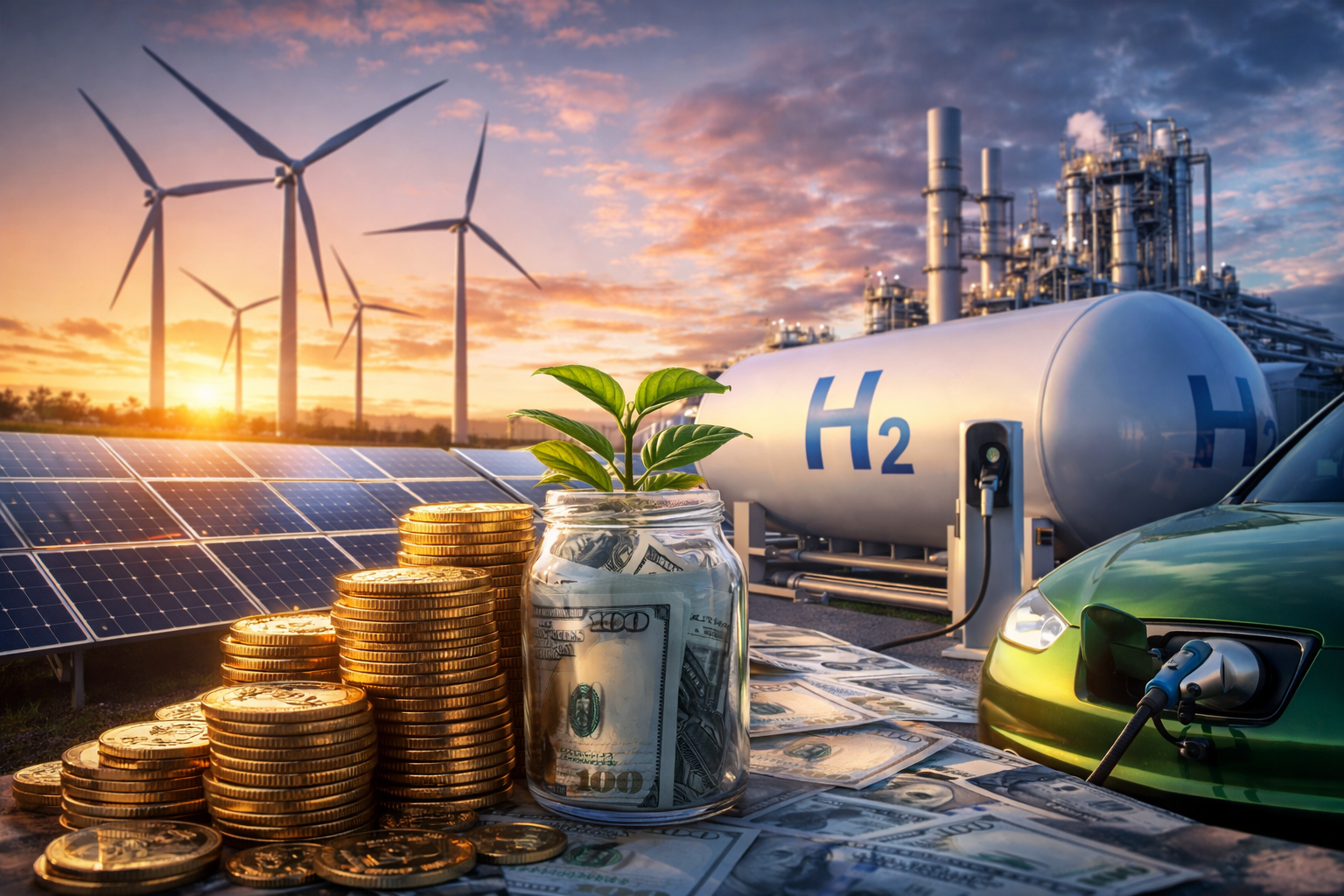
The clean energy transition is entering a decisive new phase—and investors are paying close attention. After a period of cautious capital deployment amid macro uncertainty, funding is flowing back into climate-focused startups at an accelerating pace. From battery storage to hydrogen and carbon capture, emerging technologies are attracting renewed venture and private equity interest, driven largely by supportive government policy and long-term decarbonization goals.
According to recent data from Reuters and PitchBook (March 2026), U.S. clean energy startups are seeing a notable uptick in funding activity, with cross-border partnerships—particularly involving Canadian firms—adding momentum. For investors, this signals more than a cyclical rebound; it points to a structural shift in how capital is being allocated across the energy landscape.
Policy Tailwinds Are Driving Capital Back Into Clean Tech
At the heart of this funding resurgence is policy. U.S. climate initiatives—ranging from tax credits to direct subsidies—are reshaping the economics of clean energy innovation. These incentives are lowering the cost of capital, reducing risk for investors, and accelerating commercialization timelines for emerging technologies.
Government-backed programs are particularly impactful in sectors that historically struggled with high upfront costs and long payback periods, such as hydrogen production and carbon capture. By de-risking early-stage investments, policymakers are effectively crowding in private capital.
Reuters reports that venture capital and private equity firms are increasingly targeting startups aligned with these incentives, viewing them as both economically viable and strategically important. This alignment between public policy and private investment is creating a powerful growth engine for the sector.
Canada is also playing a complementary role. With its own clean energy initiatives and resource base, Canadian firms are attracting U.S. capital through joint ventures and cross-border funding agreements. This collaboration is strengthening North America’s position in the global energy transition.
Where the Money Is Flowing
The current funding wave is not uniform—it is highly concentrated in specific high-growth segments within clean energy:
1. Battery Storage
Energy storage remains one of the most critical enablers of renewable energy adoption. As solar and wind generation increase, the need for efficient storage solutions is becoming more urgent.
Startups focused on next-generation battery technologies—such as solid-state batteries and grid-scale storage systems—are attracting significant investment. These innovations are essential for stabilizing power grids and supporting electrification trends.
2. Hydrogen Economy
Hydrogen is gaining traction as a clean fuel alternative, particularly in industries that are difficult to electrify, such as heavy manufacturing and transportation.
Investment is flowing into companies developing green hydrogen production methods, as well as infrastructure for storage and distribution. Policy incentives are playing a key role in making hydrogen projects financially viable.
3. Carbon Capture and Removal
Carbon capture technologies are emerging as a critical component of global decarbonization strategies. Startups in this space are working on solutions to capture emissions from industrial processes and remove carbon dioxide from the atmosphere.
While still early-stage, this sector is attracting growing investor interest due to its potential to address emissions that cannot be eliminated through renewable energy alone.
Why This Matters for Investors
The resurgence of funding in clean energy startups carries important implications for both public and private market investors.
1. Early-Stage Innovation Is Accelerating
The influx of capital is enabling startups to scale faster, bringing new technologies closer to commercialization. This increases the likelihood of successful exits—whether through IPOs, acquisitions, or strategic partnerships.
For public market investors, this creates a pipeline of future investment opportunities as these companies mature.
2. Supply Chain Opportunities Are Expanding
The clean energy transition is not limited to startups—it extends across an entire ecosystem of suppliers, manufacturers, and infrastructure providers.
Publicly traded companies involved in battery materials, renewable energy equipment, and grid infrastructure stand to benefit from increased demand. Investors should look beyond headline technologies and consider the broader supply chain.
3. Volatility Remains a Key Risk
Despite strong growth potential, clean tech investments remain inherently volatile. Many startups operate in capital-intensive industries with long development timelines, making them sensitive to interest rates and economic conditions.
Additionally, policy support—while currently strong—can shift over time, introducing regulatory risk.
The Role of Cross-Border Collaboration
One of the most notable trends in the current funding environment is the growing collaboration between U.S. and Canadian firms. Canada’s abundant natural resources and supportive policy framework make it an attractive partner in the clean energy transition.
Joint ventures and funding partnerships are enabling companies to scale more efficiently, share risk, and access new markets. This cross-border dynamic is particularly important in sectors like critical minerals, where supply chain security is becoming a strategic priority.
For investors, this highlights the importance of taking a North American—or even global—perspective when evaluating clean energy opportunities.
Future Trends to Watch
1. Commercialization of Emerging Technologies
As funding accelerates, the focus will increasingly shift from innovation to execution. Investors should monitor which startups successfully transition from pilot projects to large-scale deployment.
2. Public Market Entry
The next wave of clean tech IPOs could emerge from today’s funding boom. Companies that demonstrate scalable business models and strong unit economics are likely candidates for public listings.
3. Integration With Traditional Energy
Rather than replacing traditional energy systems outright, many clean technologies are being integrated into existing infrastructure. This hybrid approach could create opportunities for established energy companies to participate in the transition.
4. Global Competition Intensifies
While North America is currently a leader in clean energy investment, competition from Europe and Asia is intensifying. Governments worldwide are investing heavily in clean tech, creating both opportunities and competitive pressures.
Positioning for the Clean Energy Investment Cycle
The current surge in funding underscores a broader shift: clean energy is no longer a niche sector—it is becoming a central pillar of the global economy. For investors, the challenge lies in identifying where value will be created within this rapidly evolving landscape.
Key areas to watch:
- Battery Supply Chains: Companies involved in lithium, nickel, and battery manufacturing
- Hydrogen Infrastructure: Firms developing production, storage, and transport solutions
- Carbon Capture Technologies: Emerging leaders in emissions reduction and removal
- Renewable Energy Integration: Businesses supporting grid modernization and energy storage
A balanced approach is essential. While early-stage startups offer high growth potential, they also carry significant risk. Public market investors may find more stable opportunities in established companies that are benefiting from the same underlying trends.
The Investment Outlook for Clean Energy
The resurgence of funding in clean energy startups reflects a powerful convergence of policy, capital, and innovation. With governments actively supporting decarbonization and private investors seeking long-term growth opportunities, the sector is poised for sustained expansion.
However, success will depend on execution. Not all startups will survive, and not all technologies will scale. Investors must remain selective, focusing on companies with strong fundamentals, clear pathways to profitability, and alignment with long-term policy trends.
Ultimately, the clean energy transition represents one of the most significant investment themes of the decade. Those who understand its complexities—and position themselves accordingly—stand to benefit from its transformative impact.
Stay informed on the trends shaping the future of energy and investing with MoneyNews.Today, your trusted source for daily market insights.