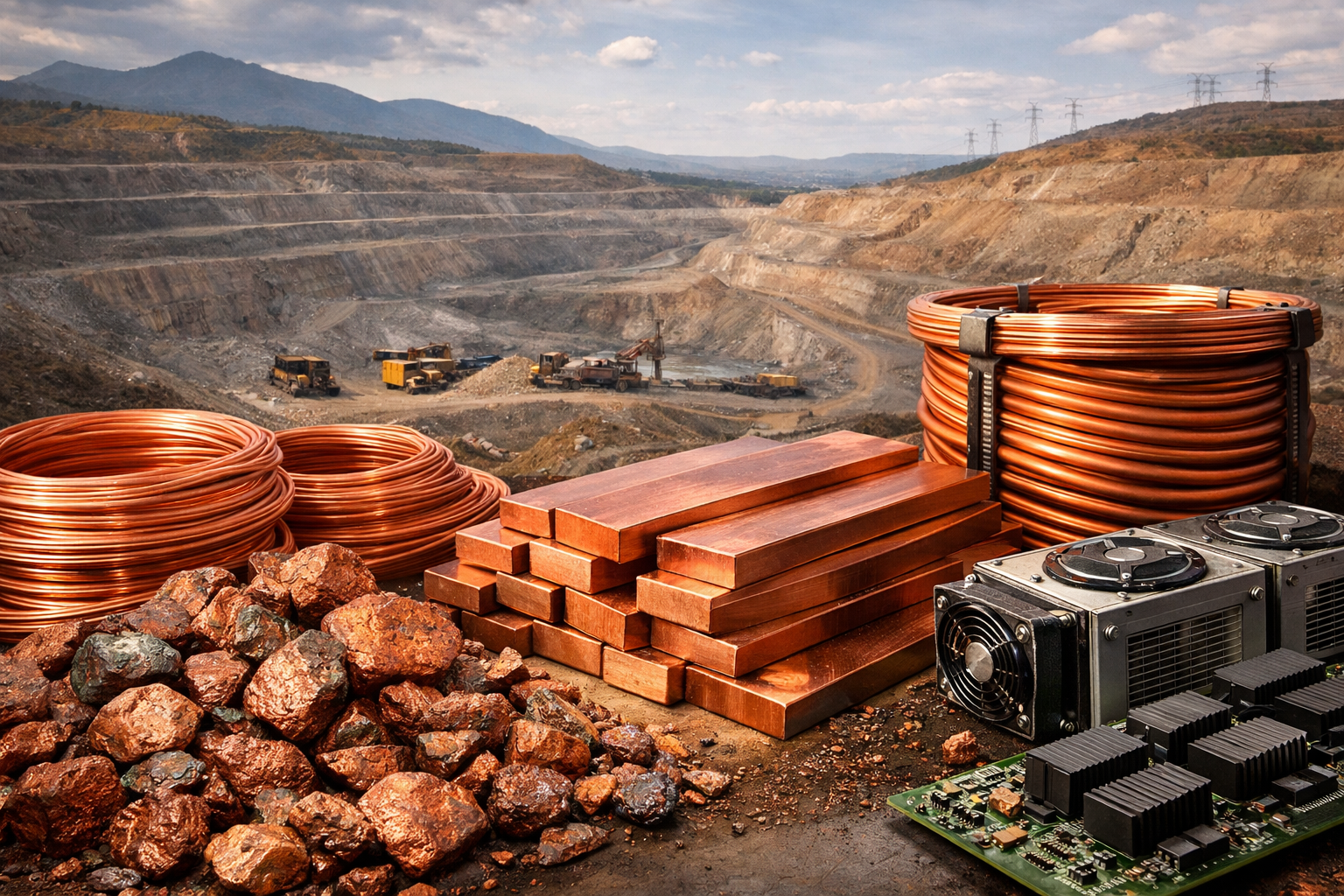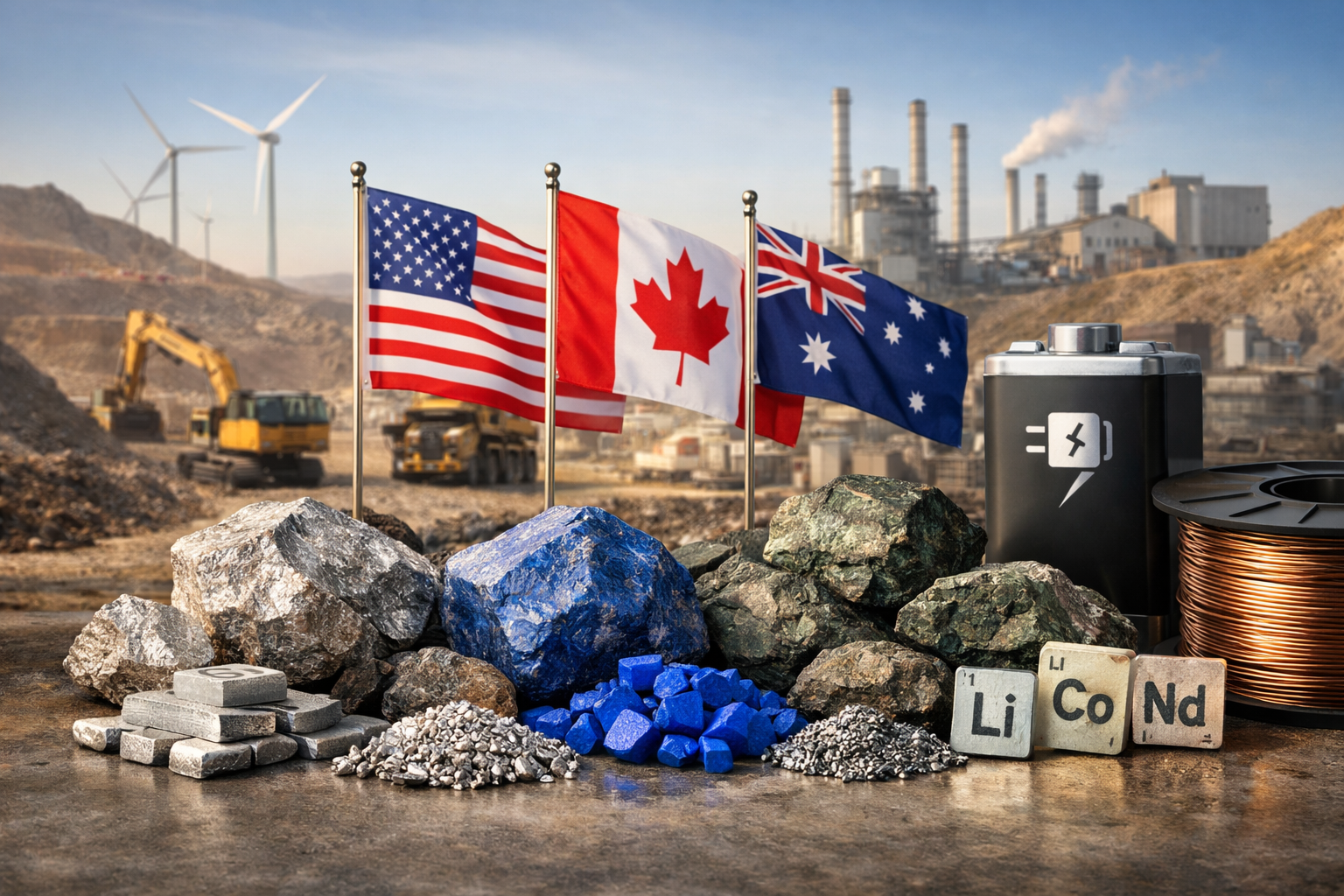
The United States is taking decisive steps to secure its critical minerals supply chains, signaling a new era in geopolitics that directly impacts investors. By deepening partnerships with Canada and other allies, the U.S. government aims to reduce reliance on China for essential raw materials that power everything from electric vehicles to AI infrastructure. This strategy, backed by subsidies, trade agreements, and domestic mining incentives, is reshaping the global resource landscape.
According to Reuters and the U.S. State Department, these policy measures are part of a broader push to strengthen domestic and allied production capabilities, ensuring long-term strategic autonomy. For investors, the shift represents potential opportunities in North American mining, processing, and infrastructure companies that stand to benefit from government-backed incentives.
Geopolitical Pressures Driving Policy
The dependence on China for critical minerals—such as lithium, cobalt, rare earths, and nickel—has become a growing concern for U.S. policymakers. These materials are essential for manufacturing high-tech products, including EV batteries, semiconductors, renewable energy systems, and defense applications.
By forming strategic alliances with Canada, Australia, and other resource-rich nations, the U.S. is aiming to diversify supply sources, reduce geopolitical risk, and secure critical production capacity. These efforts include:
- Trade and supply agreements to ensure steady imports from allied countries
- Subsidies and tax incentives for domestic mining and processing projects
- Investment in infrastructure to transport, refine, and store critical minerals efficiently
Bloomberg analysts note that the U.S. government is effectively creating a “friendly supply chain bloc” to mitigate risks associated with Chinese dominance in these markets.
Implications for the Resource Sector
The evolving geopolitical landscape is set to have far-reaching effects on metals and mining companies, particularly those operating in North America.
1. Domestic Mining Gains Traction
U.S. mining companies stand to benefit from direct incentives, including tax credits and streamlined permitting processes. This could accelerate the development of projects that were previously stalled due to regulatory or capital constraints.
2. Canadian and Allied Producers Benefit
Canada, Australia, and select African nations are positioned as reliable sources of critical minerals. Mining and processing companies in these countries may see increased demand as contracts with U.S. firms and government agencies expand.
3. Processing and Value-Added Opportunities
Investors should also consider firms involved in downstream processing and refining, which are critical to turning raw materials into usable components for EV batteries, renewable energy systems, and defense applications.
Why This Matters for Investors
The shift toward domestic and allied production is more than a policy initiative—it is a structural change with long-term investment implications:
- Supply Security Drives Premium Pricing: Companies with reliable, geopolitically aligned supply chains can command premium prices for their materials.
- Government Backing Reduces Risk: Policy incentives can accelerate project timelines and reduce capital risks for mining and processing firms.
- Strategic Metals Become Portfolio Anchors: Exposure to lithium, cobalt, nickel, and rare earths can serve as a hedge against global supply shocks and inflationary pressures.
According to Reuters, U.S. officials are prioritizing minerals critical to EV batteries, wind turbines, solar panels, and defense systems, signaling that the market for these materials may remain strong for decades.
Future Trends to Watch
1. Acceleration of North American Mining Projects
Expect a wave of new exploration, permitting, and development in the U.S. and Canada as government incentives reduce barriers to entry.
2. Increased M&A Activity
Strategic alliances and government-backed projects may drive consolidation in the resource sector, presenting opportunities for investors to participate in growth through acquisitions.
3. Supply Chain Diversification
Companies that can secure stable, diversified sources of critical minerals are likely to outperform peers, reducing dependency on high-risk geographies.
4. Technological Innovation in Processing
Advances in mineral extraction and refining technologies may enhance yields, lower costs, and further strengthen domestic capabilities.
Credible Signals from the Market
The U.S. State Department emphasizes that these strategic partnerships are not temporary measures but part of a long-term geopolitical strategy to ensure access to critical minerals. Financial news outlets, including Reuters, highlight that private investors and institutional funds are increasingly allocating capital toward North American mining projects with clear government support.
Industry analysts point out that these developments could reshape global commodity flows, with U.S. and allied firms capturing a larger share of high-demand metals.
Key Investment Insight
Geopolitics is now a defining factor in resource markets. Investors should consider:
- Exposure to North American mining and processing firms benefiting from government incentives
- Canadian and allied producers supplying minerals to U.S. markets
- Downstream companies in battery materials and rare earth processing poised to capture value
- Diversified investment strategies that focus on critical metals essential for EVs, renewable energy, and AI infrastructure
With U.S. policy driving long-term structural shifts, the metals and mining sector is increasingly intertwined with geopolitics. Strategic allocation toward companies positioned to benefit from these tailwinds may offer both growth and resilience.
The race to secure critical minerals is accelerating, and investors positioned to capitalize on the structural changes in North American supply chains could see significant opportunities over the next decade. MoneyNews.Today provides daily insights and analysis to help investors navigate these transformative trends.