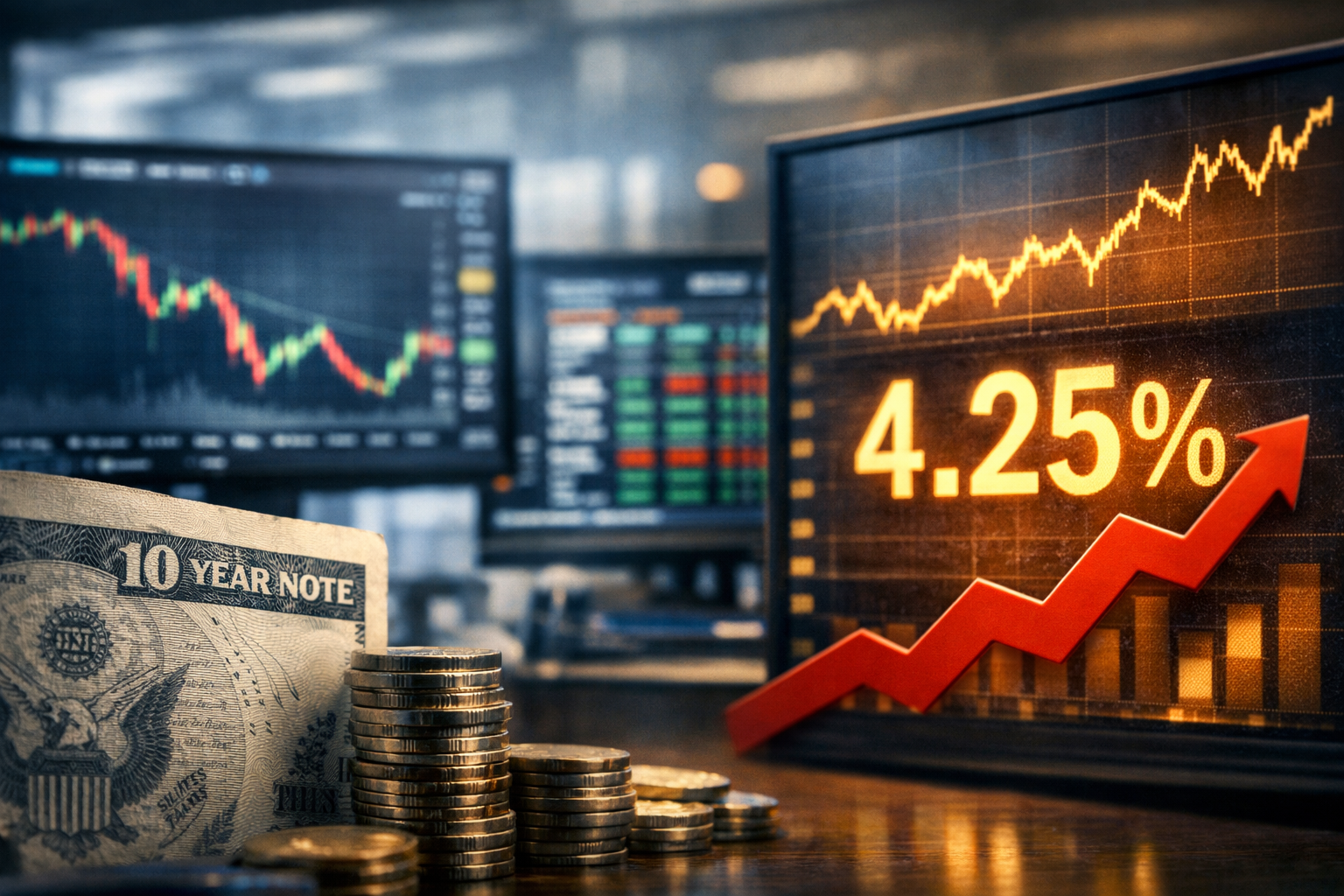
Wall Street is attempting to find its footing.
After days of sharp global volatility tied to escalating tensions between the United States and Iran, U.S. stock index futures stabilized early Wednesday, offering a tentative sign that investors are reassessing the near-term risk landscape. According to Reuters, futures tracking the S&P 500 and Nasdaq edged higher in pre-market trading as traders weighed reports of potential diplomatic backchannel discussions. Yet beneath the surface calm, markets remain fragile.
Oil prices have surged. Gold is climbing. Bond yields are oscillating. And global equities from Asia to Europe have experienced broad sell-offs. For investors, the message is clear: geopolitical risk has returned to center stage — and portfolio positioning must adapt accordingly.
MoneyNews.Today breaks down what’s driving markets now, why it matters, and how investors can navigate this volatile phase.
A Market Searching for Stability
In recent sessions, global equities have reflected a classic “risk-off” environment. Major European indices fell sharply earlier this week, while Asian markets posted significant declines amid fears that Middle East tensions could disrupt global energy flows.
The key flashpoint: the potential for supply disruptions in the Strait of Hormuz — a chokepoint through which roughly 20% of the world’s oil supply passes, according to the U.S. Energy Information Administration (EIA). Even the perception of supply risk has pushed crude prices meaningfully higher.
Brent crude futures climbed above recent trading ranges, while West Texas Intermediate (WTI) also surged, reigniting inflation concerns just as investors believed price pressures were cooling.
Meanwhile, safe-haven assets saw renewed demand:
- Gold prices advanced as investors sought protection from geopolitical instability.
- U.S. Treasury yields moved lower at points during peak tension, reflecting defensive positioning.
- The U.S. dollar strengthened against several major currencies, according to Bloomberg currency trackers.
Despite these pressures, U.S. equity futures steadied on hopes of de-escalation — a sign that markets are highly sensitive to headlines and diplomatic signals.
Oil, Inflation, and the Federal Reserve
The most immediate macroeconomic concern stemming from the Iran conflict is energy-driven inflation.
Higher oil prices tend to ripple through transportation, manufacturing, and consumer goods costs. If crude remains elevated, it could complicate the Federal Reserve’s policy path.
Recent Federal Reserve communications have emphasized a data-dependent approach, with policymakers closely watching inflation trends. Prior to this geopolitical shock, markets had been increasingly confident that rate cuts could materialize later this year. However, renewed energy-driven price pressures may delay or reduce the magnitude of easing.
Goldman Sachs CEO commentary cited by Reuters suggested markets may take “a couple of weeks” to fully digest the economic implications of the conflict. That timeframe underscores how uncertain the inflation trajectory has become.
For equity investors, this presents a delicate balancing act:
- Rising oil prices can benefit energy producers.
- But higher inflation can compress profit margins in consumer and industrial sectors.
- And delayed rate cuts could weigh on growth-oriented stocks, particularly in technology.
The bond market’s reaction will be critical in the coming days. If yields rise due to inflation fears, equity valuations — especially in rate-sensitive sectors — may face renewed pressure.
Sector Rotation: Energy and Defensives Lead
One of the clearest trends emerging from the current volatility is sector rotation.
Energy stocks have outperformed broader indices as oil prices climbed. Integrated oil majors and exploration companies are seeing renewed investor interest. Defense contractors are also drawing attention amid rising geopolitical risk.
Conversely, cyclical sectors tied to global trade and discretionary consumer spending have faced selling pressure. Technology shares, which had been market leaders earlier this year, have shown heightened sensitivity to macro headlines.
This rotation mirrors patterns seen during previous geopolitical disruptions:
- Capital flows toward hard assets and essential industries.
- Growth sectors experience valuation reassessment.
- Volatility spikes across equity and options markets.
The CBOE Volatility Index (VIX), often referred to as Wall Street’s “fear gauge,” has moved higher in recent sessions, reflecting increased demand for downside protection.
For institutional investors, portfolio hedging activity has risen — particularly through options and commodity exposure.
Why This Matters for Investors
The Iran conflict is not just a geopolitical story — it is a macro catalyst.
Markets are attempting to answer three critical questions:
- Will oil supply actually be disrupted?
- Will higher energy prices reignite sustained inflation?
- How will the Federal Reserve respond if inflation expectations rise?
If tensions ease quickly, the current volatility may prove short-lived. However, if disruptions escalate, investors could face a multi-week period of elevated risk premiums across asset classes.
The risk-off tone dominating social media financial conversations and institutional commentary reflects caution rather than panic. That distinction matters. Liquidity remains intact. Credit markets are functioning. But sentiment has clearly shifted from optimism to guarded positioning.
According to Bloomberg market strategists, geopolitical shocks historically produce short-term drawdowns but rarely alter long-term earnings trajectories unless they materially impact energy supply or global trade routes.
That conditional caveat is what investors are watching now.
Future Trends to Watch
As markets digest developments, several indicators will serve as critical signals:
1. Oil Price Stability
If crude prices retreat toward prior levels, inflation fears may ease quickly. Sustained prices above recent highs, however, could change monetary policy expectations.
2. Bond Yield Movements
A sharp rise in Treasury yields would signal growing inflation anxiety. Conversely, falling yields may indicate safe-haven demand dominating growth concerns.
3. Fed Communication
Upcoming Federal Reserve speeches and minutes will be scrutinized for references to geopolitical risks and energy price impacts.
4. Corporate Guidance
Earnings calls from multinational firms may reveal how companies are adjusting supply chains and cost assumptions.
5. Volatility Metrics
A continued rise in the VIX would suggest sustained investor anxiety. A pullback would indicate normalization.
These metrics collectively will determine whether markets stabilize or enter a deeper corrective phase.
Key Investment Insight
Risk-off sentiment remains dominant — and prudence is warranted.
Investors may consider:
- Maintaining higher-than-normal cash allocations to preserve flexibility.
- Hedging equity exposure with options or inverse ETFs where appropriate.
- Increasing exposure to defensive sectors such as energy, utilities, and select consumer staples.
- Monitoring gold and commodity allocations as geopolitical hedges.
- Avoiding overleveraged positions during headline-driven volatility.
Long-term investors should remember that geopolitical shocks historically create selective buying opportunities. However, timing entries requires patience and disciplined risk management.
Short-term traders, meanwhile, should be prepared for rapid reversals driven by diplomatic headlines.
In environments like this, preservation of capital often outweighs aggressive positioning.
The Bigger Picture
Markets are resilient, but they are not immune to geopolitical risk.
The Iran–U.S. conflict has injected a new layer of uncertainty into an already complex macro environment marked by shifting rate expectations, evolving AI-driven technology investments, and global supply chain recalibration.
While U.S. futures may be steady for now, underlying volatility suggests investors should remain vigilant.
The coming days will likely be defined by headlines, oil price fluctuations, and Federal Reserve commentary. Clarity may take time. In the meantime, disciplined risk management and diversified exposure remain the cornerstones of navigating uncertain markets.
For investors seeking timely, data-backed insights across global markets, stay tuned to MoneyNews.Today — your trusted source for daily investor intelligence and actionable market analysis.