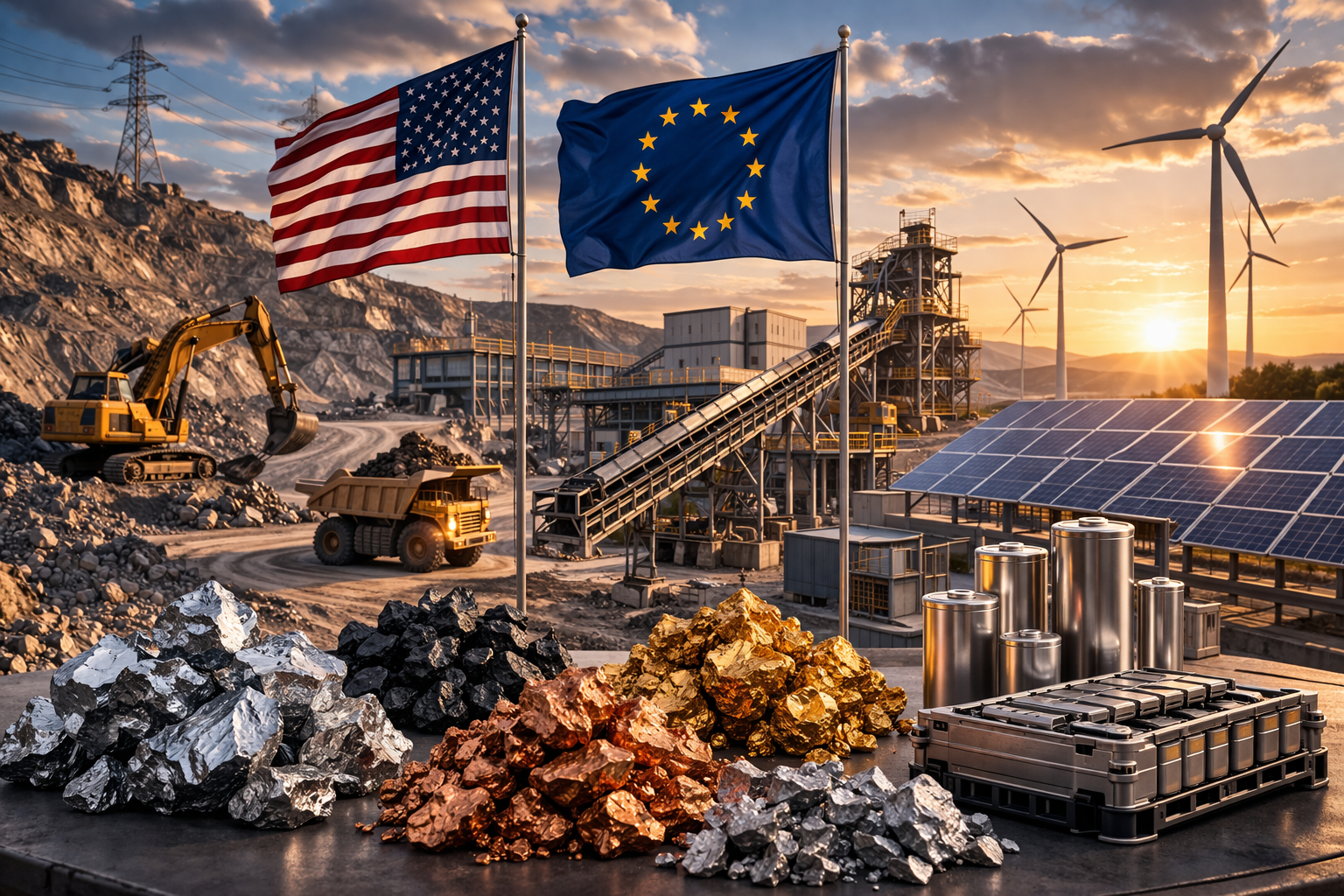
Washington’s decision to make its largest-ever direct equity investment in the rare earths sector is sending a clear signal to markets: securing domestic supply of critical minerals has become a strategic and economic priority. The Trump administration’s plan to invest $1.6 billion in USA Rare Earth (USAR) for a 10% stake has already sparked a sharp rally in the company’s shares and lifted sentiment across the broader critical-minerals space. For investors, the move underscores how geopolitics, industrial policy, and the global race for technological leadership are converging around a small but indispensable group of materials.
Rare earth elements are essential inputs for electric vehicles, wind turbines, advanced semiconductors, and a wide range of defense systems. According to the U.S. Geological Survey, the United States still relies heavily on imports—particularly from China—for many of these materials. That dependence has become a growing concern as trade tensions and supply-chain disruptions highlight vulnerabilities in strategically important industries.
Why This Matters for Investors
The proposed investment positions the U.S. government not just as a regulator or customer, but as a direct shareholder in a domestic producer. Analysts cited by Reuters and Bloomberg describe the move as a watershed moment for the sector, potentially lowering financing risk for rare earth projects that are typically capital-intensive and slow to reach commercial scale.
From an equity-market perspective, government backing can have several important effects:
- Reduced Cost of Capital: A large, well-capitalized shareholder can improve access to funding and lower borrowing costs, accelerating mine development and processing infrastructure.
- Policy Support and Long-Term Offtake: Strategic investments often come with long-term supply agreements for defense and clean-energy programs, providing revenue visibility that private miners often lack.
- Re-rating Potential: As policy risk declines and project timelines become clearer, valuation multiples for domestic critical-minerals producers may expand.
Strategic Context: Supply Chains and National Security
Rare earths are a cornerstone of modern industrial and military technology. The International Energy Agency estimates that demand for critical minerals used in clean-energy technologies could more than double by 2030, driven by electric vehicles, renewable power, and grid storage. At the same time, the U.S. Department of Defense has repeatedly warned about supply concentration risks, noting that a disruption in rare earth availability could affect everything from missile guidance systems to advanced communications equipment.
The investment in USAR aligns with broader initiatives under the Defense Production Act and other federal programs aimed at reshoring or “friend-shoring” key parts of the materials supply chain. McKinsey research shows that companies with secure access to critical inputs are better positioned to scale production and maintain margins during periods of geopolitical stress.
Market Reaction and Sector Implications
Shares of USA Rare Earth surged following reports of the proposed deal, and peer companies across North America and Australia also saw renewed interest. Market participants view the move as a potential template for further public-private partnerships in lithium, nickel, cobalt, and other strategic materials.
For diversified mining companies, the development highlights a possible tailwind: projects that once struggled to attract financing due to long payback periods may now find a more supportive policy environment. Exchange-traded funds focused on critical minerals and battery materials could also benefit from increased investor attention as capital rotates toward sectors aligned with energy transition and national security priorities.
Future Trends to Watch
Several factors will shape the investment case for rare earths and other emerging-industry materials:
1. Expansion of Government Involvement
If the USAR transaction proves successful, analysts expect similar initiatives for lithium, graphite, and advanced battery materials. Official releases from the U.S. Department of Energy and the Department of Defense suggest a multi-year pipeline of funding programs.
2. Processing and Refining Capacity
Mining is only part of the equation. Much of the value chain lies in separation and refining, where China currently dominates. Investments that build domestic processing capability could further strengthen the strategic and financial outlook for the sector.
3. Demand from AI and Electrification
The rapid build-out of data centers, electric vehicles, and renewable power infrastructure is intensifying competition for specialized metals. According to BloombergNEF, demand for magnet materials used in EV motors and wind turbines is projected to grow at a double-digit annual rate through the end of the decade.
Key Investment Insight
The U.S. government’s $1.6 billion stake in USA Rare Earth marks a turning point for the critical-minerals industry. It signals long-term policy commitment, reduces project risk, and highlights the strategic value of domestic supply chains. For investors, this creates potential opportunities in:
- Domestic rare earth and critical-minerals producers with advanced projects and government partnerships.
- Infrastructure and processing companies that support the downstream value chain.
- Thematic ETFs focused on energy transition and strategic materials.
While the sector remains cyclical and subject to commodity-price volatility, government backing may provide a structural floor under investment and accelerate the path to commercial production.
As global competition for critical resources intensifies and industrial policy becomes a central driver of capital flows, staying informed on these developments is essential. Follow MoneyNews.Today for timely, in-depth coverage of emerging industries and the investment opportunities shaping tomorrow’s markets.