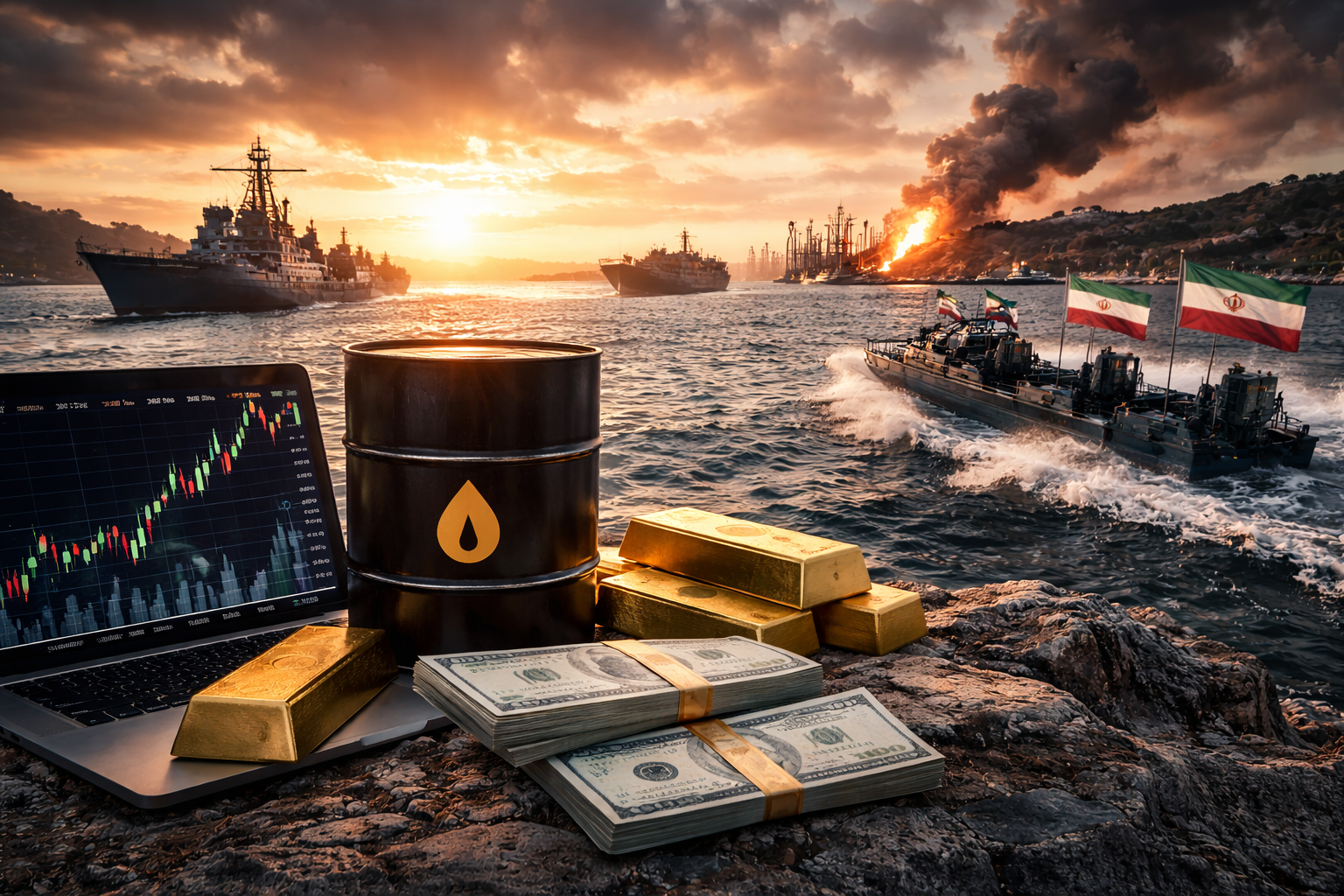
The fragile calm in global markets may not last.
After a brief period of relief following a temporary ceasefire between the United States and Iran, tensions are once again rising. Reports of ongoing violations and continued military activity are casting doubt over the durability of the truce—just as both sides prepare for critical negotiations. The situation remains highly volatile, with markets increasingly sensitive to any developments around the Strait of Hormuz, one of the world’s most important oil transit chokepoints.
For investors, this is no longer a background geopolitical story. It is a primary market driver, directly influencing oil prices, inflation expectations, central bank policy, and equity market direction.
A Ceasefire in Name, Not in Stability
While the ceasefire initially helped calm markets, underlying tensions have not been resolved. Instead, recent developments suggest that the situation remains precarious:
- Reports of localized military activity continue
- Accusations of ceasefire violations from both sides are increasing
- Naval presence in the region remains elevated
- Diplomatic rhetoric is becoming more cautious ahead of talks
This creates a classic market dynamic: temporary stability masking deeper uncertainty.
The upcoming negotiations are now seen as a critical inflection point. A successful diplomatic outcome could reinforce market confidence, while any breakdown could trigger rapid risk-off sentiment across global assets.
Why the Strait of Hormuz Matters So Much
At the center of this geopolitical tension lies the Strait of Hormuz—a narrow waterway through which a significant portion of the world’s oil supply flows.
According to the U.S. Energy Information Administration (EIA):
- Roughly 20% of global oil consumption passes through the Strait
- It is a key transit route for exports from major producers in the Middle East
- Any disruption can lead to immediate supply shocks and price spikes
This makes the region one of the most strategically important—and vulnerable—points in the global energy system.
Even the perception of risk in the Strait can move markets, as traders price in the possibility of supply disruptions.
Why This Matters for Investors
The current geopolitical environment is having a direct and measurable impact across asset classes.
1. Oil Prices Are the First Transmission Channel
Geopolitical tension in the Middle East typically leads to higher oil prices due to supply risk. This, in turn, affects:
- Energy stocks
- Transportation and industrial sectors
- Consumer spending dynamics
2. Inflation Expectations Are Rising
Higher energy prices feed into broader inflation, complicating the outlook for central banks.
According to Bloomberg Economics, sustained increases in oil prices could delay or alter expected interest rate cuts, particularly in the United States.
3. Equity Markets Are Becoming Headline-Driven
Markets are increasingly reacting to real-time geopolitical developments, leading to:
- Increased volatility
- Short-term rallies and pullbacks
- Sector rotation based on risk sentiment
4. Safe-Haven Assets Are Back in Focus
Gold, the U.S. dollar, and government bonds tend to benefit during periods of geopolitical uncertainty.
Oil, Inflation, and Central Banks: A Tight Feedback Loop
One of the most important dynamics for investors to understand is the feedback loop between geopolitics, oil, and monetary policy.
Rising Oil Prices → Higher Inflation
As oil prices increase, transportation and production costs rise, feeding into consumer prices.
Higher Inflation → Central Bank Caution
Central banks, including the Federal Reserve, may be forced to delay rate cuts or maintain tighter monetary policy.
Tighter Policy → Pressure on Equities
Higher interest rates typically weigh on equity valuations, particularly in growth sectors.
This chain reaction means that geopolitical developments in the Middle East can have far-reaching consequences for global financial markets.
Market Reactions So Far
Initial reports of the ceasefire led to a relief rally in global equities and a pullback in oil prices. However, as tensions have resurfaced:
- Oil prices have shown renewed volatility
- Equity gains have become more fragile
- Defensive sectors have started to outperform
- Volatility indices have ticked higher
According to Reuters Markets coverage, traders are increasingly positioning for a range of outcomes, reflecting the uncertainty surrounding upcoming negotiations.
Future Trends to Watch
As the situation evolves, several key developments will shape market direction:
Outcome of U.S.–Iran Talks
The success or failure of negotiations will be the single most important catalyst for markets.
Stability in the Strait of Hormuz
Any disruption—or escalation—could trigger significant moves in energy markets.
Central Bank Response
Investors will closely watch how policymakers respond to inflation risks tied to energy prices.
Broader Regional Dynamics
Involvement from other regional players could either stabilize or further complicate the situation.
Market Sentiment Shifts
Rapid changes in investor sentiment could lead to sharp market swings, particularly in risk assets.
Risks Investors Should Consider
While geopolitical developments can create opportunities, they also introduce significant risks.
Headline Risk
Markets can move sharply on breaking news, making short-term positioning challenging.
Overreaction and Volatility
Initial market reactions may overshoot, creating both risks and opportunities.
Policy Uncertainty
Diplomatic outcomes are inherently unpredictable, adding another layer of complexity.
Cross-Asset Contagion
Movements in oil and inflation can quickly spill over into equities, bonds, and currencies.
Key Investment Insight
The current U.S.–Iran situation highlights a critical shift in market dynamics: geopolitics is no longer a secondary factor—it is a primary catalyst.
For investors, this requires a more adaptive and risk-aware approach:
- Monitor oil price trends as a leading indicator of market sentiment
- Maintain diversified exposure, including defensive assets
- Be prepared for short-term volatility driven by headlines
- Identify sectors that benefit from higher energy prices, such as energy and commodities
At the same time, investors should remain cautious about overreacting to short-term developments, focusing instead on long-term positioning and risk management.
A Market Defined by Uncertainty—and Opportunity
The coming days will be critical. As negotiations approach, markets will continue to react to every signal—whether diplomatic or military.
This is the kind of environment where informed investors can find opportunity, but only with a clear understanding of the risks.
Geopolitics has reasserted itself at the center of the financial landscape, influencing everything from commodities to central bank policy to equity valuations.
Stay with MoneyNews.Today for daily, investor-focused insights that help you navigate the complex forces shaping global markets.