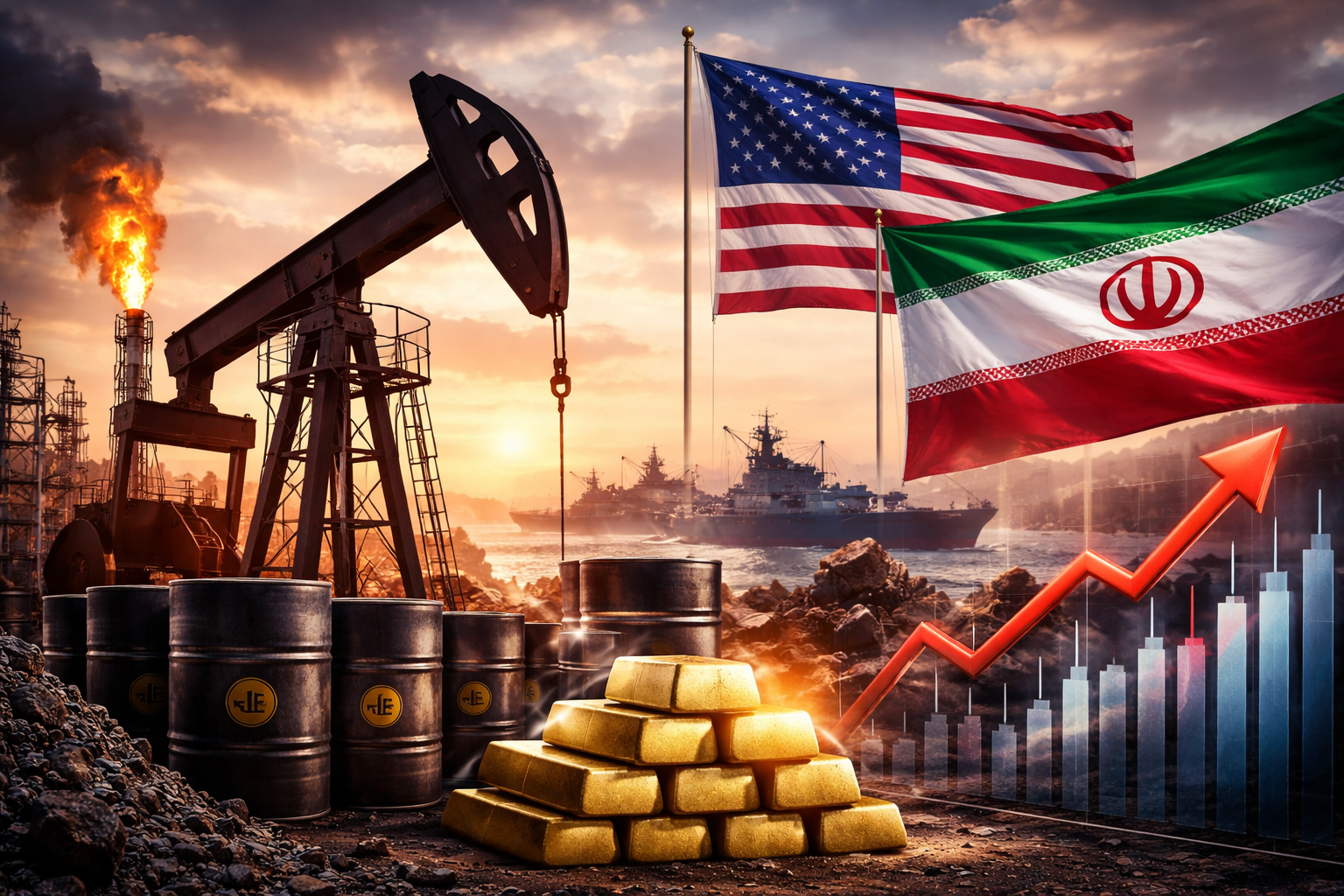
Markets are once again being pulled out of the boardroom and into the geopolitical arena. As tensions between the United States and Iran escalate, oil prices are surging and volatility is returning across global financial markets. For investors, this is more than just a headline—it’s a reminder that geopolitics can rapidly reshape market dynamics, often with little warning.
In recent days, traders and institutional investors alike have been closely monitoring developments surrounding the Strait of Hormuz, a critical chokepoint for global energy supply. Any disruption in this region has the potential to send shockwaves through oil markets—and by extension, equities, currencies, and commodities worldwide.
Why the Strait of Hormuz Matters More Than Ever
At the center of current concerns lies the Strait of Hormuz, one of the most strategically important waterways in the global energy system. Roughly 20% of the world’s oil supply passes through this narrow corridor, making it a critical artery for energy flows between the Middle East and global markets.
According to reporting from Reuters and analysis cited by Investopedia, rising tensions between the U.S. and Iran have heightened fears of potential disruptions in this region. Even the perception of risk is enough to move markets, as traders price in the possibility of supply constraints.
Historically, geopolitical instability in the Middle East has led to:
- Sharp spikes in oil prices
- Increased market volatility
- Flight to safe-haven assets
This time appears no different. Oil prices have already begun trending higher, reflecting a growing risk premium tied to geopolitical uncertainty.
Oil Prices Surge: A Catalyst for Market Repricing
The immediate market impact of escalating tensions has been felt in the energy sector.
Oil benchmarks have moved higher as traders react to:
- Potential supply disruptions
- Strategic positioning by OPEC+
- Heightened geopolitical risk
Higher oil prices create a ripple effect across the global economy. For energy producers, this is a clear positive—boosting revenues, margins, and cash flows. However, for the broader market, rising energy costs can act as a headwind, increasing inflationary pressures and weighing on consumer spending.
Reuters reports that markets are becoming increasingly sensitive to geopolitical developments, with even minor updates triggering significant price movements. This heightened sensitivity underscores how fragile the current equilibrium is.
Why This Matters for Investors
The resurgence of geopolitical risk introduces a new layer of complexity for investors navigating already uncertain markets.
1. Geopolitics Is Now a Primary Market Driver
For much of the past decade, markets were dominated by central bank policy and economic data. Today, geopolitical developments are playing an equally—if not more—important role in shaping investor sentiment.
2. Energy Markets Are Back in Focus
After a period of relative stability, energy is once again a central theme in global investing. Rising oil prices can:
- Boost energy stocks
- Pressure inflation-sensitive sectors
- Influence central bank decisions
3. Volatility Is Likely to Increase
Geopolitical events are inherently unpredictable. As a result, markets may experience:
- Sudden price swings
- Increased demand for hedging strategies
- Short-term dislocations across asset classes
Winners and Losers in a Geopolitical Shock Scenario
Not all sectors respond equally to rising geopolitical tensions. Understanding these dynamics is critical for positioning portfolios effectively.
Potential Beneficiaries:
Energy Companies:
Higher oil prices directly benefit producers, particularly those with low production costs and strong balance sheets.
Defense Stocks:
Periods of geopolitical tension often lead to increased defense spending, supporting companies in the aerospace and defense sector.
Gold and Safe-Haven Assets:
Gold has historically served as a hedge against uncertainty. Increased demand for safe-haven assets can drive prices higher during times of crisis.
Potential Risks:
Consumer and Industrial Sectors:
Rising energy costs can squeeze margins and reduce consumer purchasing power.
Airlines and Transportation:
Fuel costs are a major expense, making these industries particularly vulnerable to oil price spikes.
High-Growth Tech Stocks:
In risk-off environments, investors often rotate away from growth stocks into more defensive assets.
The Inflation Connection
One of the most important implications of rising oil prices is their impact on inflation.
Energy costs are a key input across the economy. When oil prices rise:
- Transportation costs increase
- Manufacturing expenses climb
- Consumer prices follow
This can complicate the outlook for central banks, particularly the Federal Reserve, which may be forced to balance inflation concerns with economic growth risks.
According to broader market analysis referenced by Investopedia, persistent energy-driven inflation could delay interest rate cuts or even prompt tighter monetary policy—both of which would have significant implications for equity markets.
Future Trends to Watch
1. Escalation vs. De-escalation
The trajectory of U.S.-Iran relations will be the single most important factor driving markets in the near term. Any signs of escalation could push oil prices higher, while diplomatic progress could ease market tensions.
2. OPEC+ Policy Decisions
Oil-producing nations may adjust output in response to market conditions. Their actions will play a key role in determining price stability.
3. Strategic Reserves and Government Intervention
Governments may tap into strategic petroleum reserves to stabilize markets, as seen in past crises. This could temporarily offset supply concerns.
4. Safe-Haven Demand Trends
Monitoring flows into gold, U.S. Treasuries, and other safe-haven assets can provide valuable insight into investor sentiment.
Credible Signals From the Market
The current narrative is supported by multiple credible sources.
Reuters has highlighted the growing geopolitical tensions and their impact on oil prices, emphasizing the market’s sensitivity to developments in the Middle East. Meanwhile, Investopedia has underscored the broader implications for financial markets, including inflation risks and sectoral shifts.
Institutional analysts and major financial media outlets, including Bloomberg, have also pointed to a resurgence in geopolitical risk as a key driver of market behavior in 2026.
Additionally, real-time market data shows increased volatility in energy markets and a corresponding shift in investor positioning toward defensive assets.
Key Investment Insight
Geopolitics is no longer a background risk—it is a central force shaping market outcomes.
Investors should consider:
- Increasing exposure to energy stocks as a hedge against rising oil prices
- Allocating to gold and safe-haven assets to manage risk
- Monitoring defense sector opportunities tied to increased geopolitical spending
- Maintaining diversification to navigate heightened volatility
The ability to adapt quickly to geopolitical developments may become a defining factor in investment performance in the current environment.
Investment Outlook: Navigating a Geopolitically Driven Market
The resurgence of U.S.-Iran tensions is a stark reminder that global markets are deeply interconnected with geopolitical events. As oil prices rise and uncertainty spreads, investors are being forced to rethink traditional strategies and incorporate geopolitical risk into their decision-making processes.
This environment favors a more balanced approach—one that combines growth opportunities with defensive positioning. Energy, commodities, and safe-haven assets are likely to play an increasingly important role in portfolios, particularly if tensions persist.
At the same time, investors must remain vigilant. Geopolitical situations can evolve rapidly, and market reactions can be equally swift.
Staying informed is no longer optional—it’s essential. Follow MoneyNews.Today for daily investor insights, breaking developments, and actionable analysis designed to help you navigate today’s complex financial landscape.