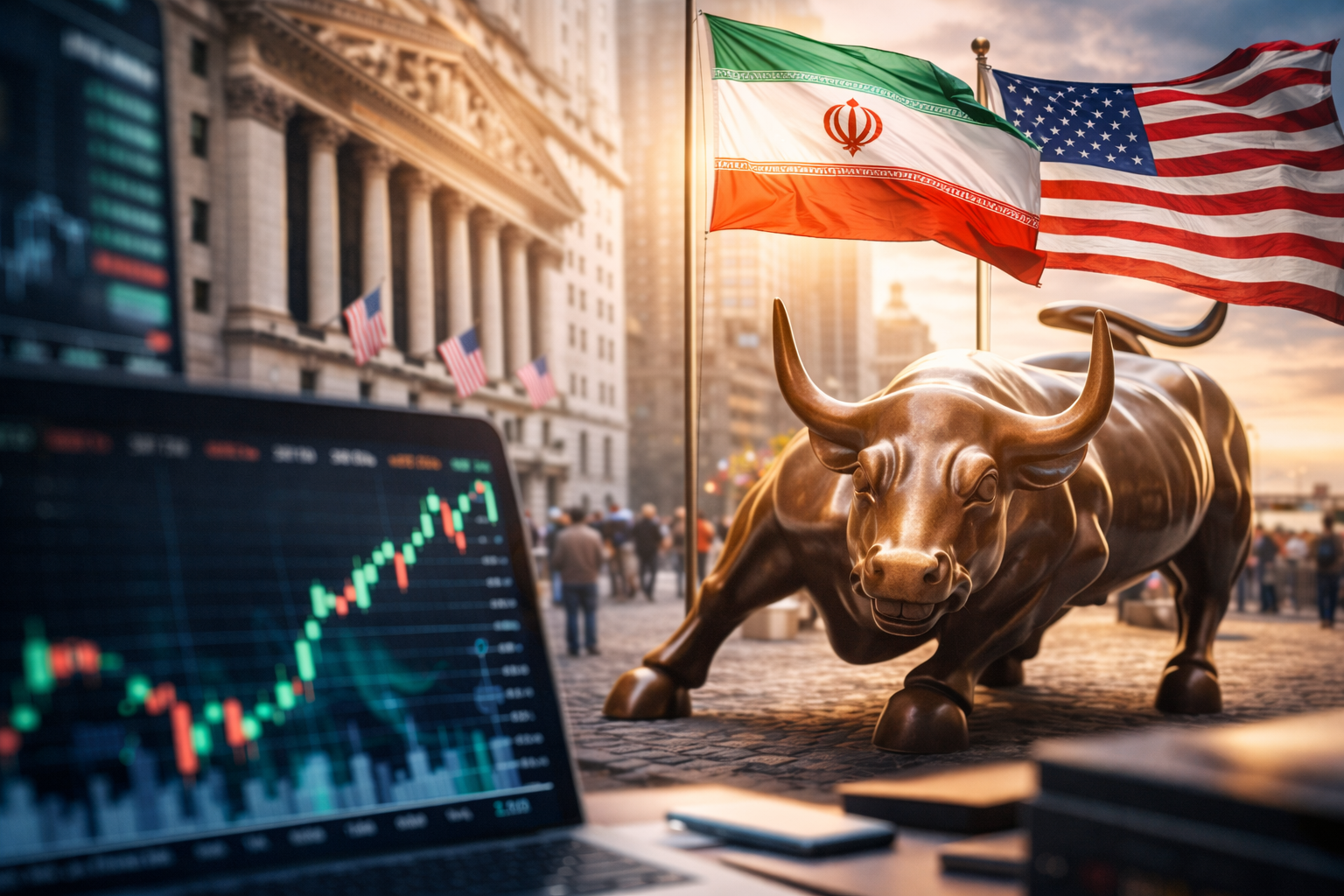
After days of volatility fueled by trade tensions and mounting concerns over AI-driven disruption, Wall Street is attempting to find its footing. U.S. stock index futures edged higher on February 25, 2026, signaling a pause in the recent pullback as investors cautiously reposition ahead of a pivotal earnings catalyst: results from Nvidia.
The rebound comes at a critical moment. The Nasdaq Composite and the S&P 500 have both traded within a tight range in recent sessions, reflecting uncertainty about valuations, macroeconomic headwinds, and the durability of the AI-driven rally that defined much of the past year.
A Market in Consolidation Mode
According to market reporting from Reuters and Bloomberg, U.S. futures stabilized following earlier declines tied to AI-related valuation concerns and global trade policy uncertainty. The bounce in technology and semiconductor stocks has helped offset weakness in more cyclical sectors.
While the moves are modest, they carry symbolic weight. Investors appear willing to step back into risk assets — particularly AI-linked equities — after a brief bout of profit-taking. Trading volumes suggest institutional participation, not merely retail momentum, is contributing to the stabilization.
Yet beneath the surface, this remains a consolidation phase. Major indices are neither breaking decisively higher nor rolling over sharply lower. Instead, markets are compressing — often a precursor to a larger directional move.
Why This Matters for Investors
Markets rarely move in straight lines. Following an extended rally driven by artificial intelligence enthusiasm, some digestion was inevitable. What matters now is whether earnings confirm that AI-driven revenue growth remains strong enough to justify elevated valuations.
Nvidia’s results are widely viewed as a bellwether for the broader semiconductor and AI infrastructure complex. As one of the largest contributors to index performance over the past year, its guidance will likely influence sentiment across hardware suppliers, cloud providers, and enterprise software firms.
If forward-looking commentary signals sustained demand for AI chips and data-center expansion, markets could regain upward momentum. Conversely, even minor disappointments could trigger renewed volatility, particularly given how concentrated index gains have been in a handful of mega-cap tech stocks.
The AI Factor and Broader Risk Appetite
Artificial intelligence is no longer just a thematic investment story — it is a macro driver of equity flows. The outperformance of AI-exposed names has had an outsized impact on index returns, particularly within the Nasdaq.
Research from McKinsey estimates generative AI could add trillions of dollars annually to global productivity, reinforcing the long-term thesis. However, near-term market pricing reflects high expectations. As Bloomberg analysts note, earnings growth must continue accelerating to support current multiples.
This week’s stabilization suggests investors believe the structural AI narrative remains intact, even as macro risks persist.
Macro and Policy Undercurrents
Beyond earnings, broader macro forces continue shaping equity positioning. Treasury yields remain elevated compared to pre-pandemic norms, tightening financial conditions. Trade policy headlines and geopolitical developments also add layers of uncertainty.
The Federal Reserve’s path forward remains another critical variable. Any shift in rate expectations can quickly alter risk sentiment. Historically, growth-heavy indices such as the Nasdaq are particularly sensitive to changes in real yields.
Despite these pressures, equity resilience indicates that liquidity conditions, while not expansive, are stable enough to prevent a disorderly selloff — at least for now.
Sector Rotation Signals
One notable trend during this stabilization phase is selective sector rotation. Semiconductor and AI infrastructure names have regained relative strength, while some defensive sectors lag. This suggests investors are not abandoning risk, but rather reallocating within growth themes.
Financial strategists cited by Reuters argue that market breadth will be an important indicator to watch. A rally supported by broader participation across sectors would signal healthier momentum. Conversely, continued reliance on a few mega-cap names may limit durability.
Key Investment Insight
For investors navigating this pivotal moment, discipline and selectivity are essential.
- Monitor Earnings Guidance Closely: Beyond headline numbers, forward commentary on AI demand and enterprise spending trends will shape market direction.
- Assess Concentration Risk: Consider portfolio exposure to mega-cap technology and balance with sectors offering defensive characteristics.
- Watch Yield Movements: Changes in Treasury yields could amplify or dampen the relief rally.
- Look for Breadth Confirmation: Sustainable rallies often require participation beyond a narrow group of stocks.
Markets are at an inflection point. A confirmed earnings-driven breakout could propel indices to new highs, while disappointment may reinforce the current trading range.
Future Trends to Watch
- Continued AI infrastructure investment and capital expenditure trends
- Federal Reserve commentary on interest rates and inflation
- Trade negotiations influencing global supply chains
- Expansion of earnings strength beyond technology into industrials and financials
Each of these factors will help determine whether this stabilization evolves into a sustained rally or merely a temporary pause.
For investors, the message is clear: the next move will likely be earnings-driven. Staying informed and nimble is critical in this environment of compressed ranges and concentrated leadership.
Follow MoneyNews.Today for daily, data-driven insights that help you navigate market volatility and capitalize on emerging opportunities.