The cryptocurrency market has always moved at the intersection of technology, finance, and regulation—but a new wave of scrutiny from Washington could reshape the industry’s infrastructure in ways investors cannot ignore.
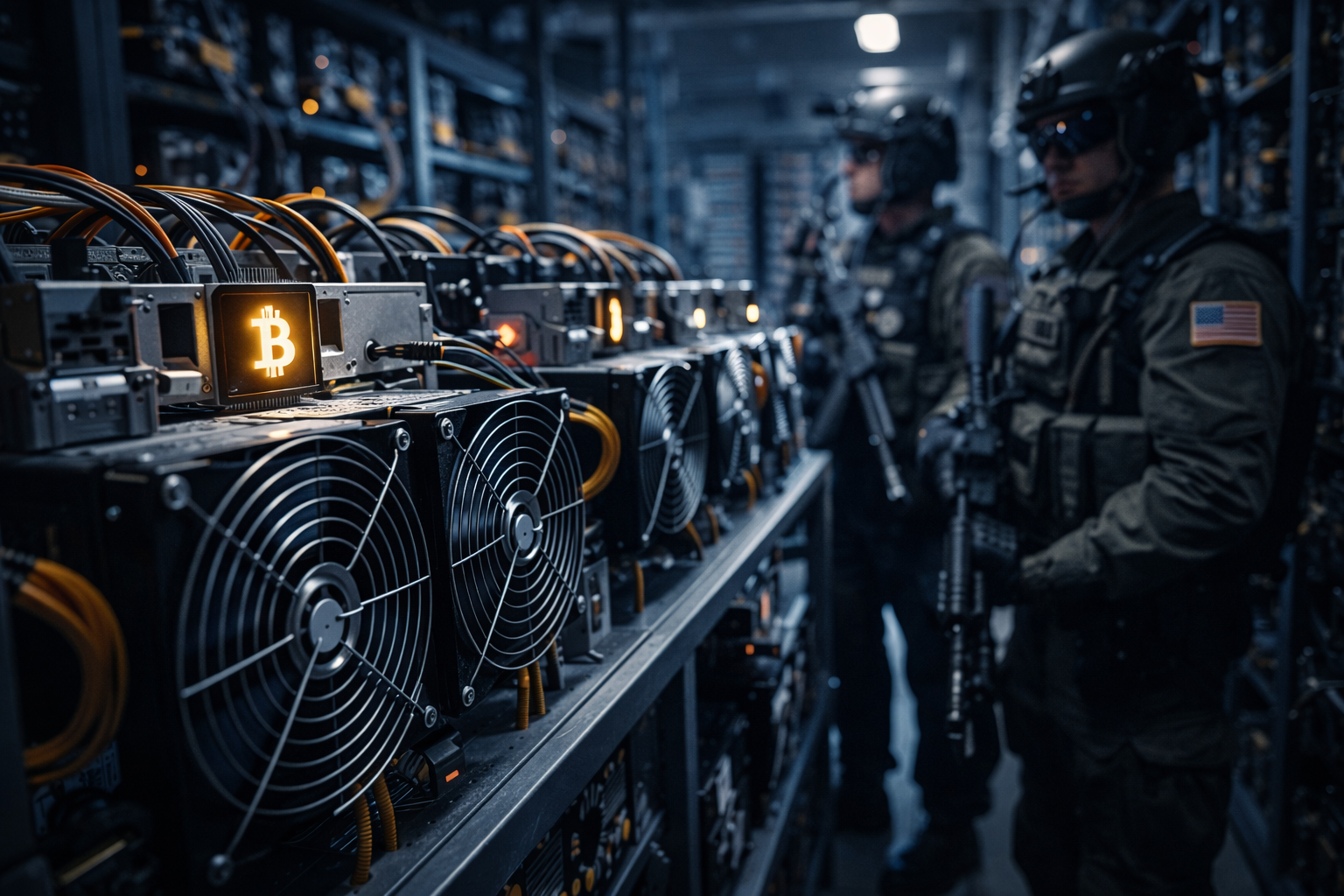
According to recent reporting from Bloomberg and TheStreet, U.S. regulators and national-security agencies are increasingly examining the global supply chains behind cryptocurrency mining hardware and digital asset infrastructure. The focus centers on potential risks linked to foreign-manufactured mining equipment, cybersecurity vulnerabilities, and financial transparency concerns within the broader crypto ecosystem.
For investors, the implications are significant. Regulatory developments have historically acted as major catalysts for cryptocurrency markets—capable of triggering both volatility and long-term structural shifts. As policymakers intensify oversight, compliance-focused companies and U.S.-based infrastructure providers could emerge as some of the biggest beneficiaries.
Crypto’s Infrastructure Is Now Under the Microscope
Cryptocurrency markets have matured dramatically over the past decade. What began as a niche experiment centered on decentralized digital money has evolved into a global financial ecosystem encompassing exchanges, mining operations, blockchain networks, and institutional investors.
At the heart of this system is mining infrastructure, the network of specialized computing equipment used to validate transactions and secure blockchain networks like Bitcoin.
Much of the hardware used for crypto mining—particularly application-specific integrated circuits (ASICs)—is produced by companies based outside the United States. Industry analysts estimate that a majority of global Bitcoin mining hardware originates from manufacturers in Asia, raising questions about supply chain dependence and potential security risks.
In recent months, U.S. policymakers have begun to investigate these vulnerabilities more closely.
According to policy reporting cited by Bloomberg, regulators and national-security officials are examining whether foreign-produced mining equipment could introduce cybersecurity risks or create dependencies that might affect financial stability or national security.
This scrutiny comes as the U.S. government takes a broader look at the strategic implications of emerging technologies—including artificial intelligence, semiconductor manufacturing, and digital assets.
Why Crypto Regulation Is Heating Up
Regulatory attention toward cryptocurrency has been building for several years, but several recent developments have accelerated the urgency among policymakers.
1. National Security Concerns
Digital infrastructure increasingly plays a role in geopolitical competition. Lawmakers are evaluating whether reliance on foreign-manufactured mining hardware could expose critical financial infrastructure to potential security vulnerabilities.
2. Financial Transparency and Compliance
Cryptocurrency’s decentralized structure has raised longstanding concerns about anti-money-laundering compliance and financial transparency. Regulators want to ensure that infrastructure supporting digital assets adheres to strict oversight standards.
3. Rapid Institutional Adoption
Institutional investors—including hedge funds, banks, and asset managers—have entered the crypto market in large numbers. As the industry becomes more integrated with traditional finance, policymakers are paying closer attention to systemic risks.
These factors have made crypto infrastructure a priority area for regulators seeking to balance innovation with financial stability.
The Role of Mining in the Crypto Economy
To understand why policymakers are focused on mining supply chains, investors need to consider the critical role mining plays in blockchain networks.
Mining involves powerful computers solving complex mathematical problems to validate transactions and add them to the blockchain ledger. In return, miners receive cryptocurrency rewards—often in Bitcoin.
This process requires specialized chips and high-performance hardware designed specifically for cryptographic calculations.
Companies involved in this sector include mining operators as well as hardware manufacturers and infrastructure providers such as:
- Riot Platforms
- Marathon Digital Holdings
- CleanSpark
Many of these firms operate large mining facilities within the United States, often located in regions with access to low-cost electricity.
As the industry has scaled, the hardware powering these operations has become increasingly specialized—and globally interconnected.
Why This Matters for Investors
Regulatory scrutiny of crypto infrastructure could create both risks and opportunities across the digital asset ecosystem.
Historically, policy decisions have had a powerful influence on cryptocurrency prices and market sentiment.
For example:
- Regulatory crackdowns in certain jurisdictions have triggered sharp market declines.
- Clear regulatory frameworks have often boosted investor confidence and institutional participation.
The latest developments suggest policymakers are shifting focus from crypto trading platforms alone toward the underlying infrastructure powering blockchain networks.
For investors, this could reshape competitive dynamics across the industry.
U.S.-Based Mining Could Gain Strategic Importance
One potential outcome of increased scrutiny is a greater emphasis on domestic crypto infrastructure.
If regulators impose restrictions on foreign-manufactured mining equipment or require stricter compliance standards, U.S.-based operators may gain a competitive advantage.
Companies with transparent governance structures, strong regulatory compliance, and domestic infrastructure could attract greater investor confidence.
According to data from industry research firms, the United States already accounts for a significant share of global Bitcoin mining capacity, particularly after China banned crypto mining operations in 2021.
This shift has positioned North America as one of the most important regions for crypto mining activity.
As regulatory oversight expands, that position could become even more important.
Exchanges and Compliance-Focused Firms May Benefit
Another group likely to benefit from stronger regulatory frameworks is regulated cryptocurrency exchanges and financial platforms.
Companies that prioritize compliance with government regulations may find themselves better positioned as policymakers introduce stricter rules for crypto infrastructure.
Major crypto platforms such as Coinbase have already invested heavily in regulatory compliance and transparency measures.
If new rules increase barriers to entry, established firms operating within regulatory frameworks could gain market share.
This dynamic mirrors developments in other financial sectors where regulation often consolidates industry leadership among companies capable of meeting compliance requirements.
The Broader Impact on the Crypto Market
While regulatory scrutiny can create uncertainty in the short term, it may ultimately strengthen the long-term foundation of the crypto industry.
Clearer rules governing mining operations, infrastructure security, and financial transparency could encourage broader institutional adoption.
According to research cited by Bloomberg Intelligence, institutional investors remain interested in digital assets but continue to seek clearer regulatory frameworks before committing larger allocations.
As governments establish more defined oversight mechanisms, cryptocurrency markets may become more integrated into the traditional financial system.
This process could support long-term growth for digital assets—even if it introduces volatility during the transition period.
Future Trends to Watch
Several key trends will shape the future of crypto infrastructure regulation.
Government Oversight of Mining Supply Chains
Policymakers may introduce new standards governing where mining equipment is produced and how infrastructure is secured.
Expansion of Domestic Crypto Mining
Countries seeking greater control over digital infrastructure may encourage the growth of domestic mining operations.
Increased Institutional Participation
Clearer regulatory frameworks could attract more institutional investors into cryptocurrency markets.
Infrastructure Security Standards
Governments may establish stricter cybersecurity requirements for mining operations and blockchain infrastructure.
Each of these trends could influence capital flows within the digital asset sector.
Key Investment Insight
Regulatory pressure has consistently been one of the most powerful forces shaping cryptocurrency markets.
If Washington intensifies scrutiny of foreign-sourced mining hardware and crypto infrastructure, compliance-focused firms and U.S.-based mining operations could benefit significantly.
Investors should watch for developments affecting:
- Domestic crypto mining companies
- Regulated cryptocurrency exchanges
- Blockchain infrastructure providers
These segments of the market may emerge as relative winners in an environment where transparency, compliance, and national security considerations play a growing role in digital asset policy.
Cryptocurrency markets are entering a new phase where infrastructure, regulation, and geopolitics are becoming just as important as technological innovation.
For investors navigating this rapidly evolving landscape, staying informed about policy developments could be just as critical as tracking market prices.
Follow MoneyNews.Today for daily investor insights on the trends, technologies, and regulatory shifts shaping the future of global financial markets.