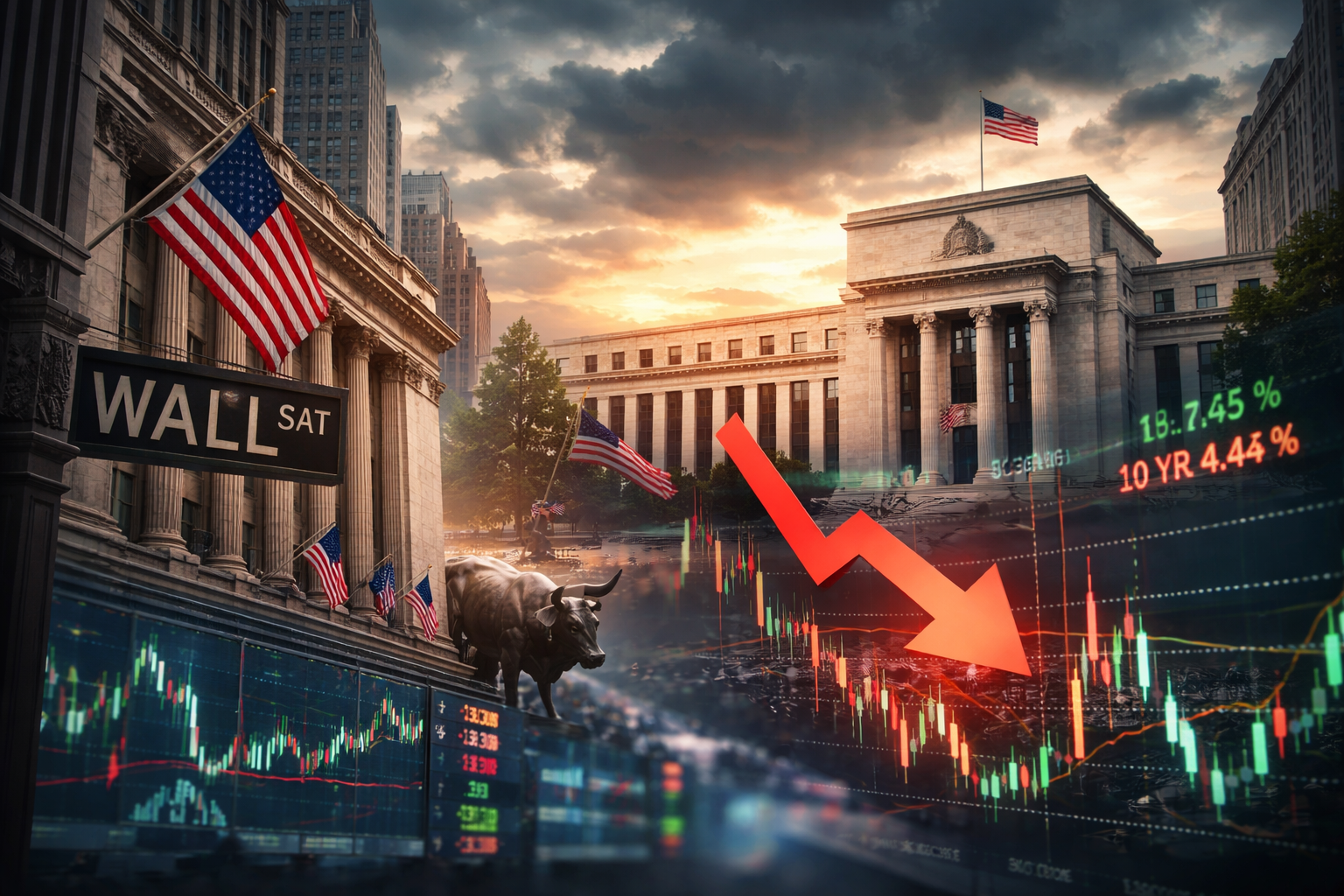
Wall Street is trying to regain its footing — but investors aren’t convinced the worst is over.
On February 5, 2026, U.S. stock futures traded mixed after a sharp wave of selling hit growth and AI-linked technology stocks earlier in the week. While the S&P 500 and Nasdaq showed signs of stabilizing, market sentiment remains fragile as traders brace for major earnings releases, including highly anticipated results from companies such as Amazon.
According to Yahoo Finance market coverage and Reuters live updates, the current environment reflects a market caught between two competing forces: bargain hunters stepping in after a tech-led pullback, and institutional investors continuing to reduce exposure to high-multiple stocks amid uncertainty around AI spending, earnings growth, and macroeconomic direction.
For investors, the message is clear: volatility is not fading yet — it’s evolving into a rotation-driven market.
Markets Are Stabilizing — But Not Calm
The recent rebound in futures is less of a confidence rally and more of a “pause-and-reassess” moment.
Following aggressive selling in large-cap technology and AI-related names, investors are increasingly watching whether the market can sustain a bounce or whether it is simply experiencing a short-term relief move. The Nasdaq, which has been heavily influenced by mega-cap earnings and AI sentiment, remains particularly sensitive to headlines around corporate spending and profit margins.
Reuters reporting has pointed to the growing concern that the AI boom—while still structurally powerful—may be entering a phase where investors demand proof of profitability rather than just growth narratives. This has pressured technology stocks that have been trading at premium valuations.
At the same time, broader market breadth suggests money is not leaving equities entirely. Instead, it is moving.
Why This Matters for Investors
The stock market is currently sending an important signal: investors are becoming more selective.
In previous bull phases, rallies were often driven by a narrow group of mega-cap tech winners. Now, the sell-off in AI and growth names has created a more complex environment where investors must weigh:
- earnings durability
- valuation sensitivity
- interest rate expectations
- sector resilience
This is critical because a volatile market does not always mean a bear market — it often marks the beginning of a transition in leadership.
For investors, the biggest risk is assuming the same strategies that worked in 2024 and 2025 will automatically work in 2026. The current pullback suggests the market is shifting toward fundamentals and away from pure momentum.
Tech Weakness Is Driving the Narrative
Technology remains the core pressure point.
Much of the recent selling has been fueled by concerns that Big Tech’s AI race is becoming increasingly expensive. Investors are debating whether massive capital expenditures across cloud computing and AI infrastructure will produce near-term revenue growth fast enough to justify current valuations.
Yahoo Finance highlighted that markets are now extremely reactive to earnings guidance, particularly around:
- capex forecasts
- AI monetization timelines
- cloud growth rates
- operating margin expectations
This explains why the tech sector has become the main driver of index volatility. With so much weighting concentrated in a few mega-cap names, even small disappointments can create outsized market moves.
Earnings Catalysts Are the Next Market Test
The upcoming earnings cycle is shaping investor behavior more than macro headlines.
Markets are watching major companies—especially Amazon, Apple, Microsoft, and other mega-cap leaders—not just for revenue performance but for signals about the consumer, enterprise spending, and AI investment returns.
In this environment, the market is not rewarding “good results” alone. Instead, it is rewarding:
- conservative guidance
- disciplined spending
- strong free cash flow
- credible long-term forecasts
Reuters market commentary has suggested that investors are increasingly focused on earnings quality rather than top-line growth. This shift often marks a transition from momentum-driven rallies into a more valuation-sensitive cycle.
For investors, this means earnings season is no longer just about beating estimates—it’s about proving stability.
Sector Rotation Is Becoming the Real Market Story
While tech has been under pressure, defensive sectors are gaining attention.
Market flows have increasingly favored industries viewed as more stable in uncertain conditions, including:
- healthcare
- consumer staples
- utilities
- dividend-focused value names
This rotation is not necessarily bearish. It reflects a market adjusting to risk and looking for predictable cash flow.
Historically, when volatility rises and investors lose confidence in growth multiples, capital often shifts into sectors that can hold up regardless of economic surprises.
For portfolio managers, this rotation also provides an opportunity: investors who missed earlier rallies may now find entry points in quality names at more reasonable valuations.
Future Trends to Watch
The next market phase will likely be shaped by three major factors:
1. AI Spending vs. Profitability
AI remains the dominant long-term growth story, but the market is increasingly questioning whether spending levels will pressure earnings.
Investors should watch how capex trends impact free cash flow across tech giants.
2. Interest Rates and Bond Market Signals
Even modest shifts in yield expectations can quickly impact high-growth stocks. Growth valuations remain highly sensitive to discount rates.
3. Consumer and Enterprise Demand
Retail spending trends and enterprise cloud demand will be key indicators of whether the economy can support continued earnings expansion.
If earnings begin weakening outside tech, volatility could broaden across the market.
Key Investment Insight: Defense May Outperform While Earnings Settle
With volatility elevated and tech leadership under pressure, investors may benefit from focusing on balance rather than chasing short-term rebounds.
In the near term, defensive positioning could offer better risk-adjusted returns. That includes:
- healthcare leaders with stable demand
- staples companies with pricing power
- dividend-paying stocks with strong cash flow
- value sectors benefiting from rotation
This does not mean abandoning technology entirely. Instead, it suggests investors should consider reducing overexposure to high-beta AI names until earnings clarity improves.
Selective tech exposure—especially companies with strong margins and proven monetization—may still outperform once the market finds a bottom.
But until that happens, risk management is becoming more important than chasing upside.
Investor Outlook
The mixed performance in U.S. stock futures reflects a market trying to stabilize after a sharp tech-led sell-off. While the S&P 500 and Nasdaq are attempting to bounce, volatility remains elevated as investors prepare for major earnings catalysts that could define sentiment for the weeks ahead.
For investors, the opportunity is not in predicting every short-term swing, but in recognizing that the market is rotating toward stability. Defensive sectors may provide stronger near-term positioning while high-growth tech valuations reset and earnings guidance becomes clearer.
For more daily market coverage, sector insights, and actionable investor analysis, stay with MoneyNews.Today—your trusted source for what’s moving markets every day.