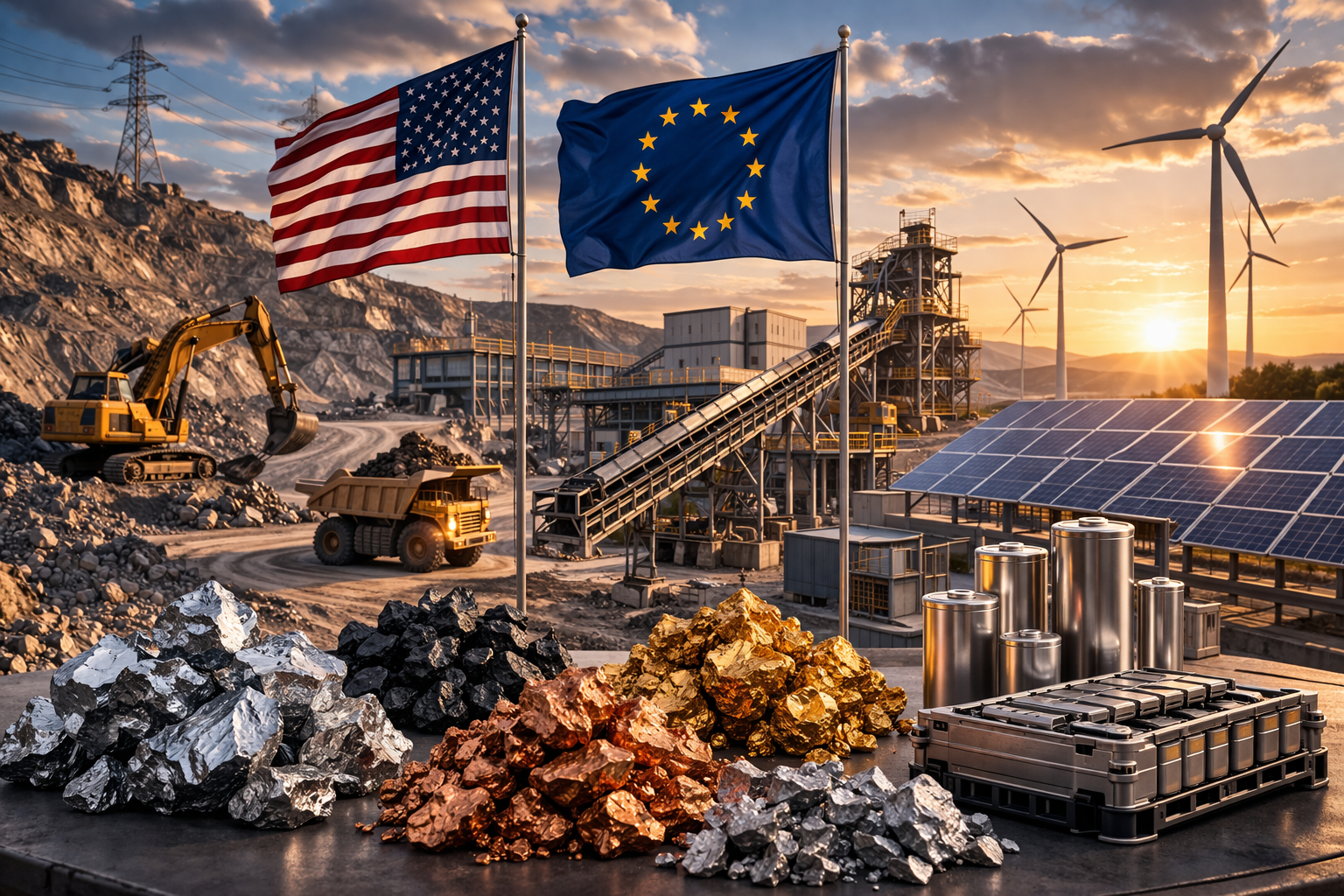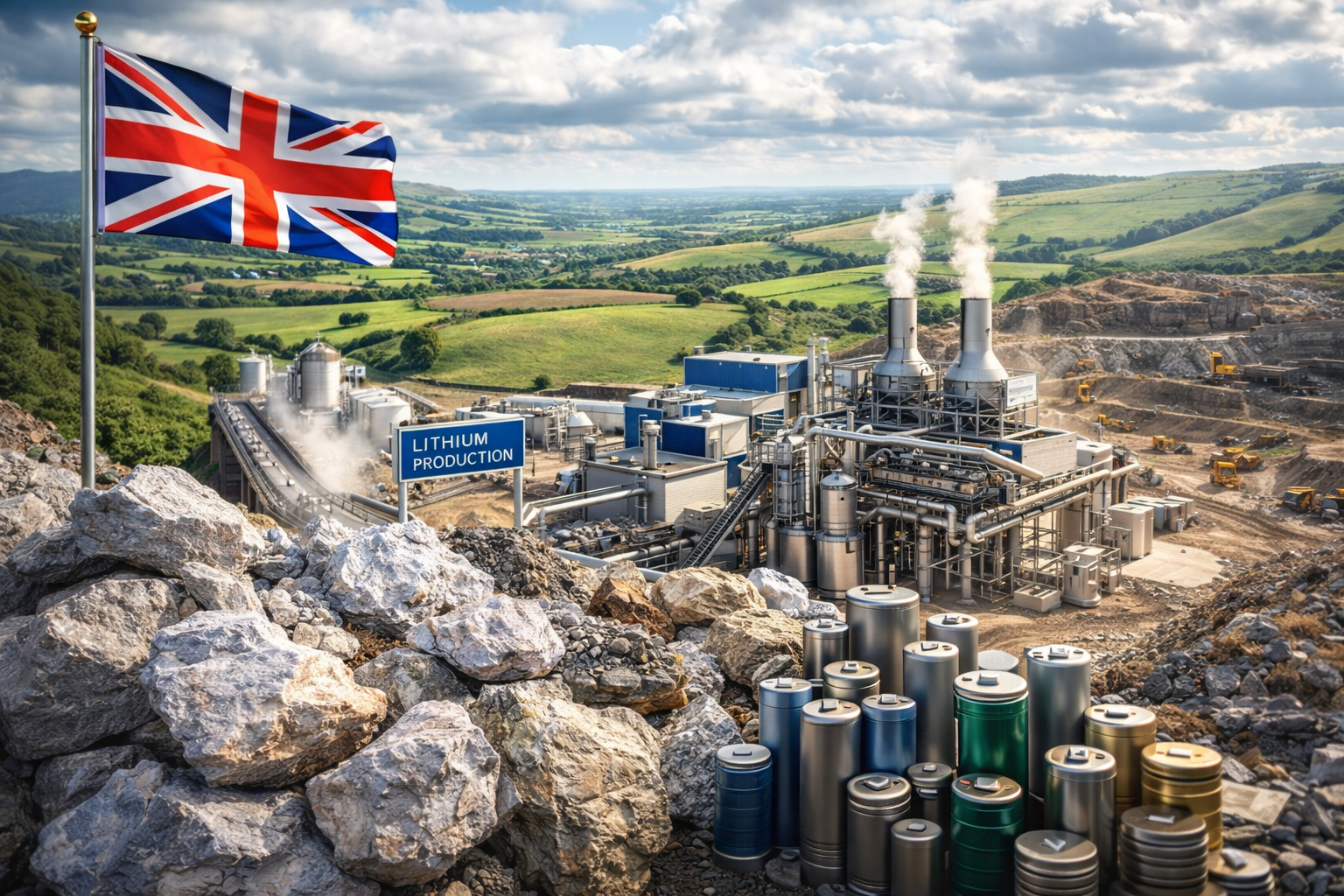
The global energy transition just gained a new industrial milestone — and it’s significant for metals and mining investors worldwide. The United Kingdom has officially launched its first commercial‑scale lithium production facility, a development that signals the West’s deeper push to build localized supply chains for critical metals essential to electric vehicles (EVs), battery storage systems, and advanced technologies.
This achievement — though centered in Europe — matters for investors in North America, where economic policy increasingly aims to reduce reliance on overseas supply and boost domestic capabilities. The UK’s newest plant marks a shift in how critical minerals are produced and processed, with implications for global pricing dynamics, supply resilience, and investor strategies in metals and mining.
A New Chapter in Lithium Production
The lithium plant in Redruth, Cornwall, operated by Geothermal Engineering Ltd (GEL), represents the first commercial geothermal lithium extraction facility in the UK. Initially targeting about 100 tonnes of lithium per year — enough for roughly 2,000 EV batteries — the facility plans to scale to 1,500 tonnes annually and potentially exceed 18,000 tonnes by the end of the decade. The development comes amid rising demand for battery metals and growing policy emphasis on secure, localized supply chains.
The plant uses a geothermal process that combines renewable energy generation with lithium extraction from hot underground water — an innovative approach that aligns with both environmental and industrial goals. Excess electricity generated by the geothermal operation is sold to utility partners, enhancing the project’s economics and demonstrating synergies between renewable power and minerals production.
This new commercial production milestone is part of a broader Western strategy: accelerate domestic and allied capacity in critical minerals to support the burgeoning EV, clean energy, and technology sectors. As policymakers and industrial strategists focus on reducing dependencies on traditional suppliers — particularly in Asia — investors are paying close attention to how these shifts influence global supply chains and long‑term pricing trends.
Why This Matters for Investors
1. Reducing Dominance of Traditional Suppliers
Historically, countries like China have dominated lithium processing and refining, controlling roughly 60% of the global supply chain for battery‑grade lithium and related compounds. As a result, Western manufacturers and automakers have faced supply vulnerabilities and strategic risks. By building domestic capacity — even if smaller initially — Western nations are signaling their intention to diversify sources and rebalance global supply dynamics.
This shift may not immediately erode China’s market share, but it contributes to a slow reconfiguration of global networks that could influence both prices and investment flows for metals like lithium, nickel, and rare earths over the next decade.
2. Policy‑Driven Investment Support
Government strategies are also catalyzing private capital deployment. In the UK, a broader critical minerals strategy aims to produce a meaningful share of domestic mineral demand by 2035 and boost recycling and processing capabilities. Meanwhile, Canada and the United States have launched similar incentives and funding programs to support exploration, processing, and downstream manufacturing for EV and defense applications. These coordinated policy efforts provide a structural backdrop that increases investor confidence in long‑term returns for strategic metals.
3. Supply Chain Resilience as an Investment Theme
Institutional investors are increasingly using supply chain resilience as an investment filter. Projects that integrate extraction with processing and manufacturing — particularly those supported by governmental frameworks — tend to attract more stable institutional capital. The UK lithium plant’s integration with geothermal energy production, for example, represents a value‑added, differentiated model that complements traditional mining projects.
Investors should closely watch financing announcements, public‑private partnerships, and funding allocations (for instance, through U.S. Department of Energy loan programs or Canadian critical minerals partnerships) as forward signals of where capital is likely to flow.
Navigating Market Challenges and Risks
While the launch of commercial lithium production in the UK is promising, investors should balance optimism with caution:
- Capital intensity remains high: Scaling lithium projects — especially ones relying on innovative extraction technologies — requires significant upfront investment and patient capital.
- Market pricing volatility: Lithium and battery metal prices have experienced large fluctuations in recent years, which can compress margins for early producers.
- Regulatory and permitting hurdles: Even with political support, building refining and extraction infrastructure often faces permitting delays and community challenges.
These dynamics underscore the importance of risk‑adjusted positioning within the metals and mining sector.
Future Trends to Watch
Scaling Production and Refining Capacity
Projects like Tees Valley Lithium’s planned refinery in the UK — designed to produce high‑purity lithium hydroxide for EV batteries — signal the next phase of commercialization in the Western supply chain. U.S. and Canadian investors should monitor how similar facilities progress as they can become key nodes in regional and global EV value chains.
Tech Innovation in Extraction
Direct lithium extraction (DLE) and geothermal‑integrated methods continue to gain attention for their environmental and economic advantages. Breakthroughs in extraction technologies could lower costs and shorten production timelines, making emerging projects more competitive.
Strategic Partnerships and Offtake Agreements
Early offtake deals with battery manufacturers or EV producers can de‑risk revenue streams for new lithium producers. Investors should watch for announcements of long‑term supply contracts, which often precede project financing and construction milestones.
Key Investment Insight
The UK’s commercial lithium plant launch is more than a milestone; it’s a bellwether for Western metals strategy. While North American projects may still be in development, this achievement foreshadows the kinds of supply chain investments that could redefine the critical minerals landscape over the next decade.
For investors, the core takeaway is clear: even small-scale production infrastructure backed by policy incentives can shift market structures and unlock new strategic value. Positioning capital in companies at the intersection of extraction, processing, and downstream integration — particularly those with strong policy alignment — may yield outsized returns as global demand for battery metals continues to grow.
With regional supply chains diversifying and critical mineral projects gaining traction, 2026 could mark the beginning of a structural rerating in the metals and mining sector.
Stay connected with MoneyNews.Today for daily insights into market‑moving developments in metals, mining, and emerging industrial ecosystems.