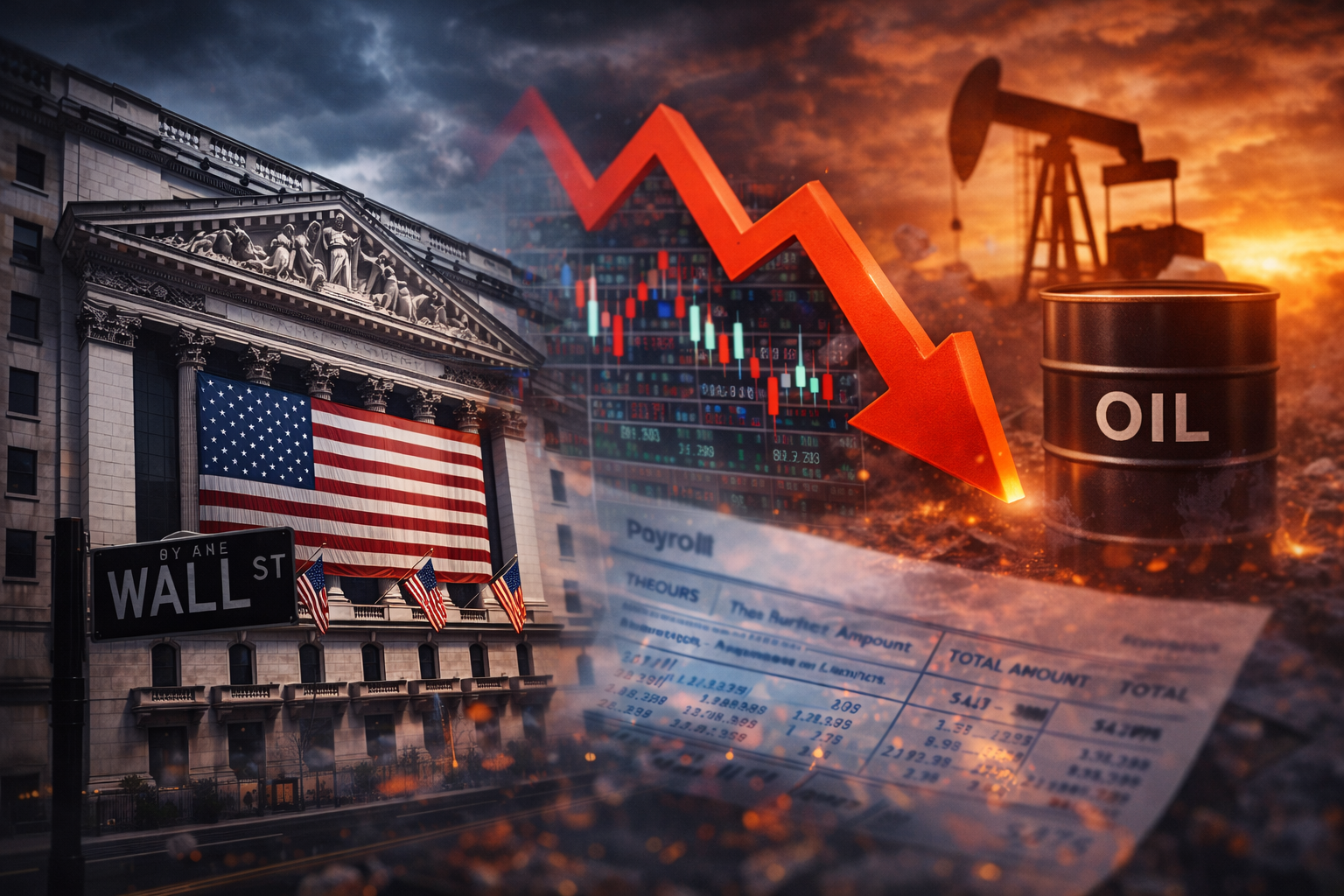
Investors on Wall Street are facing a familiar but unsettling combination: rising energy prices and weakening economic data. Markets have turned volatile as oil prices climb and fresh labor market indicators suggest the U.S. economy may be slowing. The dual pressures have revived a term that sends chills through financial markets—stagflation.
Major U.S. stock indexes have slipped in recent sessions, with the S&P 500 and Nasdaq Composite both declining as investors reassess the outlook for growth, inflation, and monetary policy. According to market coverage from Reuters, the combination of rising oil prices and softer employment data is raising concerns that the U.S. economy could face slower growth while inflation pressures remain elevated.
For investors, the situation creates a complex landscape. Economic slowdowns typically push central banks toward easing policy, but persistent inflation—especially from energy costs—can limit that flexibility. The result is a challenging environment for equities, particularly high-growth sectors sensitive to interest rates.
Markets React to Rising Energy Costs
Energy prices have historically played a powerful role in shaping global financial markets, and recent developments are no exception.
Oil prices have surged amid geopolitical tensions and concerns about potential supply disruptions, pushing energy markets higher and reigniting inflation fears. Because energy costs affect nearly every sector of the economy—from manufacturing and transportation to consumer goods—rising oil prices can ripple across the entire economic system.
Higher energy prices often translate into increased operating costs for businesses and higher prices for consumers. When these pressures persist, inflation can remain elevated even if broader economic activity begins to slow.
Financial analysts note that this dynamic is precisely what makes stagflation so difficult to manage.
Historically, periods of stagflation have been challenging for equity markets because the traditional tools used to stimulate economic growth—such as lower interest rates—can risk worsening inflation if price pressures remain strong.
As oil prices climb, investors are increasingly worried that inflation may remain sticky even as economic momentum begins to weaken.
Weak Jobs Data Signals Slowing Economic Momentum
Adding to investor concerns are recent signals that the U.S. labor market may be losing some of its momentum.
Employment indicators cited in reports from Reuters suggest that hiring activity could be cooling after an extended period of resilience. While the labor market remains relatively strong compared with historical standards, even modest signs of weakness can influence investor expectations about economic growth.
Employment trends are closely watched by economists and policymakers because consumer spending—one of the largest drivers of the U.S. economy—depends heavily on job stability and wage growth.
If hiring slows or unemployment begins to rise, consumer spending may weaken, potentially dragging down corporate earnings across multiple sectors.
This possibility has prompted investors to reassess their exposure to growth stocks and economically sensitive industries.
Why Stagflation Concerns Matter for Markets
Stagflation represents a particularly challenging environment for financial markets because it combines two negative forces: slow economic growth and persistent inflation.
When economic growth slows, corporate profits often decline, putting pressure on stock prices. At the same time, high inflation can push central banks to maintain tighter monetary policy, keeping borrowing costs elevated.
This combination can reduce liquidity across financial markets and limit the upside potential for equities.
The Federal Reserve now faces a delicate balancing act. Policymakers must monitor inflation trends while also considering the risks of slowing economic growth.
If inflation remains elevated due to rising energy prices, the Fed may have less room to lower interest rates even if economic conditions weaken.
Market participants are closely watching upcoming economic data releases and central bank commentary for clues about how policymakers might respond.
Sector Rotation Signals a Defensive Shift
As uncertainty increases, investors are beginning to rotate capital into sectors traditionally viewed as more resilient during periods of economic turbulence.
Defensive sectors such as energy, commodities, and healthcare are seeing renewed interest from investors seeking stability amid market volatility.
Energy companies may benefit directly from higher oil prices, while commodity producers often perform well during inflationary environments. Healthcare stocks, meanwhile, tend to be less sensitive to economic cycles because demand for medical services remains relatively stable.
In contrast, growth-oriented sectors—particularly technology companies with high valuations—may face pressure if interest rates remain elevated.
Higher interest rates can reduce the present value of future earnings, making growth stocks less attractive compared with more stable, income-generating assets.
This shift in investor sentiment is contributing to broader market volatility as portfolios adjust to the evolving macroeconomic environment.
Global Markets Feel the Ripple Effects
The implications of rising oil prices and economic uncertainty extend far beyond U.S. markets.
Because energy prices influence global trade, transportation costs, and manufacturing activity, fluctuations in oil markets can affect economies around the world. Emerging markets, in particular, can face increased pressure if higher energy prices lead to inflation and currency volatility.
International investors are therefore closely monitoring developments in U.S. economic data and energy markets.
The United States remains the world’s largest economy, and shifts in its growth outlook can have cascading effects across global financial markets.
Analysts at several investment firms have noted that geopolitical tensions, supply chain disruptions, and energy market volatility are increasingly interconnected forces shaping investor sentiment worldwide.
Future Trends to Watch
Several key developments could determine how markets evolve in the coming months.
Oil Price Stability
If oil prices stabilize or decline, inflation pressures could ease, providing relief for equity markets. Conversely, sustained energy price increases could intensify stagflation concerns.
Federal Reserve Policy Signals
Statements from the Federal Reserve will remain one of the most important drivers of market sentiment. Investors will watch closely for indications of how policymakers plan to balance inflation risks with slowing growth.
Labor Market Strength
Future employment reports will offer critical insights into the health of the U.S. economy. A strong labor market could help support consumer spending and stabilize market confidence.
Corporate Earnings Trends
Upcoming earnings reports may reveal how companies are managing rising costs and shifting consumer demand. Profit guidance from major corporations will likely influence sector performance across the market.
Key Investment Insight
Periods of macroeconomic uncertainty often trigger major shifts in investor strategy.
The current environment suggests that diversification and sector rotation may become increasingly important. Investors are already adjusting portfolios to include assets that historically perform better during inflationary or volatile economic conditions.
Energy companies, commodity producers, and defensive sectors such as healthcare may attract increased investor attention if stagflation concerns persist.
At the same time, long-term investors should remember that market volatility can also create opportunities to accumulate high-quality assets at more attractive valuations.
Understanding how macroeconomic trends—from oil prices to labor market data—shape market sentiment will be essential for navigating the months ahead.
Financial markets are constantly evolving as economic forces, geopolitical developments, and investor sentiment intersect. For timely analysis, market intelligence, and investor-focused reporting on the trends shaping global markets, stay connected with MoneyNews.Today, your trusted destination for daily financial insights.