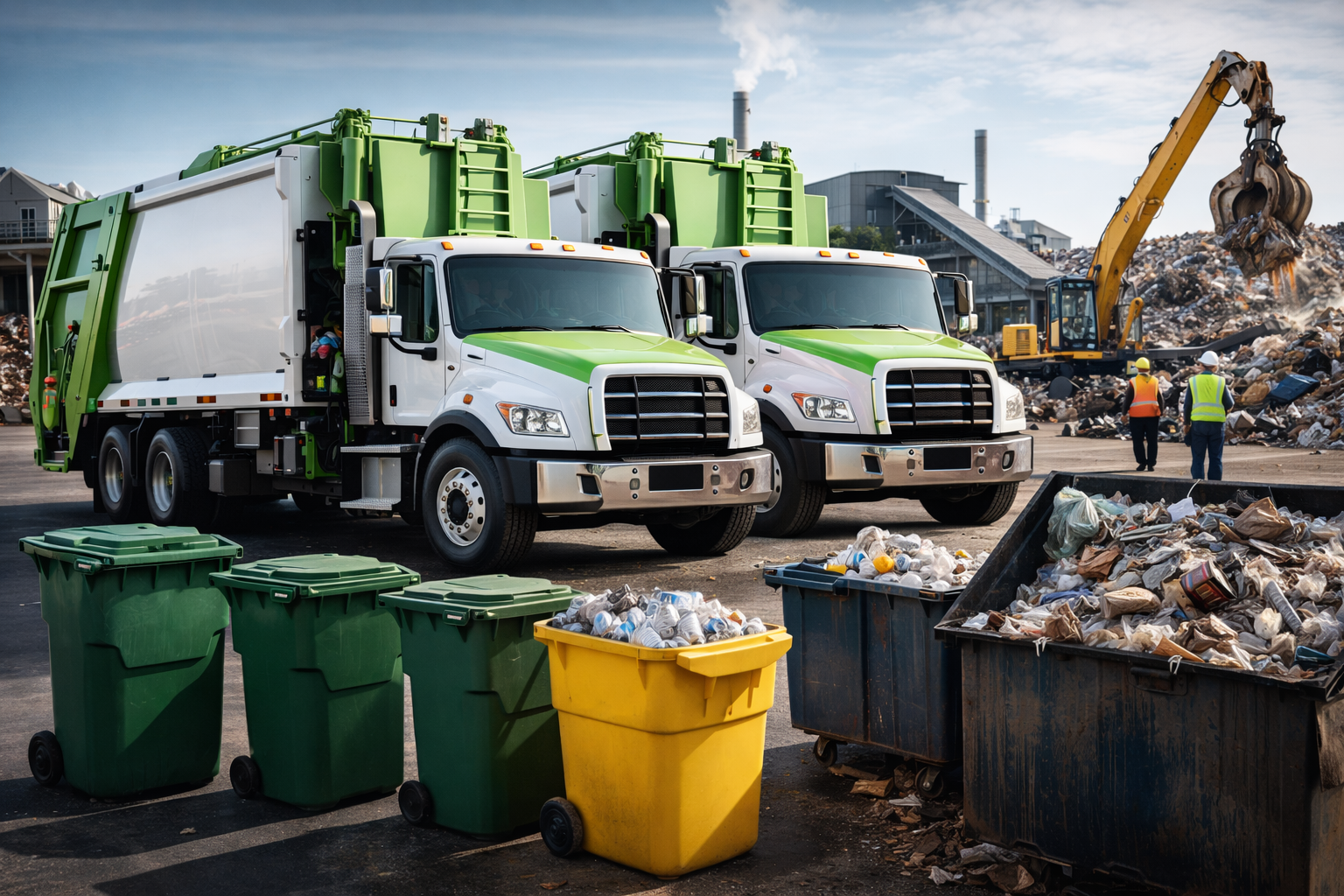
A quiet corner of the market is suddenly getting loud—and investors are starting to pay attention.
While headlines remain dominated by AI, geopolitics, and tech earnings, a major $4.63 billion deal in Canada is shining a spotlight on a sector that has long compounded value in the background. GFL Environmental’s acquisition of Secure Waste Infrastructure is more than just another M&A transaction—it’s a signal that consolidation in environmental and waste services is accelerating, and the implications for investors could be significant.
According to Reuters (April 13, 2026), the deal underscores growing demand for integrated waste solutions tied to energy production, industrial activity, and tightening environmental regulations. For markets, this isn’t just about waste—it’s about infrastructure, compliance, and long-term cash flow stability.
A Sector Hidden in Plain Sight
Waste management and environmental services have traditionally been viewed as defensive, low-growth industries. But that perception is increasingly outdated.
Today, the sector sits at the intersection of several powerful macro trends:
- Rising global energy production
- Stricter ESG and environmental compliance requirements
- Industrial expansion and reshoring
- Infrastructure modernization
The acquisition of Secure Waste Infrastructure positions GFL Environmental to expand its footprint in handling complex waste streams generated by oil, gas, and industrial operations—areas where margins tend to be higher and barriers to entry are significant.
This is not just consolidation—it’s strategic scaling in a fragmented market.
Why This Matters for Investors
The significance of this deal goes far beyond the companies involved. It highlights a structural shift that could reshape the investment landscape within the sector.
1. Consolidation Is Creating Scale Advantages
The waste and environmental services industry remains highly fragmented, particularly in specialized segments like energy waste, hazardous materials, and environmental remediation.
Large players like GFL Environmental are using acquisitions to:
- Expand geographic reach
- Integrate service offerings
- Improve operational efficiency
- Strengthen pricing power
Scale matters in this business. Larger operators can optimize logistics, invest in advanced technologies, and secure long-term contracts with industrial clients.
For investors, this creates a clear dynamic: the biggest players are getting stronger, faster.
2. ESG Compliance Is Driving Structural Demand
Environmental regulations are tightening globally, and companies across industries are facing increasing pressure to manage waste responsibly.
This includes:
- Hazardous waste disposal
- Water treatment and recycling
- Emissions and environmental monitoring
As compliance becomes more complex and costly, businesses are outsourcing these functions to specialized service providers.
This trend is turning environmental services into a recurring revenue model, with long-term contracts and high customer retention rates.
3. Energy Sector Linkages Are Expanding
One of the most important aspects of this deal is its connection to the energy sector.
Secure Waste Infrastructure specializes in managing waste generated by oil and gas operations, including:
- Drilling byproducts
- Produced water
- Industrial waste streams
As energy production remains elevated—especially amid geopolitical uncertainty—demand for these services is rising in tandem.
This creates a powerful linkage: energy activity drives waste services demand, providing a secondary revenue stream tied to commodity cycles.
The Numbers Behind the Deal
The $4.63 billion valuation reflects growing investor confidence in the sector’s long-term prospects.
According to Reuters, the acquisition will significantly expand GFL Environmental’s capabilities in Western Canada, a key region for energy production and industrial activity.
More broadly, industry analysts estimate that the global waste management market could exceed $2 trillion in value over the next decade, driven by:
- Urbanization
- Industrialization
- Environmental regulation
This positions the sector as a long-duration growth story, rather than a cyclical play.
Future Trends to Watch
The implications of this deal extend well beyond Canada. Several key trends are likely to shape the sector’s evolution in the coming years.
Continued M&A Activity
The current deal is unlikely to be an outlier. As companies seek scale and efficiency, further consolidation is expected across:
- Regional waste operators
- Specialized environmental service providers
- Recycling and resource recovery firms
This could create opportunities for investors to identify acquisition targets before they are absorbed by larger players.
Technology Integration
Technology is playing an increasingly important role in waste management, including:
- Automation and robotics in sorting facilities
- Data analytics for route optimization
- Advanced recycling technologies
Companies that successfully integrate technology into their operations may achieve higher margins and stronger competitive positioning.
Circular Economy Opportunities
The shift toward a circular economy—where waste is reused, recycled, or repurposed—is creating new revenue streams.
This includes:
- Resource recovery from industrial waste
- Renewable energy generation from waste
- Sustainable materials processing
These opportunities are transforming waste from a cost center into a value-generating asset.
Risks Investors Should Consider
Despite its attractive fundamentals, the sector is not without risks:
- Regulatory changes: While generally supportive, shifting policies could impact profitability
- Execution risk in M&A: Integrating large acquisitions can be complex and costly
- Commodity exposure: Ties to energy markets can introduce cyclical volatility
Investors should focus on companies with strong balance sheets, disciplined acquisition strategies, and proven operational execution.
Key Investment Insight
The waste and environmental services sector is evolving into a quiet compounder—a space where consistent demand, regulatory tailwinds, and consolidation dynamics create long-term value.
The GFL Environmental–Secure Waste Infrastructure deal highlights several key takeaways:
- Scale is becoming a critical competitive advantage
- ESG compliance is driving recurring revenue growth
- Energy sector linkages provide additional upside
For investors, this is a sector worth watching closely—not for short-term hype, but for durable, compounding returns.
The Bigger Picture
In a market often driven by high-growth narratives and rapid innovation cycles, waste and environmental services offer something different: stability with upside.
As global economies expand and environmental challenges intensify, the need for efficient, scalable waste solutions will only grow. Companies that can deliver these solutions at scale are positioning themselves as essential infrastructure providers.
The recent Canadian deal is a reminder that some of the most compelling opportunities in today’s market are not the most obvious ones—they’re the ones quietly building momentum beneath the surface.
Stay with MoneyNews.Today for daily, data-driven insights into emerging industries and the trends shaping tomorrow’s investment landscape.