
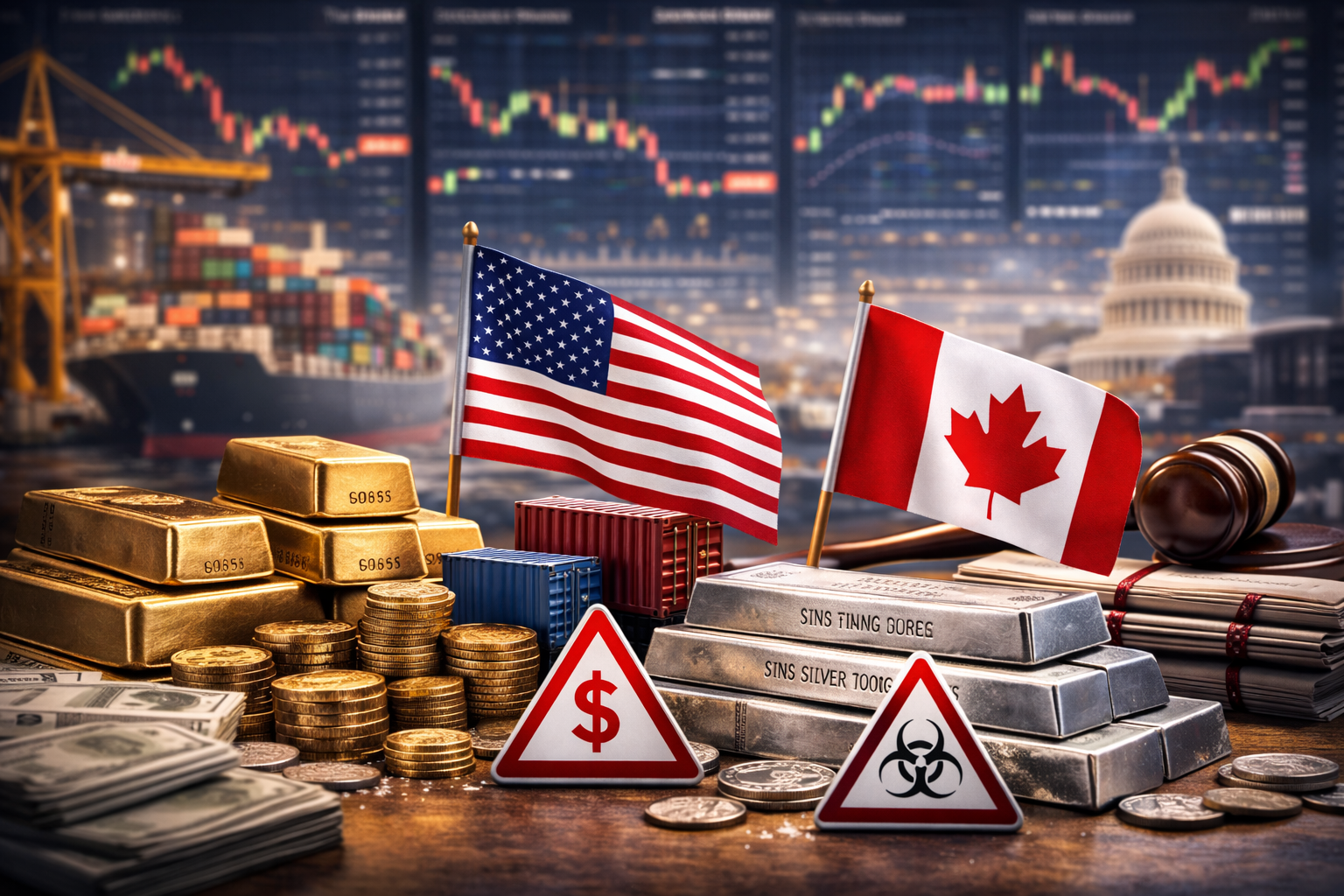
Global markets are once again being forced to price in politics. Renewed U.S. tariff threats against Canada and mounting uncertainty over stalled federal spending negotiations have revived fears of a partial government shutdown, injecting fresh volatility into equities, currencies, and cross-border trade expectations. As investors brace for a week heavy with earnings and economic data, policy risk is re-emerging as a dominant macro force, shaping risk appetite and sector performance.
According to Reuters and Seeking Alpha commentary, the combination of trade tension and fiscal gridlock is weighing on futures markets and driving demand for traditional safe havens. The U.S. dollar has shown increased volatility, while equity indices have struggled to gain traction as portfolio managers reassess exposure to politically sensitive sectors.
Why This Matters for Investors
Markets dislike uncertainty, and few factors introduce it more abruptly than unresolved trade policy and the threat of a government shutdown. Tariffs can disrupt supply chains, raise input costs, and compress corporate margins, while a shutdown risks delaying federal spending, contract payments, and key economic data releases that guide monetary policy expectations.
Historically, episodes of fiscal brinkmanship in Washington have coincided with short-term spikes in volatility and a rotation into defensive assets. Research from the Congressional Budget Office shows that previous shutdowns, even when brief, temporarily slowed GDP growth and dampened business sentiment. For investors, this creates a dual risk: near-term market swings and potential downward revisions to corporate earnings guidance.
Trade Tensions and Cross-Border Implications
The renewed focus on tariffs targeting Canadian imports is particularly significant given the depth of U.S.–Canada trade ties. Canada remains one of the United States’ largest trading partners, supplying critical inputs across energy, automotive, agriculture, and industrial manufacturing. Any escalation in tariff policy could ripple through North American supply chains, affecting costs, pricing power, and capital investment decisions.
Analysts cited by Reuters note that even the threat of higher duties can alter corporate behavior, prompting firms to delay orders, adjust sourcing strategies, or hedge currency exposure. Currency markets often respond swiftly to such developments, with the Canadian dollar and U.S. dollar reflecting shifts in relative growth and interest-rate expectations.
Government Shutdown Risk and Market Confidence
Alongside trade concerns, stalled budget negotiations have raised the possibility of a partial federal government shutdown. While essential services typically continue, non-essential operations and some federal payments can be delayed, creating uncertainty for contractors, infrastructure projects, and consumer-facing services.
From a market standpoint, shutdowns can also cloud the economic outlook by postponing releases of key data such as employment, inflation, and GDP. According to Bloomberg, these data gaps can complicate central-bank decision-making and add another layer of unpredictability to interest-rate expectations—an important driver for equity and bond valuations.
Sector and Asset-Class Sensitivity
Periods of elevated policy risk often produce clear patterns in asset allocation:
- Defensive Equities: Utilities, healthcare, and consumer staples tend to outperform as investors seek stable cash flows.
- Commodities and Safe Havens: Gold and other precious metals frequently attract inflows as hedges against political and currency risk.
- Currencies and Rates: Heightened uncertainty can support the U.S. dollar in the short term while increasing volatility across G10 and emerging-market currencies.
- Cyclicals and Trade-Exposed Stocks: Industrials, autos, and exporters may face pressure if tariff risks escalate or global growth expectations soften.
Seeking Alpha analysts have highlighted that during past episodes of trade tension, companies with strong domestic revenue bases and low leverage generally weathered volatility better than highly globalized peers.
Future Trends to Watch
Several developments will determine how persistent the current policy overhang becomes:
- Negotiation Outcomes: Any progress on budget agreements or trade talks could quickly ease risk premiums.
- Central Bank Communication: Clarity from the Federal Reserve on how it views fiscal uncertainty and its impact on growth and inflation will be closely watched.
- Corporate Guidance: Earnings calls may reveal whether companies are already adjusting forecasts or capital-spending plans in response to policy risks.
Market participants will also monitor volatility indices and credit spreads for signs that political stress is spilling over into broader financial conditions.
Key Investment Insight
Policy risk is once again a central macro driver, and investors may benefit from preparing for a period of heightened volatility. Diversification across asset classes, selective exposure to defensive sectors, and the use of hedging strategies—such as options or allocations to precious metals and low-correlation assets—can help cushion portfolios against abrupt policy-driven market moves. Keeping an eye on currency trends and interest-rate expectations can also provide early signals of shifting risk sentiment.
As trade policy and fiscal negotiations continue to influence global markets, staying informed is essential. Follow MoneyNews.Today for timely analysis and daily insights into how political developments are shaping investment opportunities and risks worldwide.




