
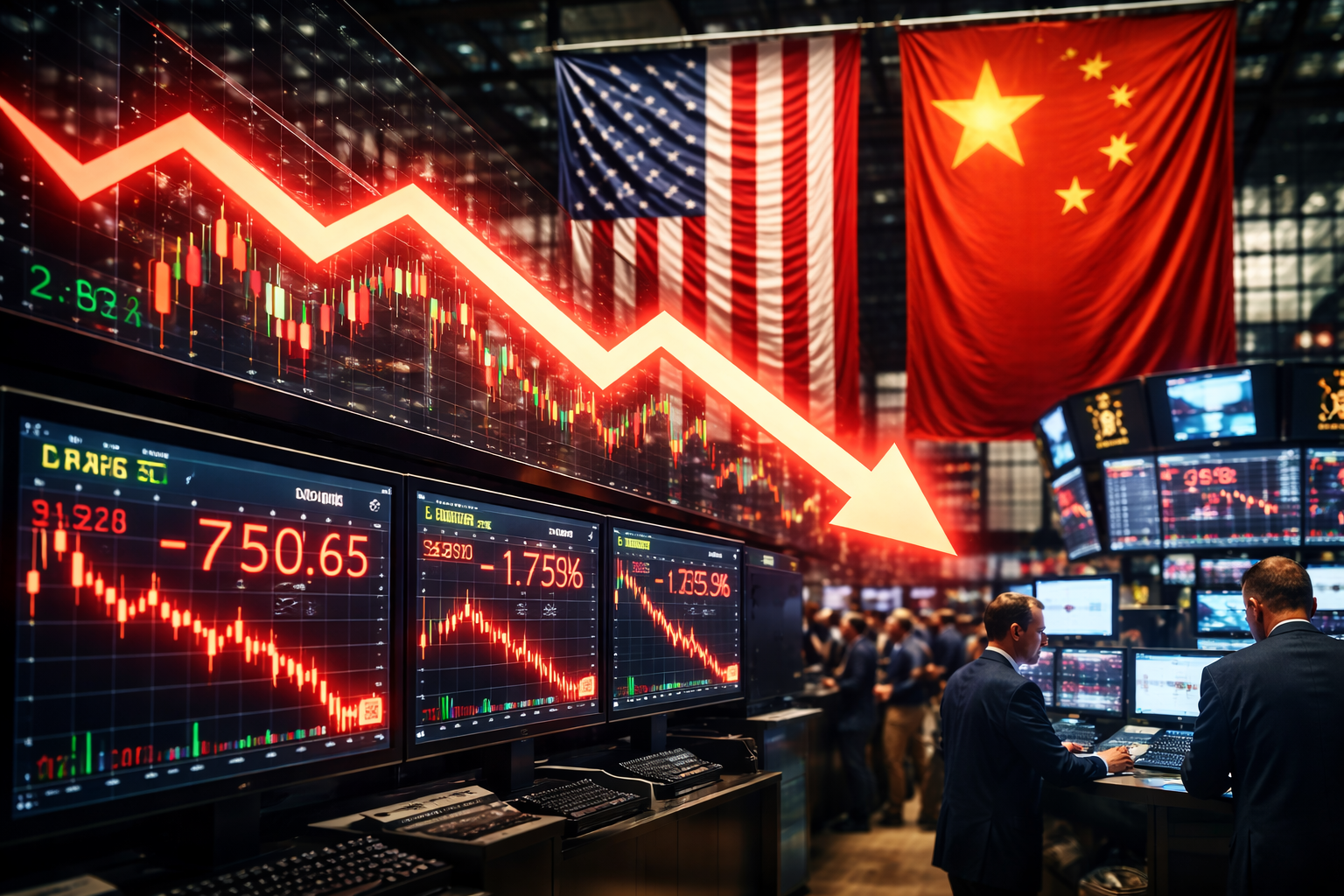
Wall Street’s rally narrative hit a pause button as tariff headlines returned to center stage.
U.S. equities opened lower following renewed uncertainty around trade policy, after a Supreme Court ruling and fresh tariff announcements unsettled investors. According to reporting from Reuters and coverage highlighted by The Economic Times, major benchmarks including the Dow Jones Industrial Average, S&P 500, and Nasdaq Composite opened in negative territory as investors reassessed geopolitical and economic risks.
Markets have grown increasingly sensitive to policy signals, and the latest developments suggest volatility may remain elevated until greater clarity emerges.
Policy Headlines Take Center Stage
Trade policy uncertainty resurfaced after legal developments and executive commentary introduced new ambiguity around tariff enforcement and expansion. Investors quickly rotated out of higher-beta sectors, particularly technology and industrial exporters, which are most exposed to global supply chains.
Reuters reported that early trading reflected broad-based caution, with cyclical stocks underperforming and defensive sectors showing relative resilience. This pattern underscores how quickly geopolitical risk can ripple through asset allocation decisions.
The concern is not merely about tariffs themselves — but about unpredictability. Markets generally tolerate higher costs when they are clearly defined. What investors struggle with is shifting policy direction that complicates forward earnings projections.
Why This Matters for Investors
Trade policy affects corporate earnings in several direct and indirect ways:
1. Input Costs and Margins
Tariffs can raise input costs for manufacturers and retailers, compressing profit margins if companies are unable to pass on higher expenses to consumers.
2. Supply Chain Disruption
Uncertainty can delay capital expenditures and complicate logistics planning, especially for multinational corporations.
3. Inflation and Monetary Policy
Tariffs can be inflationary, potentially influencing Federal Reserve decisions. While the Fed has signaled a data-dependent approach, any upward pressure on inflation expectations could impact interest rate outlooks.
Analysts at major financial institutions have previously noted that equity markets often experience short-term drawdowns during periods of heightened trade tension, particularly when policy shifts are abrupt.
Sector Rotation Signals a Defensive Tilt
Market internals suggest a modest rotation into defensive areas such as utilities, healthcare, and consumer staples. These sectors tend to perform better when growth expectations moderate or uncertainty increases.
Meanwhile, export-heavy industrials and semiconductor names — often sensitive to cross-border trade flows — saw early pressure.
The pattern aligns with historical responses to geopolitical stress. When investors perceive rising macro risk, they typically prioritize capital preservation over growth exposure.
However, it’s important to note that broad market declines remain measured rather than disorderly. Volatility has increased, but liquidity conditions remain intact.
Future Trends to Watch
Clarity on Tariff Scope
Markets will look for detailed guidance regarding the duration, scope, and enforcement of any new trade measures. Clear timelines could stabilize sentiment.
Corporate Earnings Commentary
Upcoming earnings calls may offer insight into how companies are adjusting supply chains or pricing strategies in response to potential trade shifts.
Federal Reserve Response
If tariffs materially affect inflation expectations, Fed communications could shift tone — a critical variable for equity valuations.
Global Market Reaction
International equity and currency markets may provide early signals of broader economic implications.
Key Investment Insight
Geopolitical policy risk is nudging markets toward defensive allocations.
Investors may consider:
- Diversifying across sectors to reduce concentrated exposure to trade-sensitive industries.
- Increasing allocation to defensive equities or dividend-paying stocks.
- Exploring hedging strategies, including options or inverse ETFs, where appropriate.
- Maintaining liquidity to capitalize on potential volatility-driven opportunities.
Periods of uncertainty often create both risk and opportunity. While headline-driven pullbacks can pressure valuations, they can also present attractive entry points for high-quality companies with durable earnings power.
Importantly, markets have historically adapted to trade policy shifts over time. The key for investors is to distinguish between short-term volatility and structural economic change.
Equity markets thrive on clarity. Until trade policy direction becomes more predictable, investors should expect continued swings in sentiment.
For disciplined investors, volatility is not an obstacle — it is information.
Stay ahead of market-moving developments with MoneyNews.Today — your trusted source for daily stock market insights, policy analysis, and actionable investment intelligence.




