
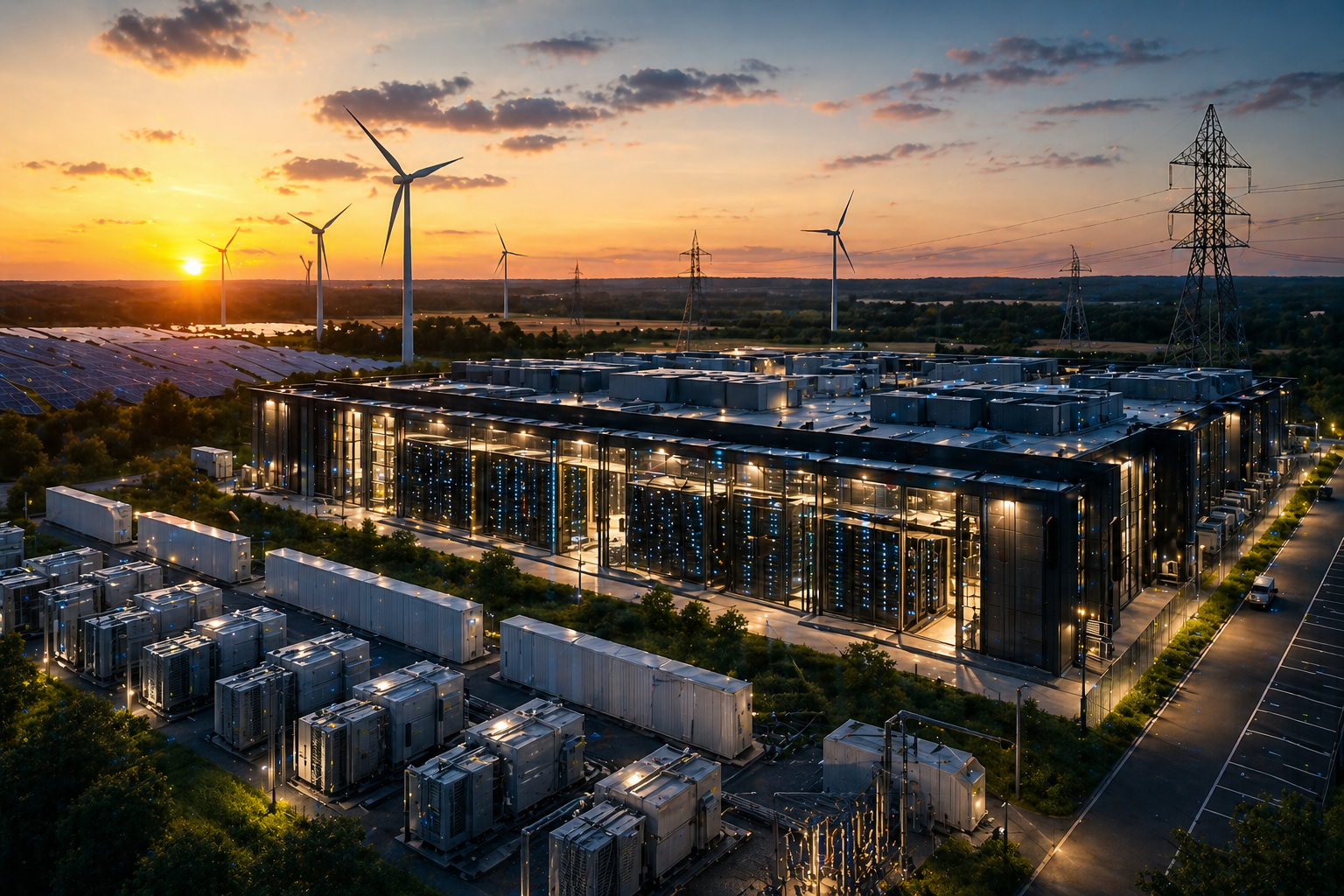
The artificial intelligence boom is no longer just a software story—it’s rapidly becoming an energy story. As demand for AI-powered applications accelerates, a new bottleneck is emerging: power. From hyperscale cloud providers to enterprise AI deployments, the infrastructure required to support next-generation computing is placing unprecedented strain on energy systems across the United States and Canada.
According to recent reporting from Reuters and the Financial Times (April 27, 2026), surging AI workloads are driving a sharp increase in demand for power-intensive data centers. This shift is triggering a wave of investment not only in digital infrastructure, but also in utilities, grid modernization, and renewable energy. For investors, the implications are profound: the AI revolution is expanding far beyond tech—and into the core of the global energy system.
The Hidden Cost of AI: Power Consumption
Artificial intelligence models—particularly large-scale generative AI systems—require enormous computational resources. Training and running these models involves thousands of high-performance chips operating simultaneously, often within massive data centers that consume vast amounts of electricity.
Industry estimates suggest that AI-driven data center demand could double or even triple global electricity consumption from digital infrastructure over the next decade. The International Energy Agency (IEA) has previously warned that data centers are becoming one of the fastest-growing sources of electricity demand worldwide.
Reuters reports that major technology companies are already securing long-term energy contracts and investing directly in power generation assets to ensure reliable supply. In some regions, utilities are struggling to keep pace with the rapid growth in demand, leading to concerns about grid capacity and energy pricing.
This dynamic is reshaping the economics of AI. It’s no longer just about computing power—it’s about access to energy.
Data Centers Become Strategic Assets
The role of data centers is evolving. Once viewed as passive infrastructure, they are now at the center of the AI ecosystem.
Hyperscale data centers—operated by major cloud providers—are expanding aggressively to meet AI demand. These facilities require not only advanced hardware but also sophisticated cooling systems and proximity to reliable energy sources.
The Financial Times highlights that location is becoming a critical factor. Data centers are increasingly being built in regions with abundant renewable energy, favorable regulatory environments, and access to transmission infrastructure.
This trend is driving significant capital investment. Billions of dollars are being allocated to build new facilities, upgrade existing ones, and integrate energy-efficient technologies. For investors, data centers are emerging as a key intersection point between technology and infrastructure.
Why This Matters for Investors
The convergence of AI and energy is creating a ripple effect across multiple sectors.
While much of the market’s focus has been on AI software and semiconductor companies, the next phase of value creation may lie in the supporting infrastructure. Utilities, energy producers, and grid operators are becoming critical enablers of the AI economy.
This shift broadens the investment opportunity set. Instead of concentrating solely on technology stocks, investors can gain exposure to the AI theme through sectors that were previously considered unrelated.
Moreover, the demand for reliable and sustainable energy is introducing new dynamics into capital allocation. Companies that can provide scalable, cost-effective power solutions are likely to benefit from long-term structural demand.
In this context, the AI boom is not just a tech story—it’s an industrial transformation.
Utilities and Energy Providers Step Into the Spotlight
One of the most immediate beneficiaries of this trend is the utilities sector.
As data center demand grows, utilities are seeing increased load requests from large-scale customers. In some cases, single data center projects can require as much power as small cities.
This surge in demand is prompting utilities to invest in grid expansion, transmission infrastructure, and energy generation capacity. Bloomberg analysts note that regulated utilities may benefit from predictable returns on these investments, making them attractive to long-term investors.
At the same time, energy producers—particularly those focused on renewables—are gaining strategic importance. Tech companies are increasingly seeking clean energy sources to meet sustainability goals and manage long-term costs.
Power purchase agreements (PPAs) between tech firms and renewable energy providers are becoming more common, creating stable revenue streams for energy companies.
Grid Modernization Becomes a Priority
The existing power grid was not designed for the demands of AI-scale computing. As a result, grid modernization is becoming a central focus.
Investments in smart grids, energy storage, and transmission infrastructure are accelerating. Governments and private sector players are working to upgrade aging systems and improve efficiency.
The integration of renewable energy adds another layer of complexity. While renewables offer cost and sustainability advantages, they also introduce variability into the grid. Managing this variability requires advanced technologies and coordinated planning.
According to the Financial Times, grid constraints are already influencing where data centers can be built. Regions with limited capacity are facing delays, while those with robust infrastructure are attracting significant investment.
For investors, companies involved in grid technology, energy storage, and infrastructure development represent a growing opportunity.
The Role of Renewable Energy in the AI Economy
Sustainability is becoming a key consideration in the AI-energy equation.
Major tech companies have made ambitious commitments to reduce carbon emissions, and energy-intensive AI operations could challenge those goals. As a result, there is a strong push toward renewable energy integration.
Solar, wind, and hydroelectric power are increasingly being used to support data center operations. In some cases, companies are co-locating data centers with renewable energy projects to ensure direct access to clean power.
This trend is driving innovation in energy management and storage solutions. Battery technology, in particular, is gaining importance as a way to balance supply and demand.
Reuters reports that the intersection of AI and clean energy is attracting significant investor interest, as it aligns with both growth and sustainability themes.
Future Trends to Watch
As the convergence of AI and energy continues, several key trends are likely to shape the investment landscape:
1. Co-Location of Data Centers and Energy Assets
Expect to see more data centers built near renewable energy sources, reducing transmission costs and improving efficiency.
2. Expansion of Power Purchase Agreements
Long-term contracts between tech companies and energy providers will become more prevalent, providing revenue stability for energy firms.
3. Advances in Energy Efficiency
Innovations in chip design, cooling systems, and data center architecture will play a critical role in managing costs and reducing environmental impact.
4. Government Policy and Incentives
Policies aimed at supporting infrastructure development and clean energy adoption will influence where and how investments are made.
5. Increased Private Capital Inflows
Infrastructure funds, private equity, and institutional investors are likely to increase allocations to energy and data center assets.
Key Investment Insight
The AI boom is expanding beyond software and semiconductors—it is reshaping the entire infrastructure landscape.
For investors, this means looking beyond traditional tech plays and identifying opportunities in adjacent sectors. Key areas to watch include:
- Utilities and grid operators benefiting from increased electricity demand
- Renewable energy providers supplying clean power to data centers
- Infrastructure companies involved in data center construction and operation
- Energy storage and grid technology firms enabling efficient power distribution
The most compelling opportunities may lie in companies that sit at the intersection of these trends—those that can support the growing energy needs of the AI economy while maintaining cost efficiency and sustainability.
In this environment, diversification across sectors tied to the AI value chain could provide a strategic advantage.
The convergence of AI and energy is one of the most underappreciated shifts in today’s market. As demand for computing power continues to rise, the ability to deliver reliable, scalable energy will become a defining factor in the success of the AI ecosystem.
Stay informed with MoneyNews.Today for daily insights, emerging trends, and in-depth analysis that helps you navigate the evolving investment landscape.




