
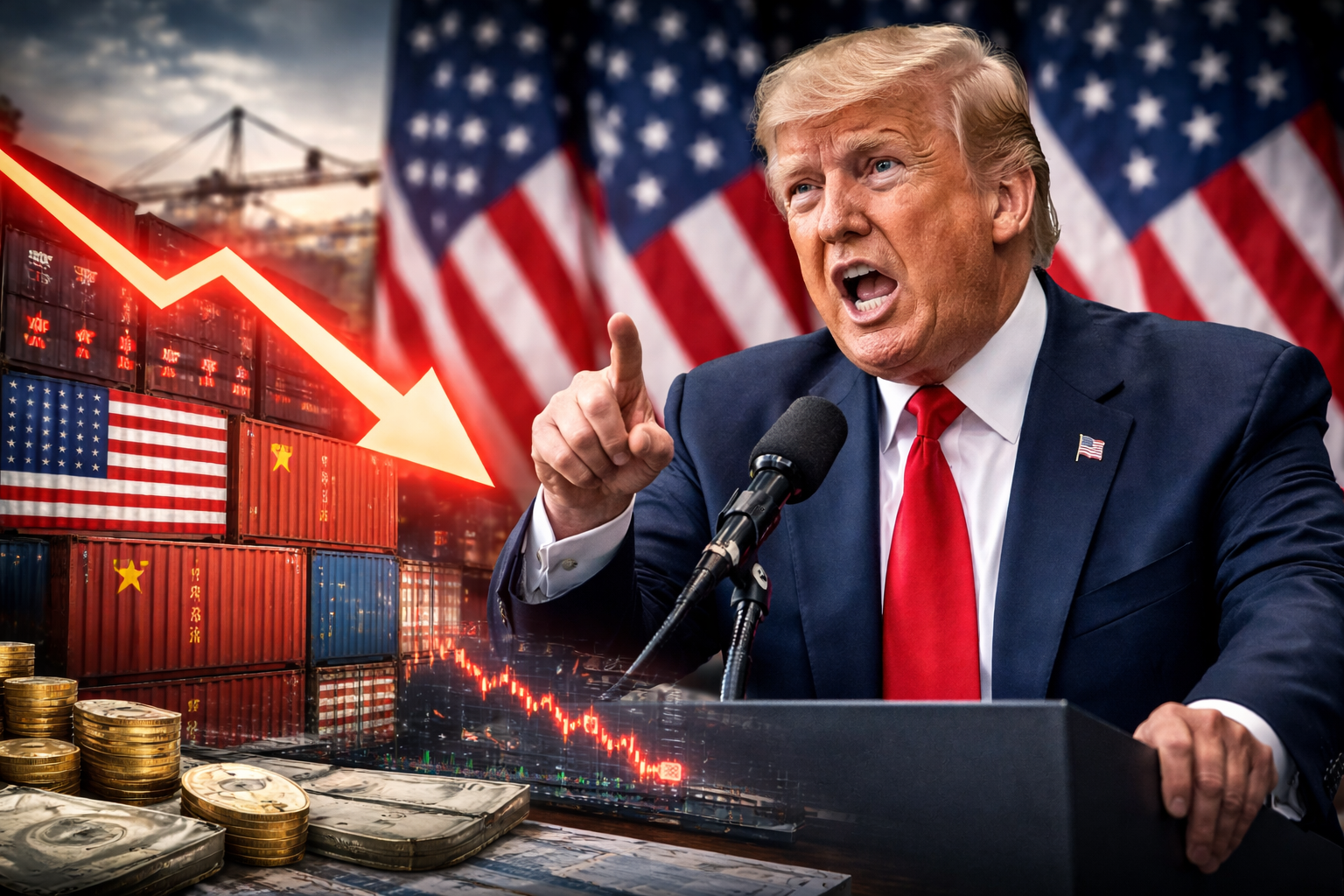
Markets dislike surprises — and trade policy just delivered one.
Following a Supreme Court rebuff of earlier tariff measures, Donald Trump announced plans to pursue broader 15% global tariffs, escalating rhetoric and injecting fresh uncertainty into global markets. According to reporting from The Guardian, the proposed stance has already stirred diplomatic friction with the European Union and key trading partners, while sending ripples across equities, currencies, and commodities.
For investors, the message is clear: trade policy is once again a primary market driver.
Legal and Policy Uncertainty Collide
The Supreme Court’s decision to limit or rebuff prior tariff actions created a moment of legal recalibration. Rather than signaling retreat, however, the administration’s renewed push for expanded tariffs has intensified confusion over implementation pathways and global response.
The uncertainty centers on several core questions:
- How quickly could new tariffs be enacted?
- Would exemptions or phased timelines apply?
- How might trading partners respond?
The absence of immediate clarity has unsettled markets, particularly export-sensitive sectors and multinational corporations reliant on integrated supply chains.
Historically, tariff disputes have triggered volatility in industrials, technology hardware, and consumer goods companies with global manufacturing exposure. Even without immediate policy implementation, headline risk alone can affect investor positioning.
Why This Matters for Investors
Trade policy is not a peripheral issue — it directly affects corporate earnings, inflation expectations, and economic growth projections.
1. Inflationary Pressure
Broad tariffs can increase import costs, potentially feeding into consumer prices. While companies may absorb some expenses, persistent cost increases often reduce margins or lead to price adjustments.
Analysts frequently note that trade-related inflationary pressures can complicate central bank policy decisions, especially if inflation expectations rise alongside slowing growth.
2. Supply Chain Disruption
Global supply chains have only recently stabilized following pandemic-era disruptions. Renewed tariff threats may prompt companies to diversify suppliers or relocate production — moves that require capital investment and time.
3. Export Exposure
Companies heavily reliant on international markets may face retaliatory measures. During prior trade tensions, agricultural producers, industrial exporters, and semiconductor manufacturers experienced earnings headwinds tied to cross-border restrictions.
Market reaction reflects these risks. Equity benchmarks have shown increased volatility, while defensive sectors have outperformed more cyclical industries.
Market Response Signals Caution
Investors have responded with measured defensiveness rather than panic. Volatility has risen, but liquidity remains stable.
Currency markets have shown sensitivity to trade rhetoric, as tariffs can influence capital flows and exchange rate expectations. Commodity markets, particularly gold, have attracted safe-haven flows during periods of geopolitical strain.
The broader takeaway: policy uncertainty alone can tighten financial conditions, even before concrete economic effects materialize.
Future Trends to Watch
Diplomatic Negotiations
Monitoring responses from the European Union and other trading partners will be critical. Escalation or de-escalation could rapidly shift market sentiment.
Corporate Guidance
Upcoming earnings reports may reveal how companies are modeling potential tariff scenarios in their forward outlooks.
Federal Reserve Communication
If tariff-related pressures affect inflation forecasts, central bank commentary could evolve, influencing interest rate expectations.
Legislative Developments
Any Congressional involvement or additional legal challenges could further complicate the timeline.
Key Investment Insight
Trade policy and tariff risk have become central market drivers.
Investors should consider:
- Reviewing portfolio exposure to export-oriented sectors.
- Diversifying across domestic-focused industries less sensitive to trade fluctuations.
- Maintaining hedges against inflation and volatility.
- Monitoring corporate earnings commentary for real-time impact assessment.
Periods of policy ambiguity demand flexibility. Investors who proactively adjust allocations rather than react emotionally to headlines may be better positioned to navigate volatility.
Importantly, markets often overreact to initial trade headlines before stabilizing as details emerge. Long-term investors should distinguish between structural economic shifts and temporary political turbulence.
Trade tensions have returned to the forefront of market consciousness. Whether this marks the beginning of a sustained policy shift or a negotiation tactic remains to be seen — but investor vigilance is essential.
Stay informed as developments unfold with MoneyNews.Today — delivering daily insights on politics, policy, and the market forces shaping investment strategy.




