Artificial intelligence is no longer just a technological breakthrough—it is rapidly becoming the most capital-intensive arms race in modern tech history. Over the past year, global technology giants have poured tens of billions of dollars into AI infrastructure, from advanced chips to massive data centers capable of training next-generation models.
Now, the scale of that investment is reaching unprecedented levels.
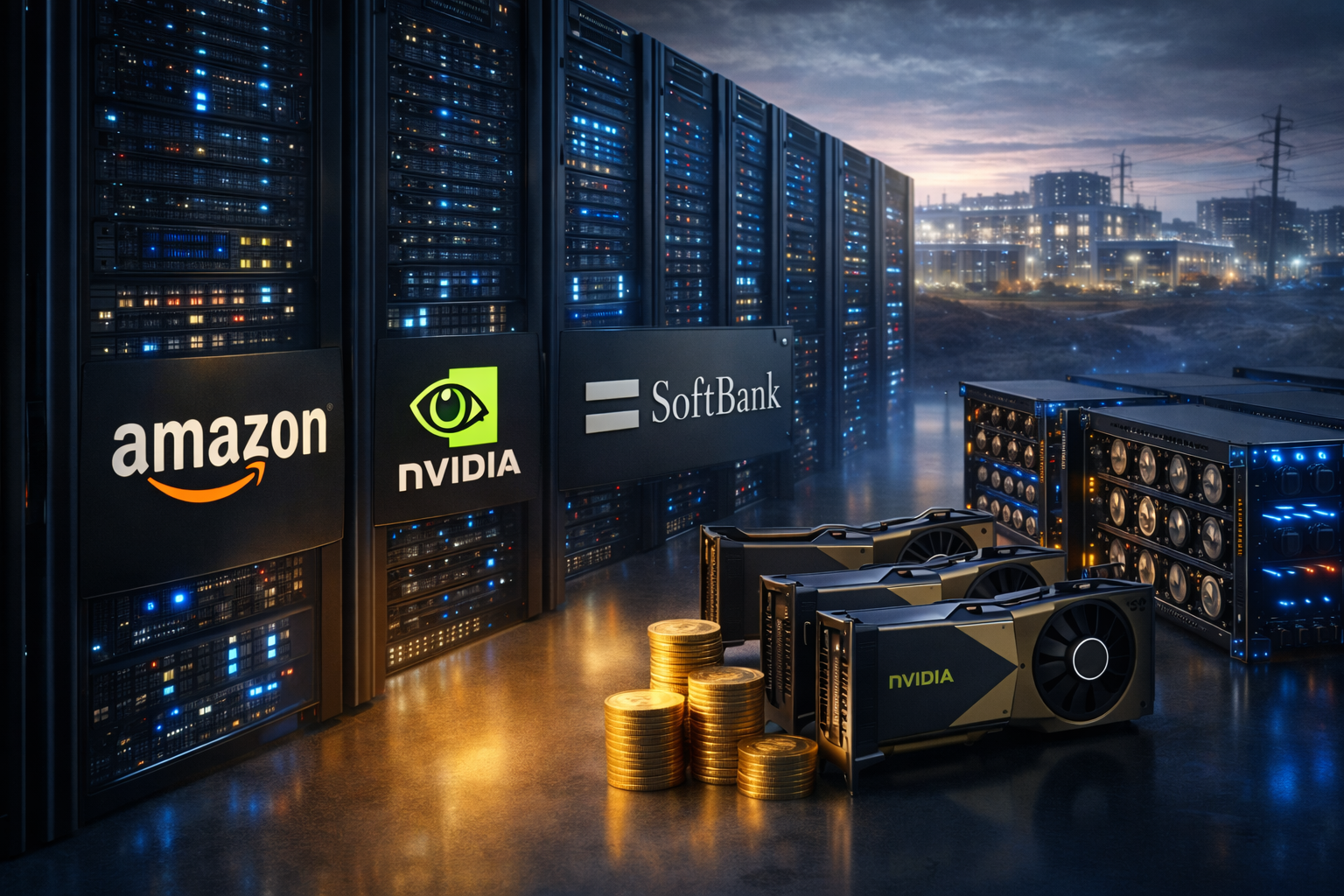
OpenAI has reportedly secured approximately $110 billion in investment commitments from major technology partners including Amazon, Nvidia, and SoftBank to expand artificial intelligence infrastructure and accelerate the development of increasingly powerful AI systems.
The move underscores a dramatic shift in the technology landscape: AI is evolving from a software trend into a full-scale infrastructure revolution—one that could reshape cloud computing, semiconductors, and global energy demand.
For investors, the message is clear. The generative AI boom is entering a new phase where massive capital deployment, rather than just innovation, will determine the industry’s winners.
The $110 Billion AI Infrastructure Expansion
The newly announced investment commitments will help expand the infrastructure powering OpenAI’s rapidly growing ecosystem of AI models and enterprise applications.
According to industry reporting cited by Yahoo Finance, the funding will support several strategic priorities:
- Building large-scale data centers designed specifically for AI workloads
- Expanding computing capacity required to train and deploy advanced models
- Scaling enterprise AI tools integrated with cloud platforms
- Accelerating development of next-generation AI systems
Training cutting-edge AI models requires enormous computing power. The latest large language models use tens of thousands of specialized GPUs running simultaneously across hyperscale data centers.
This is where companies like Nvidia play a crucial role.
Nvidia has become the dominant supplier of graphics processing units used to train AI models. Demand for these chips has surged so dramatically that the company has experienced one of the fastest revenue expansions in technology history.
Meanwhile, Amazon’s cloud infrastructure provides the computing backbone that allows companies to deploy AI tools at scale.
SoftBank, known for its aggressive investments in transformative technology, has also become a major financial backer of AI ecosystems.
Together, these partnerships reflect the growing convergence between cloud computing, semiconductors, and artificial intelligence.
The AI Infrastructure Arms Race
The race to build AI infrastructure is now intensifying across the global technology industry.
Major tech companies are competing to deploy massive computing capacity capable of supporting generative AI platforms used by businesses, governments, and consumers.
Training advanced AI models requires enormous resources:
- High-performance GPUs
- Specialized data center architectures
- Massive electricity supply
- Advanced cooling systems
- High-speed networking infrastructure
According to research from McKinsey & Company, AI could generate $4.4 trillion in annual global economic value across industries by the next decade.
Capturing that opportunity requires infrastructure capable of running complex AI models at scale.
That is why technology giants are investing billions to secure the hardware and cloud platforms that will power future AI ecosystems.
The scale of spending has already begun to transform the semiconductor industry.
Companies producing advanced AI chips have experienced surging demand, while suppliers of networking equipment, memory chips, and data center hardware are also benefiting from the boom.
Why This Matters for Investors
The massive investment commitments surrounding OpenAI highlight a structural shift that investors should not ignore.
Artificial intelligence is evolving from a high-growth software trend into a foundational infrastructure market similar to the early days of cloud computing.
Several sectors stand to benefit from this transition.
AI Semiconductor Manufacturers
Companies producing specialized AI chips are at the center of the generative AI revolution.
High-performance GPUs and AI accelerators are essential for training large language models and running inference workloads.
Demand for these chips is expected to remain strong as companies build new AI-focused data centers around the world.
Cloud Infrastructure Providers
AI applications require enormous computing power, making cloud platforms the natural environment for deployment.
Major cloud providers are rapidly integrating AI services into their platforms, offering businesses the ability to build applications powered by large language models.
Enterprise adoption of AI tools delivered through cloud infrastructure could become a major driver of revenue growth in the coming years.
Data Center Operators
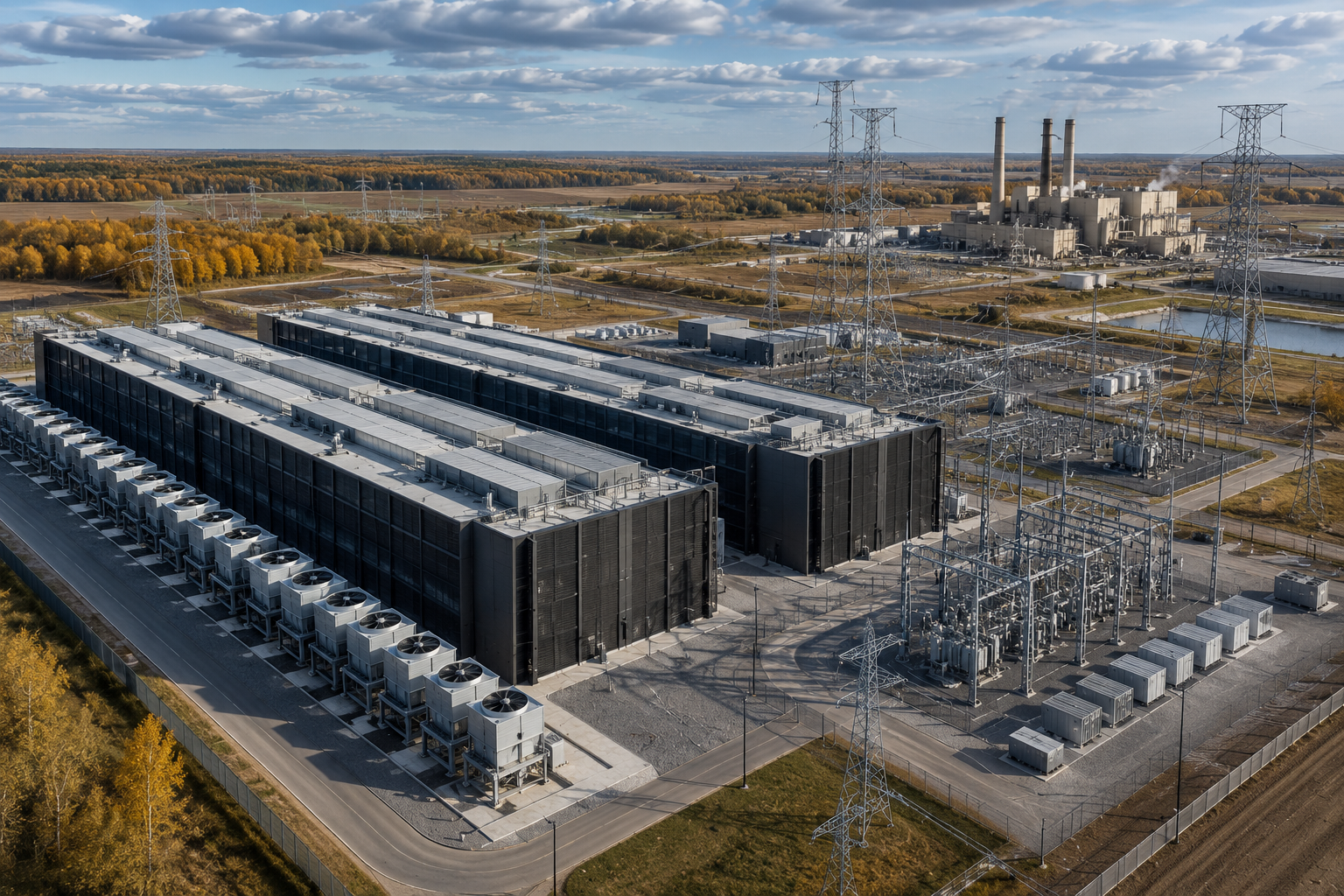
The infrastructure needed to power AI requires specialized data centers designed to handle extremely high computational workloads.
These facilities require advanced cooling systems, high-density power supplies, and specialized networking equipment.
As AI demand grows, the global data center market could experience another wave of expansion.
Energy and Utilities
AI infrastructure consumes enormous amounts of electricity.
Large data centers used for training advanced models can require hundreds of megawatts of power, comparable to the energy consumption of small cities.
This growing energy demand is creating opportunities for utilities, renewable energy developers, and companies focused on energy infrastructure.
The Enterprise AI Opportunity
Beyond infrastructure spending, the OpenAI investment wave also highlights the growing adoption of AI across corporate environments.
Businesses are increasingly integrating AI tools into operations such as:
- Customer service automation
- Software development
- data analysis
- financial modeling
- marketing optimization
Large language models can automate complex tasks that previously required human expertise.
According to Bloomberg Intelligence, enterprise spending on generative AI software could grow rapidly over the next decade as companies seek productivity gains and operational efficiency.
This shift could reshape entire industries, including finance, healthcare, logistics, and manufacturing.
Companies that successfully integrate AI into workflows may gain significant competitive advantages.
Future Trends to Watch
Several major trends could define the next phase of the AI investment cycle.
Explosive Growth in AI Data Centers
As AI models grow larger and more sophisticated, demand for specialized computing facilities will continue to increase.
Technology companies are already planning massive new data center campuses across North America, Europe, and Asia.
Chip Supply Chain Expansion
The semiconductor industry is scaling production to meet surging demand for AI chips.
Manufacturers of advanced chips, memory, and networking equipment could benefit from long-term growth driven by AI workloads.
Energy Infrastructure for AI
The electricity requirements of AI infrastructure are becoming a significant issue for governments and energy providers.
Expect increased investment in renewable energy, nuclear power, and grid infrastructure designed to support data center expansion.
AI Regulation and Policy
Governments are beginning to introduce regulations governing artificial intelligence development and deployment.
Policy decisions could influence how AI companies operate and how quickly infrastructure expands.
Key Investment Insight
The $110 billion investment wave surrounding OpenAI highlights one of the most important structural shifts in technology markets.
Artificial intelligence is transitioning from an experimental technology into a global infrastructure platform.
For investors, the opportunity extends far beyond AI software companies.
Key sectors likely to benefit include:
- AI chip manufacturers
- cloud computing platforms
- data center operators
- semiconductor equipment suppliers
- energy providers supporting AI infrastructure
Companies positioned within these ecosystems could experience sustained demand as AI adoption accelerates across industries.
However, investors should also monitor risks such as technology competition, regulatory developments, and the massive capital requirements associated with building AI infrastructure.
The long-term trajectory of AI investment suggests the sector could remain one of the most influential drivers of global technology markets for years to come.
Artificial intelligence is reshaping the global economy at a pace rarely seen in technology history. As billions of dollars flow into AI infrastructure and enterprise adoption accelerates, investors must stay informed about the companies and industries positioned to benefit from the transformation.
Stay ahead of the latest market-moving developments with MoneyNews.Today, your trusted destination for daily investor insights and financial news.