
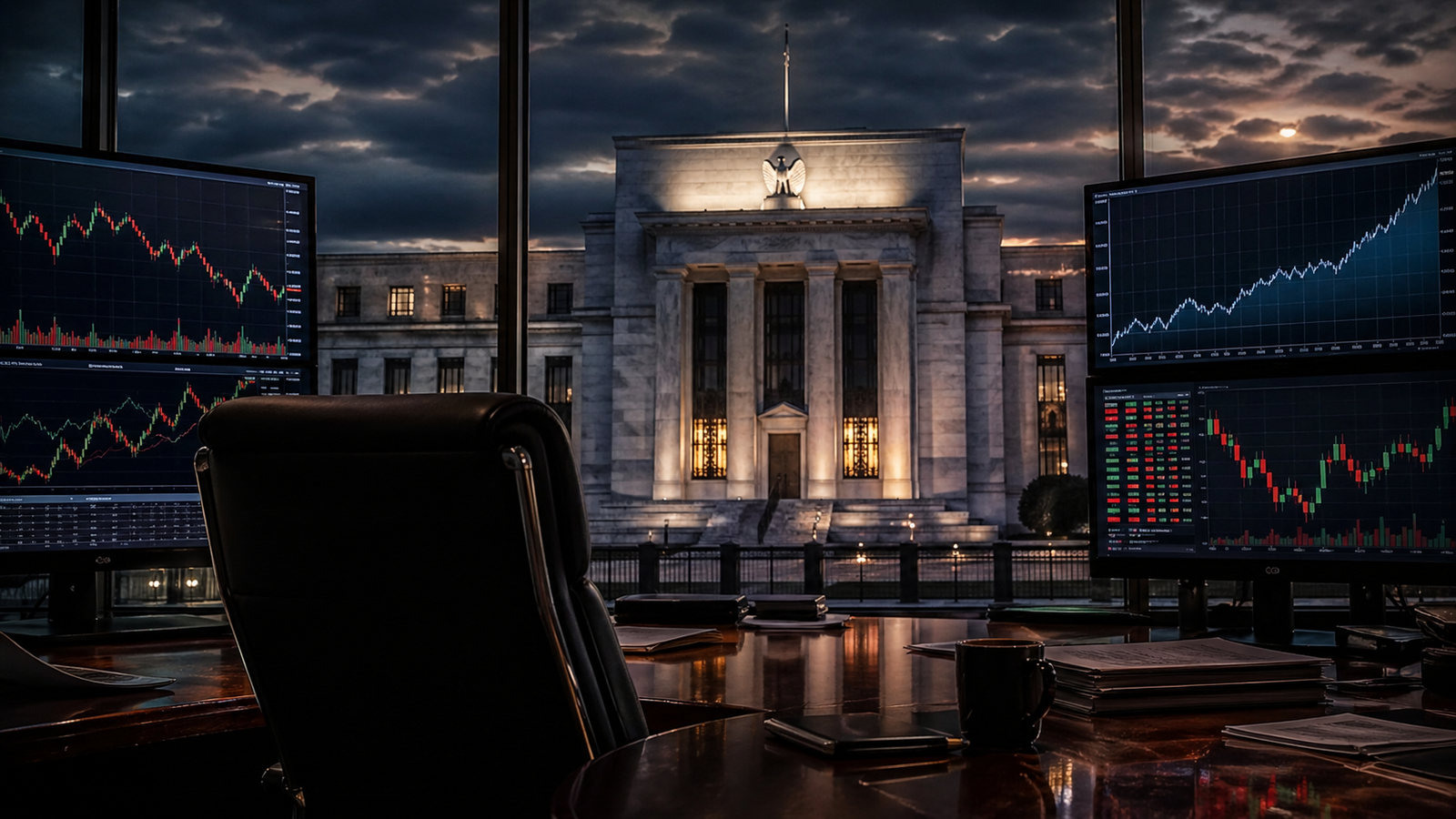
Markets can handle high interest rates. They can even adapt to inflation. But what they struggle with most is uncertainty—and right now, uncertainty around monetary policy leadership is becoming a central concern for investors.
At the heart of this uncertainty is the evolving role of Jerome Powell and the broader direction of the Federal Reserve. As inflation pressures persist and policymakers adopt a more hawkish stance, questions are emerging not just about what the Fed will do next—but how and why those decisions are being made.
According to Reuters (April 30, 2026), leadership dynamics within the Federal Reserve, combined with increasing political pressure around interest rate policy, are adding a new layer of complexity to an already fragile market environment.
For investors, this is more than a policy story—it’s a potential catalyst that could shape asset prices across equities, bonds, and currencies in the months ahead.
A Hawkish Shift Meets Political Pressure
The Federal Reserve’s recent tone has been notably cautious, with policymakers emphasizing the need to keep inflation under control—even if it means maintaining higher interest rates for longer.
This hawkish stance comes at a time when markets had been hoping for a clearer path toward rate cuts. Instead, the message from the Fed suggests patience and vigilance, reinforcing expectations that monetary policy will remain restrictive.
However, what makes the current environment unique is the growing intersection between monetary policy and political dynamics.
As borrowing costs remain elevated, pressure is mounting from various political and economic stakeholders who are concerned about the impact on:
- Economic growth
- Employment levels
- Consumer spending
This creates a delicate balance for the Federal Reserve. While its mandate is to maintain price stability and maximize employment, it must also navigate an increasingly complex political landscape.
For investors, this raises an important question: How independent is monetary policy in practice?
Why Leadership Matters More Than Ever
Central bank credibility is one of the most important pillars of financial markets.
Investors rely on the Federal Reserve not just for policy decisions, but for consistency, transparency, and independence. When these elements are called into question, market volatility tends to increase.
The continued presence of Jerome Powell on the board provides a degree of continuity. His leadership has guided the Fed through multiple economic cycles, including the pandemic-era stimulus and subsequent tightening phase.
However, as policy debates intensify, the focus is shifting toward:
- The composition of the Federal Reserve leadership
- The influence of political narratives on policy decisions
- The long-term direction of monetary strategy
This is particularly relevant as markets look ahead to late 2026 and beyond, where leadership transitions or shifts in policy priorities could have significant implications.
Market Reaction: Reading Between the Lines
Financial markets are highly sensitive to even subtle changes in central bank communication.
In recent sessions, investors have been parsing every statement, speech, and policy signal from the Federal Reserve. The result has been increased volatility across asset classes.
Key developments include:
- Rising Treasury yields as markets price in prolonged higher rates
- Fluctuations in equity markets driven by shifting rate expectations
- Strength in the U.S. dollar amid tighter monetary conditions
These movements reflect a broader theme: markets are not just reacting to policy decisions—they are reacting to uncertainty around those decisions.
This distinction is critical. Clear and predictable policy can be absorbed by markets, even if it is restrictive. Uncertainty, on the other hand, creates risk premiums and disrupts investment strategies.
Why This Matters for Investors
The growing focus on Fed leadership and policy direction has several important implications for investors:
1. Increased Policy Risk
Policy risk is becoming a more prominent driver of market behavior. Changes in leadership dynamics or political influence could lead to shifts in monetary strategy.
2. Volatility Across Asset Classes
Uncertainty around policy direction can lead to higher volatility in equities, bonds, and currencies, creating both risks and opportunities.
3. Impact on Valuations
Interest rate expectations play a key role in determining asset valuations. Prolonged higher rates can pressure growth stocks, while benefiting income-generating assets.
4. Importance of Forward Guidance
Investors must pay close attention to Federal Reserve communication, as forward guidance can provide critical insights into future policy moves.
Credible Signals from the Market
The importance of this issue is being reinforced by multiple credible sources:
- Reuters (April 30, 2026) highlights the growing uncertainty סביב Fed leadership and policy direction
- Analyst commentary across major financial institutions emphasizes the role of central bank credibility in maintaining market stability
- Historical data shows that periods of policy uncertainty often coincide with increased market volatility
These signals suggest that investors should treat policy risk as a key factor in their decision-making process.
Future Trends to Watch
As the situation evolves, several trends will be critical to monitor:
1. Federal Reserve Communication
Speeches, meeting minutes, and policy statements will provide valuable clues about the Fed’s direction and priorities.
2. Leadership Developments
Any changes in the composition of the Federal Reserve leadership could have significant market implications.
3. Political Influence on Policy
The extent to which political considerations shape monetary policy will be a key factor in assessing market risk.
4. Inflation and Economic Data
Economic indicators will continue to guide policy decisions, influencing market expectations and asset prices.
Key Investment Insight
Policy risk is rising—and investors need to adapt.
In the current environment, understanding the interplay between monetary policy and political dynamics is essential. This means:
- Monitoring Federal Reserve communications closely
- Staying informed about leadership developments
- Considering the impact of policy uncertainty on asset allocation
From a practical standpoint:
- Diversification becomes more important in volatile markets
- Exposure to rate-sensitive assets should be managed carefully
- Defensive sectors may offer stability during periods of uncertainty
The ability to anticipate and respond to policy shifts could provide a significant edge in today’s market.
A Market Shaped by Policy and Perception
What we are witnessing is a reminder that financial markets are not driven solely by economic fundamentals. Perception, credibility, and confidence play equally important roles.
The Federal Reserve’s ability to maintain its independence and communicate effectively will be critical in shaping market outcomes. Any erosion of that credibility could have far-reaching consequences.
For investors, this underscores the importance of looking beyond headlines and understanding the underlying dynamics at play.
Stay Ahead of the Market
As policy uncertainty becomes a defining feature of the market landscape, staying informed is more important than ever. The intersection of politics and monetary policy will continue to influence asset prices and investment strategies.
Follow MoneyNews.Today for daily insights that cut through the noise—helping you navigate the complexities of today’s financial markets with confidence and clarity.




