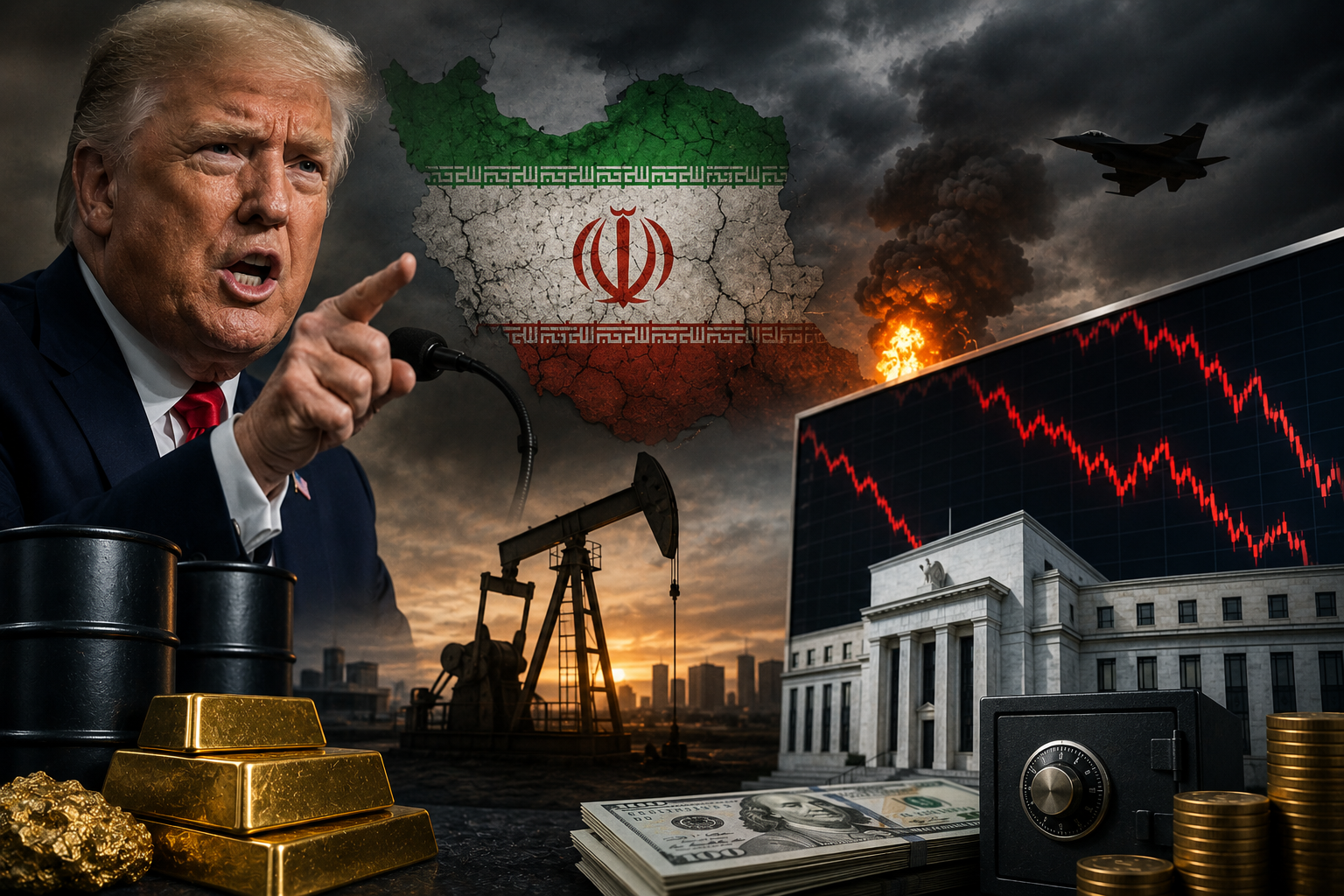
Global financial markets are once again reminding investors that geopolitics can move markets just as powerfully as economic data.
Equities across major global markets rebounded recently after political signals suggested a potential easing of tensions in the Middle East, helping calm investor fears that had been driving volatility in energy prices and broader financial markets. Oil prices, which had surged amid geopolitical uncertainty, dropped sharply following the latest developments, offering temporary relief to investors concerned about inflation and supply disruptions.
According to reporting from Reuters, the shift in sentiment reflects how quickly global markets can react to political headlines. Even small signals suggesting diplomatic progress can trigger significant movements across equities, commodities, and currencies.
For investors navigating today’s macro environment, the message is clear: markets are increasingly headline-driven, and geopolitical developments have become one of the most important forces shaping global asset prices.
Geopolitics Returns to the Center of Market Movements
For much of the past decade, investors focused primarily on monetary policy, interest rates, and corporate earnings to gauge market direction. However, recent global developments have reintroduced geopolitics as a dominant factor influencing financial markets.
The latest market rebound illustrates this dynamic. As diplomatic signals hinted at a potential easing of tensions in the Middle East, investor sentiment improved quickly, leading to gains in global equity markets while oil prices retreated.
Energy markets are particularly sensitive to geopolitical risks in the region, given that the Middle East remains one of the world’s most important oil-producing areas. Any threat to production or shipping routes can quickly drive prices higher, raising concerns about inflation and global economic stability.
According to analysis cited by Reuters, the possibility of reduced tensions eased some of these concerns, encouraging investors to rotate back into risk assets such as equities.
Yet the situation also highlights how fragile current market conditions remain.
Why Energy Prices Are a Critical Market Indicator
Oil prices play a central role in shaping global market sentiment. When geopolitical risks threaten energy supply, crude prices often surge, triggering ripple effects across the global economy.
Higher oil prices can lead to:
- Increased inflation
- Higher transportation and manufacturing costs
- Reduced consumer spending power
- Greater uncertainty for businesses and policymakers
These factors can ultimately weigh on equity markets, particularly in sectors sensitive to economic growth.
The recent drop in oil prices following diplomatic signals suggests that investors are cautiously optimistic that supply disruptions may be avoided—at least for now.
However, analysts warn that energy markets remain vulnerable to sudden changes in geopolitical conditions.
Even minor escalations in regional tensions could rapidly reverse recent price declines.
Equity Markets Respond to Shifting Risk Sentiment
Global equity markets often act as a barometer for investor confidence, and the recent rebound reflects a shift toward a more optimistic risk outlook.
When geopolitical risks appear to ease, investors tend to move capital back into equities, particularly in sectors tied to economic growth such as technology, industrials, and consumer discretionary.
Conversely, when geopolitical uncertainty increases, investors often seek safer assets such as government bonds, gold, or defensive stocks.
This pattern underscores the increasingly complex relationship between geopolitics and financial markets.
According to market analysts cited in financial media reports, investors are currently balancing multiple macroeconomic factors simultaneously, including:
- Geopolitical developments
- Inflation trends
- Interest rate expectations
- Global economic growth forecasts
The interaction of these factors can create rapid shifts in market sentiment.
Markets Are Becoming Increasingly Headline-Driven
One of the defining characteristics of today’s market environment is the speed at which information moves.
News headlines, policy announcements, and geopolitical developments can trigger immediate reactions from investors and algorithmic trading systems alike.
This reality means that markets may respond to political signals even before concrete policy changes occur.
For example, diplomatic statements suggesting progress toward easing tensions can influence markets even if the underlying situation remains unresolved.
Similarly, sudden escalations or unexpected developments can trigger sharp selloffs.
As a result, market volatility may remain elevated in the near term as investors respond to an evolving global landscape.
The Broader Macro Environment Adds Complexity
Geopolitics is not the only factor influencing global markets.
Investors are also monitoring several key macroeconomic variables that could shape the trajectory of equities and commodities in the months ahead.
Interest Rates and Monetary Policy
Central banks around the world continue to navigate the delicate balance between controlling inflation and supporting economic growth.
Interest rate decisions from major institutions such as the Federal Reserve play a crucial role in determining market liquidity and investor risk appetite.
Higher interest rates typically weigh on equity valuations, while lower rates tend to support risk assets.
Inflation Pressures
Energy prices are a major contributor to inflation. If geopolitical developments lead to renewed oil price spikes, central banks may face additional pressure to maintain restrictive monetary policies.
Global Economic Growth
Economic indicators from major economies such as the United States, China, and the European Union continue to influence investor sentiment and capital flows.
Together, these macroeconomic forces interact with geopolitical developments to create a complex and often unpredictable market environment.
Why This Matters for Investors
For investors, the key takeaway from recent market movements is that geopolitical developments can rapidly influence asset prices across multiple sectors.
The current environment requires investors to pay close attention not only to economic indicators but also to political developments that may impact global supply chains, energy markets, and international trade.
Energy prices, in particular, serve as a crucial signal for broader market conditions.
Sharp increases in oil prices may indicate rising geopolitical risk and potential inflation pressures, while falling prices may suggest easing tensions or improved supply outlooks.
Monitoring these indicators can help investors better understand shifts in market sentiment and identify potential opportunities or risks.
Future Trends Investors Should Watch
Several key trends could shape global markets in the months ahead.
Continued Geopolitical Uncertainty
Regional conflicts, trade disputes, and political tensions remain potential catalysts for market volatility.
Energy Market Stability
Oil supply conditions and global demand trends will continue to influence inflation expectations and economic growth forecasts.
Central Bank Policy
Interest rate decisions from major central banks will play a significant role in determining the direction of global equity markets.
Market Sentiment Shifts
Rapid changes in investor sentiment may create short-term trading opportunities while also increasing volatility.
Key Investment Insight
In today’s interconnected global economy, geopolitical headlines can move markets just as quickly as economic data.
Investors who monitor political developments alongside traditional financial indicators may gain a clearer understanding of emerging market trends.
Watching energy prices, geopolitical risk indicators, and global policy developments can provide valuable signals about potential shifts in market sentiment.
As the current environment demonstrates, staying informed is more important than ever for investors seeking to navigate volatility and identify opportunities.
Global markets will likely continue reacting to geopolitical developments in real time. For investors, understanding how these forces influence equities, commodities, and currencies can be essential for making informed decisions in a rapidly evolving financial landscape.
For the latest insights on global markets, emerging trends, and investor-focused analysis, stay connected with MoneyNews.Today, your trusted destination for daily financial news and market intelligence.