
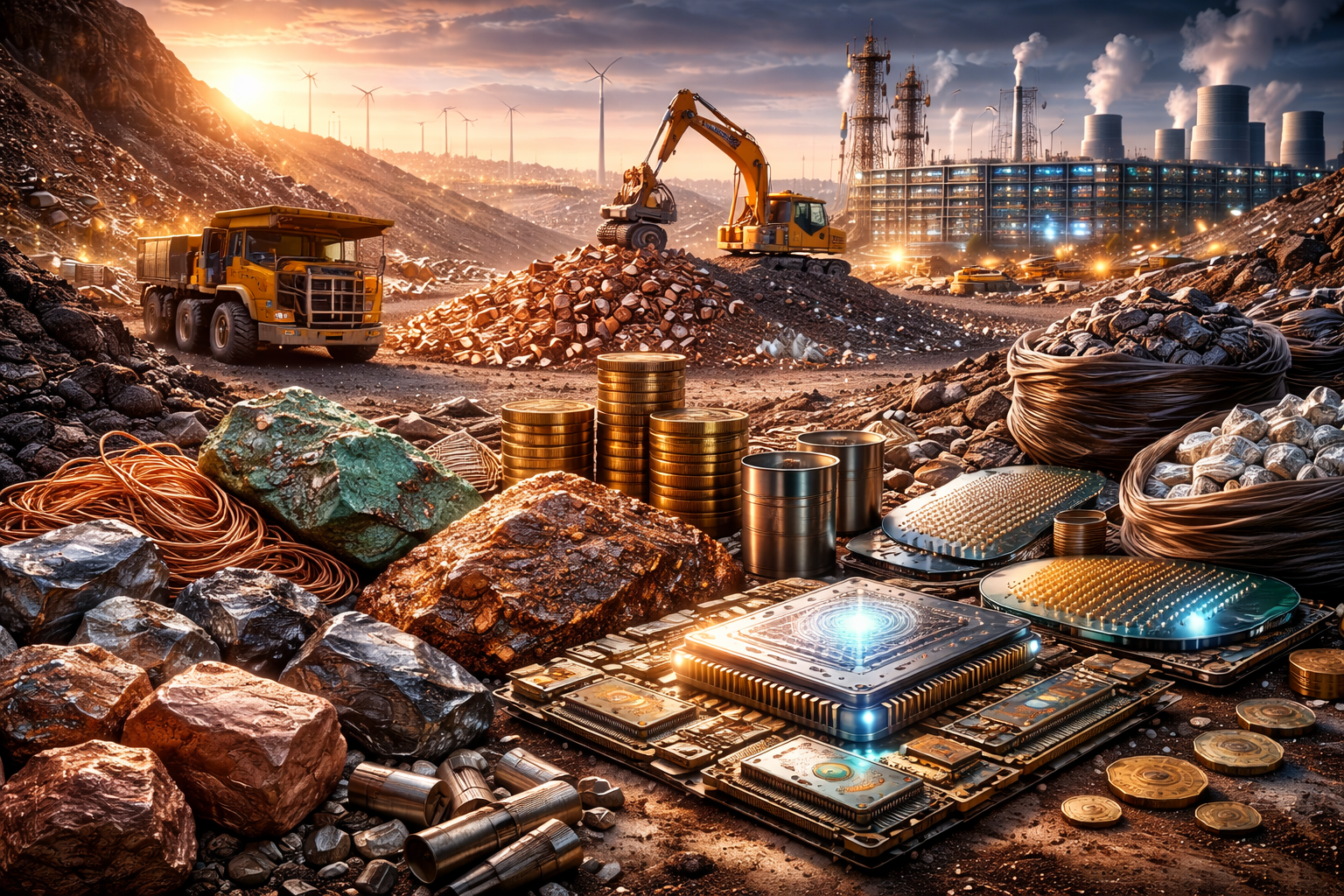
Artificial intelligence may dominate headlines in the technology sector, but behind the algorithms and data centers lies a rapidly growing demand for something far more tangible—minerals.
From copper wiring inside massive AI data centers to rare earth elements used in advanced semiconductor manufacturing, the global race to develop next-generation technologies is fueling a surge in demand for critical minerals. Governments and corporations alike are increasingly focused on securing reliable supplies of these strategic materials as AI infrastructure, electric vehicles, and high-performance computing systems expand at unprecedented speeds.
Recent industry reports and coverage from Bloomberg highlight how demand for key resources—including lithium, copper, and rare earth elements—is accelerating alongside the growth of AI-driven industries. Policymakers and mining companies are now working urgently to strengthen supply chains and prevent shortages that could slow the technology revolution.
For investors, this growing demand signals a powerful opportunity. The AI boom is not just benefiting technology companies—it is also reshaping the global commodities market.
The Hidden Resource Behind the AI Revolution
Artificial intelligence systems require enormous computing infrastructure, including high-performance data centers, semiconductor manufacturing facilities, and energy-intensive server networks.
Each of these technologies depends heavily on critical minerals.
Copper, for example, is widely used in electrical wiring and power transmission systems that support large-scale computing facilities. Lithium is a key component in battery storage systems used to stabilize power supplies for energy-hungry data centers. Rare earth elements play an essential role in advanced electronics and semiconductor manufacturing.
As companies build new AI infrastructure and expand semiconductor production, the demand for these materials is rising rapidly.
Industry analysts note that the growth of AI computing could significantly increase consumption of several key minerals over the next decade.
This dynamic is creating ripple effects throughout the global mining sector.
Copper: The Backbone of AI Infrastructure
Among all critical minerals, copper may be one of the biggest beneficiaries of the AI boom.
Copper is essential for electrical conductivity, making it a core component in power grids, data centers, and telecommunications networks. As artificial intelligence applications expand, the electricity requirements for computing infrastructure are rising sharply.
Large AI data centers require massive electrical systems capable of delivering continuous power to thousands of high-performance processors.
Each new facility adds substantial demand for copper wiring, transformers, and transmission systems.
Analysts have already warned that global copper supply may struggle to keep pace with rising demand. According to industry projections cited in reports from Bloomberg, copper consumption could increase dramatically as AI computing infrastructure expands worldwide.
Mining companies capable of producing large quantities of copper may therefore play a critical role in supporting the next phase of technological development.
Lithium Demand Expands Beyond Electric Vehicles
Lithium is widely associated with electric vehicles, but the rise of artificial intelligence may add another layer of demand for the metal.
Large-scale computing facilities require stable power systems to prevent disruptions during intensive workloads. Energy storage technologies—including lithium-based battery systems—are increasingly used to support data center operations.
As companies deploy more AI infrastructure, demand for energy storage systems is expected to increase.
At the same time, lithium demand continues to grow within the electric vehicle market and renewable energy storage sector.
This convergence of demand from multiple industries could create significant supply challenges in the years ahead.
Governments are already working to secure access to lithium resources through strategic partnerships and domestic mining initiatives.
Rare Earth Elements Power Advanced Electronics
Rare earth elements are another critical component in the AI ecosystem.
These materials are used in a wide range of advanced technologies, including semiconductor manufacturing equipment, high-performance electronics, and specialized magnets found in computing hardware.
While the name “rare earth” suggests scarcity, the real challenge lies in refining and processing these minerals.
A significant portion of the global rare earth supply chain remains concentrated in a small number of countries, raising concerns among governments about supply security.
To address these risks, several nations are investing in domestic rare earth production and processing capabilities.
Government initiatives in North America and Europe are increasingly focused on developing resilient supply chains for critical minerals used in advanced technologies.
Governments Are Racing to Secure Supply Chains
The growing importance of critical minerals has turned them into a strategic priority for policymakers.
Governments around the world are implementing policies designed to strengthen domestic mining industries and reduce reliance on foreign suppliers.
In North America, government programs are encouraging investment in mining projects and mineral processing facilities.
Officials argue that secure supply chains for critical minerals are essential not only for economic growth but also for national security.
Reports from industry analysts and government releases indicate that public funding and incentives are increasingly directed toward:
- New mining projects
- Mineral refining facilities
- Recycling technologies
- Supply chain diversification
These initiatives are intended to ensure that future technology development is not constrained by resource shortages.
Why This Matters for Investors
The rapid expansion of artificial intelligence, semiconductor manufacturing, and electrification technologies is transforming the global demand outlook for several key minerals.
While the technology sector often captures investor attention, the underlying commodities required to power that technology are becoming equally important.
The AI boom is creating strong demand across several segments of the mining industry, including:
- Copper producers
- Lithium mining companies
- Rare earth element suppliers
- Mineral processing firms
Companies involved in these areas may benefit from sustained demand growth as AI adoption accelerates.
Many analysts now view critical minerals as one of the most important long-term commodity investment themes.
Just as oil and natural gas played central roles in the industrial economy of the twentieth century, critical minerals may become the strategic resources powering the digital economy of the future.
Future Trends Investors Should Watch
Several major trends could shape the outlook for critical minerals in the coming years.
Expansion of AI Data Centers
The rapid growth of AI computing infrastructure will likely drive continued demand for copper, energy storage systems, and semiconductor components.
Semiconductor Manufacturing Growth
Advanced chip production requires specialized materials and equipment, increasing demand for rare earth elements and other critical minerals.
Government Supply Chain Policies
Public investment and policy initiatives aimed at securing mineral supply chains may accelerate the development of new mining projects.
Resource Nationalism
Some resource-rich countries may seek greater control over mineral production, potentially influencing global supply dynamics.
Key Investment Insight
The AI revolution is not only transforming the technology sector—it is also reshaping global commodity markets.
As demand for computing infrastructure and advanced electronics grows, the need for critical minerals such as copper, lithium, and rare earth elements is expected to increase significantly.
Mining companies with strong resource reserves, efficient production capabilities, and secure supply chains may be well positioned to benefit from this trend.
For investors looking beyond the technology sector itself, the mining industry may offer compelling opportunities linked to the rapid expansion of artificial intelligence and semiconductor production.
Artificial intelligence may run on code, but the infrastructure supporting it relies heavily on physical resources extracted from the earth.
As global demand for computing power accelerates, the importance of critical minerals will likely continue growing alongside the technologies they support.
Investors seeking to understand the broader impact of the AI revolution should look not only at technology companies but also at the mining sector that provides the materials enabling this transformation.
Stay informed with MoneyNews.Today, your trusted source for daily investor insights, emerging industry trends, and market-moving financial developments shaping the global economy.




