
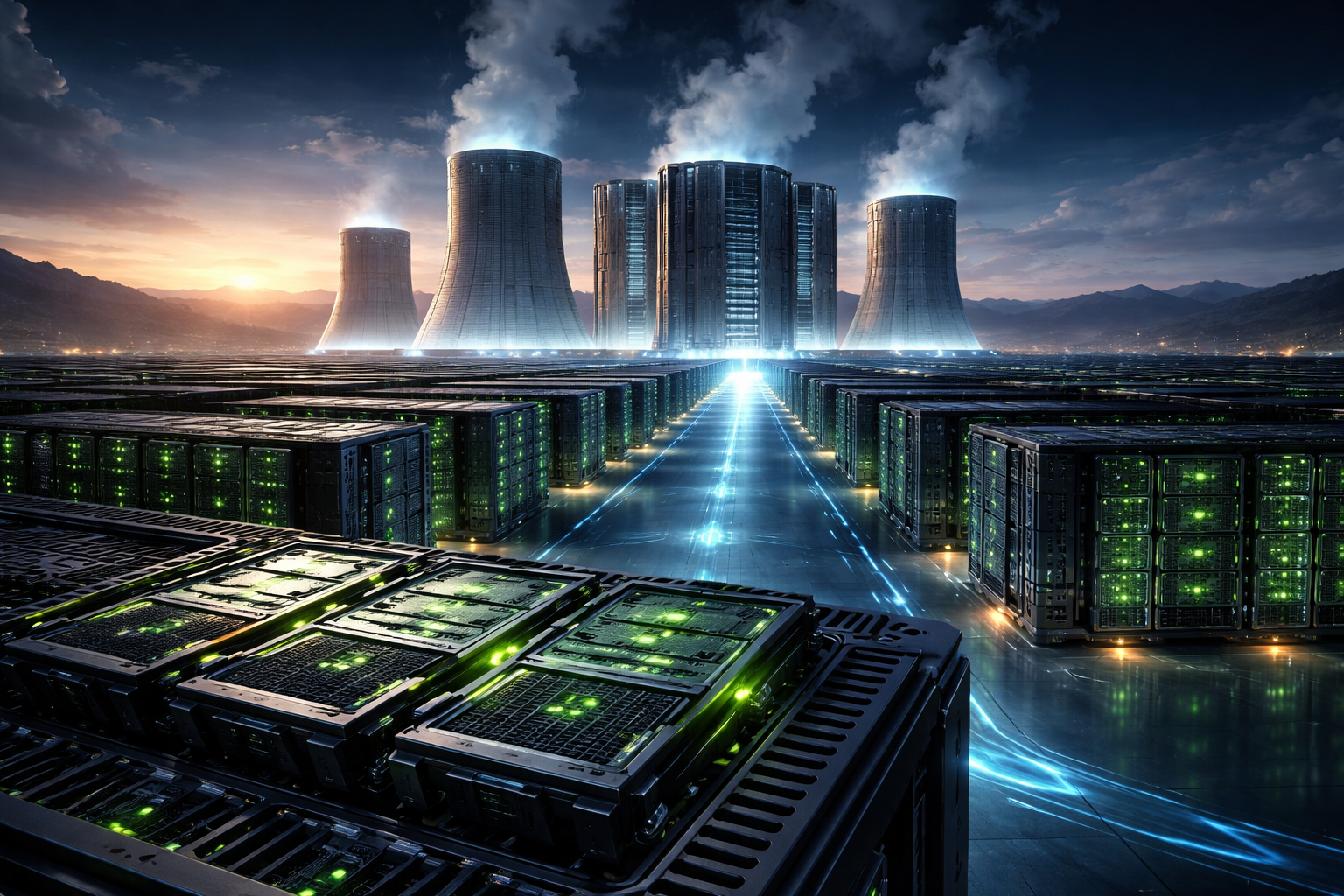
The race to build the world’s next generation of artificial intelligence infrastructure is accelerating—and investors are watching closely. A new $2 billion investment from Nvidia into AI cloud provider Nebius Group signals just how critical compute capacity has become in the global AI arms race.
The partnership aims to dramatically expand AI data center capacity, with plans to deploy more than 5 gigawatts of AI compute infrastructure by 2030. As companies from startups to Big Tech race to build and deploy AI models, the demand for advanced computing power has surged to unprecedented levels.
For investors, the move highlights a powerful shift underway: the AI boom is no longer just about chips—it’s about the infrastructure powering the AI economy.
The AI Infrastructure Arms Race Intensifies
Artificial intelligence has quickly become the defining technological theme of the decade. Since the generative AI explosion that began in 2023, companies across industries have been pouring billions into building systems capable of training and running large AI models.
At the center of this transformation is Nvidia, the dominant supplier of GPUs used for AI training and inference. Nvidia’s chips power many of the world’s largest AI systems, including those used by hyperscale cloud providers and AI startups.
But as AI workloads scale, the industry’s biggest bottleneck is no longer just semiconductor supply. It’s compute infrastructure—the data centers, power systems, networking equipment, and cloud architecture needed to support massive AI models.
That’s where Nebius enters the picture.
Nebius Group, a cloud infrastructure company focused on AI workloads, has been expanding its data center capabilities to meet surging demand from AI developers. Nvidia’s $2 billion investment is designed to accelerate this expansion and secure a long-term partner in the AI infrastructure ecosystem.
According to reporting from Reuters, Bloomberg, and Investor’s Business Daily, the companies aim to deploy more than 5 gigawatts of AI computing capacity globally by the end of the decade—a scale that rivals some of the largest hyperscale cloud operations.
Nebius shares surged following the announcement, reflecting investor enthusiasm for companies positioned to support AI’s infrastructure buildout. Nvidia’s stock moved modestly higher, consistent with its already massive valuation and dominant market position.
Why AI Compute Is the New Oil
The surge in AI demand has created a new type of resource economy: compute power.
Training modern AI models requires enormous amounts of computing resources. For example:
- Training large language models can require tens of thousands of GPUs
- AI training runs can consume megawatts of electricity
- Inference workloads must scale globally for consumer applications
According to industry analysis from McKinsey and S&P Global, global demand for AI computing capacity could grow fivefold to tenfold over the next decade.
That surge is driving massive investment across several areas:
- AI data centers
- High-performance networking
- Cooling technologies
- Power infrastructure
- Cloud AI platforms
By investing directly in a cloud infrastructure partner like Nebius, Nvidia is positioning itself to capture more value from the entire AI ecosystem—not just from selling chips.
Why This Matters for Investors
The Nvidia–Nebius deal reflects a broader trend that could reshape investment opportunities across the technology sector.
For years, Nvidia has dominated the AI chip market. But as the industry matures, the real opportunity is expanding into the full-stack AI infrastructure economy.
This includes several key layers:
1. AI Semiconductor Leaders
Companies producing the chips powering AI systems remain the backbone of the industry.
Key players include:
- Nvidia
- Advanced Micro Devices
- Intel
These companies supply the GPUs and accelerators that make AI training possible.
2. AI Cloud Infrastructure Providers
Companies building large-scale compute environments are becoming increasingly valuable.
These firms manage the infrastructure that allows developers to train and run AI models efficiently.
Nebius is part of this emerging category, alongside hyperscalers such as:
- Amazon Web Services
- Microsoft
- Alphabet
3. Data Center Infrastructure
AI workloads require specialized facilities capable of handling enormous power and cooling demands.
This has created opportunities for:
- Data center developers
- Infrastructure REITs
- Power providers
- Advanced cooling technology companies
According to Bloomberg Intelligence, AI-related data center investment could exceed $1 trillion globally over the next decade.
The Power Problem: AI’s Biggest Bottleneck
One of the most overlooked challenges in the AI boom is energy consumption.
AI data centers require vast amounts of electricity, often comparable to the power usage of small cities. This has created a growing focus on power infrastructure and energy supply.
Analysts at Goldman Sachs have warned that AI data center growth could dramatically increase electricity demand in major technology hubs.
As a result, companies involved in power generation and grid infrastructure may also benefit from the AI boom.
This includes:
- Renewable energy providers
- Nuclear power developers
- Grid modernization companies
The Nvidia–Nebius partnership, with its plan for multi-gigawatt infrastructure deployment, underscores how central power availability has become to AI development.
Future Trends to Watch
The AI infrastructure boom is still in its early stages. Several major trends could shape the next phase of investment opportunities.
Expansion of AI Cloud Ecosystems
Cloud providers are rapidly expanding their AI capabilities to support enterprise adoption of generative AI.
This includes new AI platforms, model marketplaces, and developer tools.
Vertical AI Infrastructure
Specialized infrastructure optimized for specific industries—such as healthcare, finance, and robotics—could become a major growth area.
AI-Native Data Centers
New data centers are being designed specifically for AI workloads rather than traditional cloud computing.
These facilities require advanced cooling, specialized networking, and optimized GPU clusters.
Global AI Competition
Governments are increasingly viewing AI infrastructure as a strategic national asset.
The United States, Canada, Europe, and Asia are all investing heavily in domestic AI compute capacity to ensure technological leadership.
Key Investment Insight
For investors, the biggest takeaway from Nvidia’s $2 billion Nebius investment is clear: AI infrastructure is becoming one of the most important investment themes of the decade.
While Nvidia remains the dominant AI chip supplier, the broader ecosystem includes a wide range of companies positioned to benefit from the expansion of AI computing.
Investors should watch sectors including:
- AI cloud providers
- Data center operators
- Semiconductor equipment manufacturers
- Power infrastructure companies
- Cooling and networking technology firms
As the demand for AI training and inference power continues to rise, companies building the digital backbone of artificial intelligence may see significant long-term growth.
The global AI boom is reshaping industries, markets, and investment strategies at a rapid pace. Nvidia’s expanding partnership with Nebius is just the latest signal that the race to build the world’s AI infrastructure is accelerating.
For investors looking to stay ahead of emerging trends, following these infrastructure developments will be critical.
Stay informed with MoneyNews.Today for daily insights on the technologies, markets, and global developments shaping the future of investing.




