
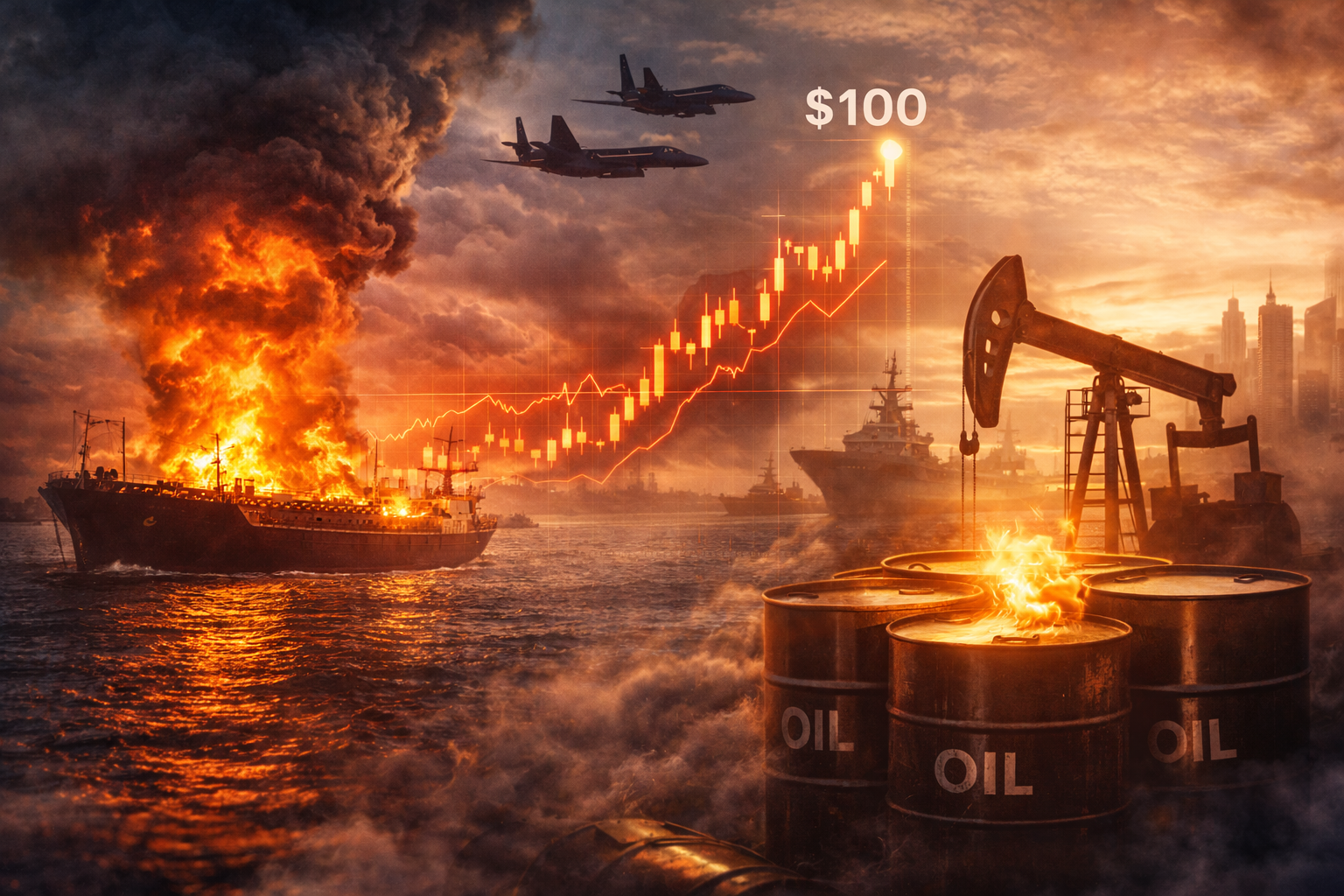
Global financial markets are once again being shaped by geopolitical developments, as escalating tensions in the Middle East push oil prices higher and inject uncertainty into the global economic outlook. Investors who had been focused on interest-rate cuts and cooling inflation are now confronting a new risk: energy supply disruptions that could reignite inflationary pressures.
In recent days, crude oil prices have surged toward the psychologically significant $100-per-barrel level, reflecting growing fears that instability in key shipping lanes and energy-producing regions could disrupt global oil supplies. Reports from Reuters and Bloomberg indicate that tanker attacks and escalating regional tensions have increased the risk premium in energy markets.
For investors, the implications go far beyond oil prices. Rising geopolitical tensions can influence inflation, central bank policy, currency markets, and equity performance across multiple sectors. As a result, financial markets are beginning to reassess economic forecasts and investment strategies for the months ahead.
Energy Markets React to Geopolitical Risk
Energy markets are often the first to respond to geopolitical instability, particularly when tensions involve regions responsible for a significant portion of global oil production and transportation.
The Middle East remains one of the most critical hubs for global energy supply. Several of the world’s largest oil producers operate in the region, and key shipping routes—such as the Strait of Hormuz—serve as vital corridors for transporting crude oil to international markets.
When geopolitical tensions rise in these areas, energy traders often price in the possibility of supply disruptions. Even the perception of risk can push oil prices higher, as markets attempt to anticipate potential shortages.
According to Bloomberg analysts, geopolitical risk premiums can add several dollars per barrel to crude prices during periods of uncertainty. When combined with strong global demand, these price increases can have ripple effects across the broader economy.
Higher oil prices raise costs for transportation, manufacturing, and logistics—ultimately feeding into consumer prices and inflation data.
Inflation Risks Return to the Spotlight
Over the past year, investors had grown increasingly optimistic that inflation was gradually easing, paving the way for interest-rate cuts from the Federal Reserve.
Lower inflation would allow central banks to shift toward more accommodative monetary policies, supporting economic growth and boosting equity markets.
However, the recent surge in oil prices is complicating that narrative.
Energy costs are a key component of inflation metrics, and sustained increases in oil prices can quickly translate into higher consumer prices. Economists warn that if crude prices remain elevated for an extended period, inflation could stabilize at higher levels than policymakers had anticipated.
This scenario would force central banks to maintain tighter monetary policy for longer, delaying interest-rate cuts that investors have been anticipating.
Financial markets are particularly sensitive to such shifts in expectations. Even minor changes in interest-rate outlooks can trigger significant volatility across stocks, bonds, and currencies.
Why Geopolitics Matters More Than Ever
The current situation highlights an increasingly important reality for global investors: geopolitical risk has returned as a major driver of financial markets.
In the decades following the Cold War, markets were largely dominated by economic indicators such as growth, inflation, and corporate earnings. Today, geopolitical developments are playing a much larger role in shaping financial outcomes.
Conflicts, trade disputes, sanctions, and regional instability can quickly disrupt supply chains, alter commodity prices, and shift global capital flows.
Recent years have provided numerous examples of this dynamic. From trade tensions between major economies to conflicts affecting energy and agricultural supply chains, geopolitical events have repeatedly triggered market volatility.
Analysts at major financial institutions note that investors are increasingly incorporating geopolitical analysis into their portfolio strategies.
Sector Winners and Losers
While geopolitical instability often introduces market volatility, it can also create opportunities for certain sectors.
Understanding which industries are likely to benefit—or face pressure—can help investors position portfolios more effectively.
Energy Sector Gains
Energy companies are typically among the biggest beneficiaries of rising oil prices. Higher crude prices can significantly increase revenue and profitability for oil producers and energy infrastructure companies.
Major energy firms such as ExxonMobil and Chevron often experience improved earnings during periods of elevated energy prices.
Energy ETFs and commodity-linked investments may also benefit from sustained oil price increases.
Defense Industry Strength
Geopolitical tensions often lead governments to increase defense spending, particularly when regional conflicts escalate.
Defense contractors such as Lockheed Martin and Northrop Grumman may see stronger demand for military equipment and security technologies during periods of heightened geopolitical risk.
Pressure on Consumer and Growth Stocks
On the other hand, sectors heavily dependent on consumer spending may face headwinds if energy costs remain elevated.
Higher fuel prices can reduce disposable income, potentially affecting industries such as retail, travel, and hospitality.
Growth stocks—especially technology companies—can also experience volatility if inflation pressures delay interest-rate cuts.
Global Trade and Supply Chain Risks
Another key concern for investors is the potential impact of geopolitical tensions on global trade.
Energy supply disruptions can lead to higher shipping costs and logistical challenges for companies operating across international markets.
These disruptions can affect a wide range of industries, including manufacturing, transportation, and consumer goods.
Supply chain stability has become an increasingly important issue since the pandemic, and geopolitical developments continue to play a significant role in shaping global trade dynamics.
Companies with diversified supply chains and strong operational resilience may be better positioned to navigate these challenges.
Future Trends to Watch
As geopolitical tensions evolve, investors should keep an eye on several key developments that could shape financial markets in the months ahead.
Energy Supply Stability
The trajectory of oil prices will largely depend on whether tensions escalate or stabilize. Any disruptions to major shipping routes or production facilities could push prices significantly higher.
Central Bank Policy Responses
The Federal Reserve and other central banks will closely monitor energy-driven inflation pressures when making future interest-rate decisions.
Global Security Dynamics
Changes in regional alliances, sanctions policies, or military developments could quickly influence investor sentiment and market behavior.
Commodity Market Volatility
Beyond oil, geopolitical tensions can also impact other commodities, including natural gas, metals, and agricultural products.
Key Investment Insight
For investors, the current geopolitical environment underscores the importance of monitoring macroeconomic and geopolitical trends alongside traditional financial indicators.
Rising geopolitical tensions can influence markets in multiple ways—through energy prices, inflation expectations, and central bank policy decisions.
Investors may want to consider maintaining diversified portfolios that include exposure to sectors that historically perform well during periods of geopolitical uncertainty, such as energy and defense.
At the same time, careful risk management remains essential, as geopolitical developments can change rapidly and unpredictably.
Global markets are entering a period where political developments, energy dynamics, and economic policy are increasingly interconnected. Understanding how these forces interact can help investors navigate volatility and identify emerging opportunities.
Stay ahead of the trends shaping global markets by following MoneyNews.Today, your trusted source for daily investor insights, financial analysis, and market-moving news.




