
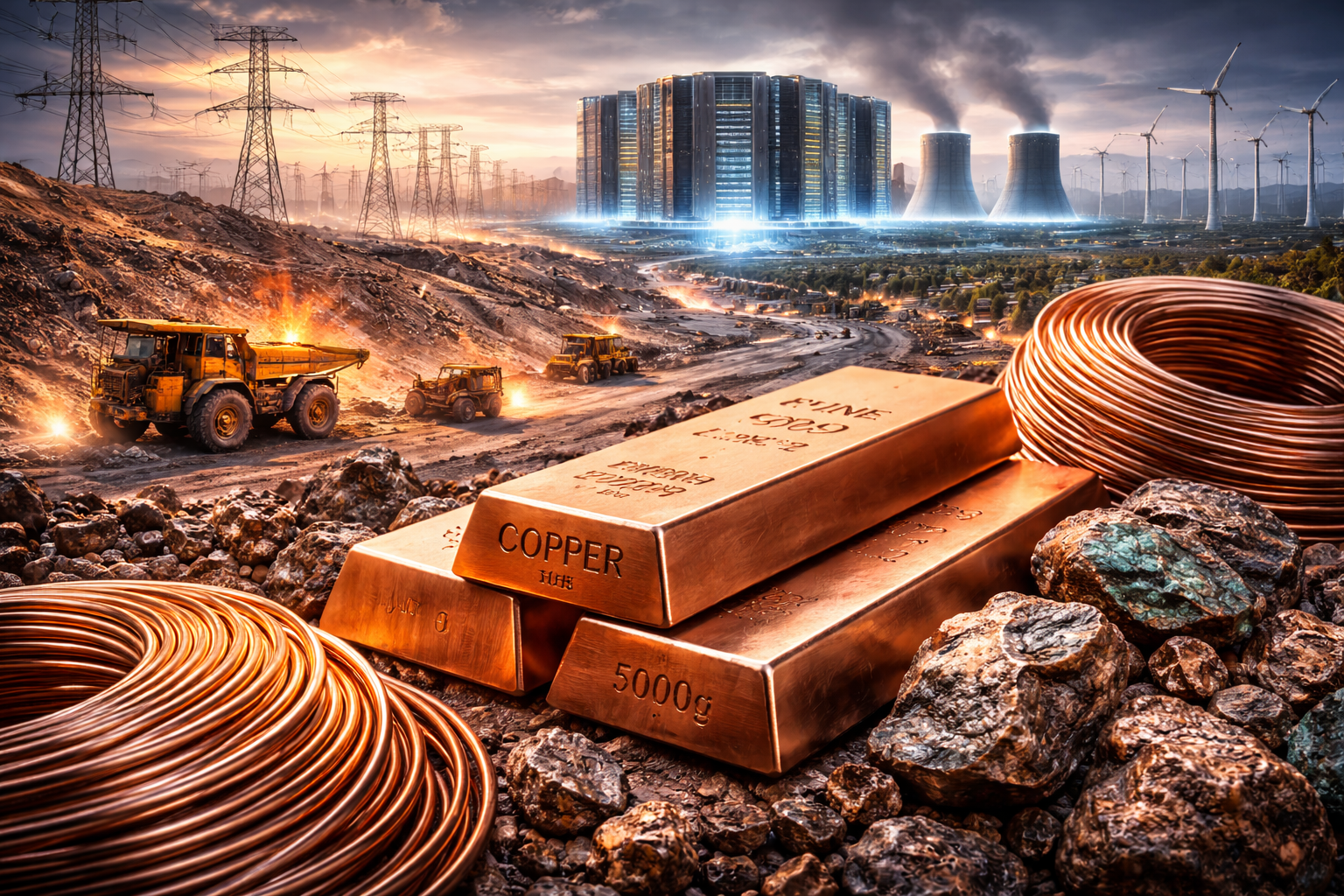
The artificial intelligence boom is no longer just about software and semiconductors—it’s increasingly about raw materials. As the world races to build AI data centers, electrify transportation, and modernize power grids, one metal is emerging as a critical foundation of the global economy: copper.
Investors across Wall Street are paying close attention. Copper prices have climbed sharply in recent months, and mining companies are benefiting from renewed interest in industrial metals. The surge reflects a broader structural shift as the world moves toward digital infrastructure, renewable energy systems, and electrified economies.
Among the biggest beneficiaries is Freeport‑McMoRan, the largest publicly traded copper producer in the United States. The company’s stock has remained resilient despite broader market volatility, gaining roughly 20% year-to-date and more than 75% over the past year. The rally highlights how investors are increasingly positioning themselves for a long-term supply crunch in copper markets.
With AI infrastructure expansion accelerating and global electrification gathering momentum, analysts believe the copper market may be entering one of its most significant growth cycles in decades.
The New Drivers of Copper Demand
Copper has long been essential for construction, electronics, and industrial manufacturing. However, the current surge in demand is being driven by a new set of powerful technological trends.
AI Data Center Expansion
Artificial intelligence infrastructure requires enormous amounts of electricity and connectivity, both of which depend heavily on copper.
Large AI data centers use copper extensively in:
- Power distribution systems
- Cooling infrastructure
- High-speed networking equipment
- Electrical wiring and transformers
According to estimates from industry researchers cited by S&P Global and International Energy Agency, global data-center electricity consumption could double by the end of the decade, largely due to AI workloads.
That expansion translates into significant copper demand. Each hyperscale data center can require thousands of tons of copper for wiring, energy systems, and networking infrastructure.
Technology giants including Microsoft, Amazon, and Alphabet are investing billions into AI infrastructure globally, indirectly fueling demand for industrial metals.
Electrification of Transportation
Electric vehicles represent another major source of copper demand.
An EV requires two to four times more copper than a traditional internal combustion vehicle. Copper is used extensively in:
- electric motors
- battery connections
- charging infrastructure
- power electronics
Automakers including Tesla and General Motors continue to expand EV production, while governments worldwide are encouraging the transition to electric mobility through incentives and regulatory policies.
This electrification trend is expected to drive a significant increase in copper consumption over the next decade.
Renewable Energy and Power Grid Upgrades
Copper is also essential for renewable energy systems and modern electricity grids.
Solar panels, wind turbines, and large-scale battery storage systems all require extensive copper wiring. Additionally, upgrading aging power grids to support renewable energy and AI data centers is creating new demand for electrical infrastructure.
According to estimates cited by McKinsey & Company and the International Copper Association, global electrification trends could push copper demand up by more than 40% by 2040.
Power grid modernization alone is expected to require massive new investments in transformers, substations, and transmission lines—all copper-intensive systems.
Copper Prices Reflect a Tightening Market
The growing demand for copper is already influencing commodity markets.
Copper prices have risen more than 25% since early 2025, according to industry data reported by Bloomberg and Reuters. Analysts say the rally reflects concerns about long-term supply shortages as demand accelerates.
Forecasts from several major investment banks suggest prices could increase another 20% to 25% by 2027.
The key issue is supply.
Copper mines typically require 10 to 15 years to develop, from discovery to production. Meanwhile, the pipeline of new mining projects has remained relatively limited due to environmental regulations, permitting challenges, and capital constraints.
As a result, the copper market could face a significant supply gap just as demand surges.
Why Mining Companies Are Benefiting
Mining companies with large copper reserves are already seeing increased investor interest.
Freeport‑McMoRan operates some of the world’s most significant copper assets, including the massive Grasberg mine in Indonesia and operations across the Americas.
The company has become a key barometer for the copper market. Strong price performance and rising demand expectations have helped support the stock even during periods of broader market volatility.
Other major copper producers attracting investor attention include:
- BHP
- Rio Tinto
- Teck Resources
These firms are expanding exploration and production projects to meet anticipated demand.
However, many analysts believe supply growth may still struggle to keep pace with consumption trends driven by AI and electrification.
Why This Matters for Investors
Copper is increasingly being described as the “metal of the future economy.”
Unlike some commodities driven primarily by cyclical demand, copper is now tied to several structural trends shaping global markets:
- artificial intelligence infrastructure
- electric vehicles
- renewable energy expansion
- power grid modernization
Because these trends are expected to last for decades, copper demand could remain strong even during economic slowdowns.
For investors, this creates potential opportunities across multiple segments of the market, including:
- mining companies
- commodity ETFs
- infrastructure suppliers
- power equipment manufacturers
The copper market also offers indirect exposure to several fast-growing sectors such as AI, clean energy, and electric transportation.
Future Trends to Watch
Several developments could shape the copper market in the coming years.
AI Infrastructure Spending
Technology companies are expected to invest hundreds of billions of dollars in AI infrastructure, including data centers and power systems. Each new facility increases copper demand.
Supply Constraints
New copper mines are difficult and expensive to develop. Environmental regulations and permitting challenges may further limit supply growth.
Government Policy
Governments in the United States, Canada, and Europe are increasingly focused on securing critical minerals supply chains. Copper could become a strategic resource for economic security.
Emerging Technologies
New battery technologies, renewable energy installations, and next-generation electrical systems could all increase copper consumption.
Key Investment Insight
The surge in copper demand highlights a broader shift in global markets. As economies become more digital and electrified, industrial metals are becoming strategic assets rather than simple commodities.
Investors looking to capitalize on this trend may consider monitoring:
- copper mining companies
- critical minerals producers
- infrastructure suppliers supporting AI and electrification
- commodity-focused exchange-traded funds
Companies with strong reserves, efficient production, and exposure to long-term infrastructure projects may be particularly well positioned.
Copper’s growing importance underscores how technological revolutions often depend on physical resources. As artificial intelligence and electrification reshape the global economy, the metals powering these systems could become some of the most valuable assets in financial markets.
For investors seeking to stay ahead of emerging trends, the copper market offers a powerful lens into the future of infrastructure, energy, and technology.
Stay informed with MoneyNews.Today as we continue delivering daily insights on the market trends, economic shifts, and investment opportunities shaping the global financial landscape.




