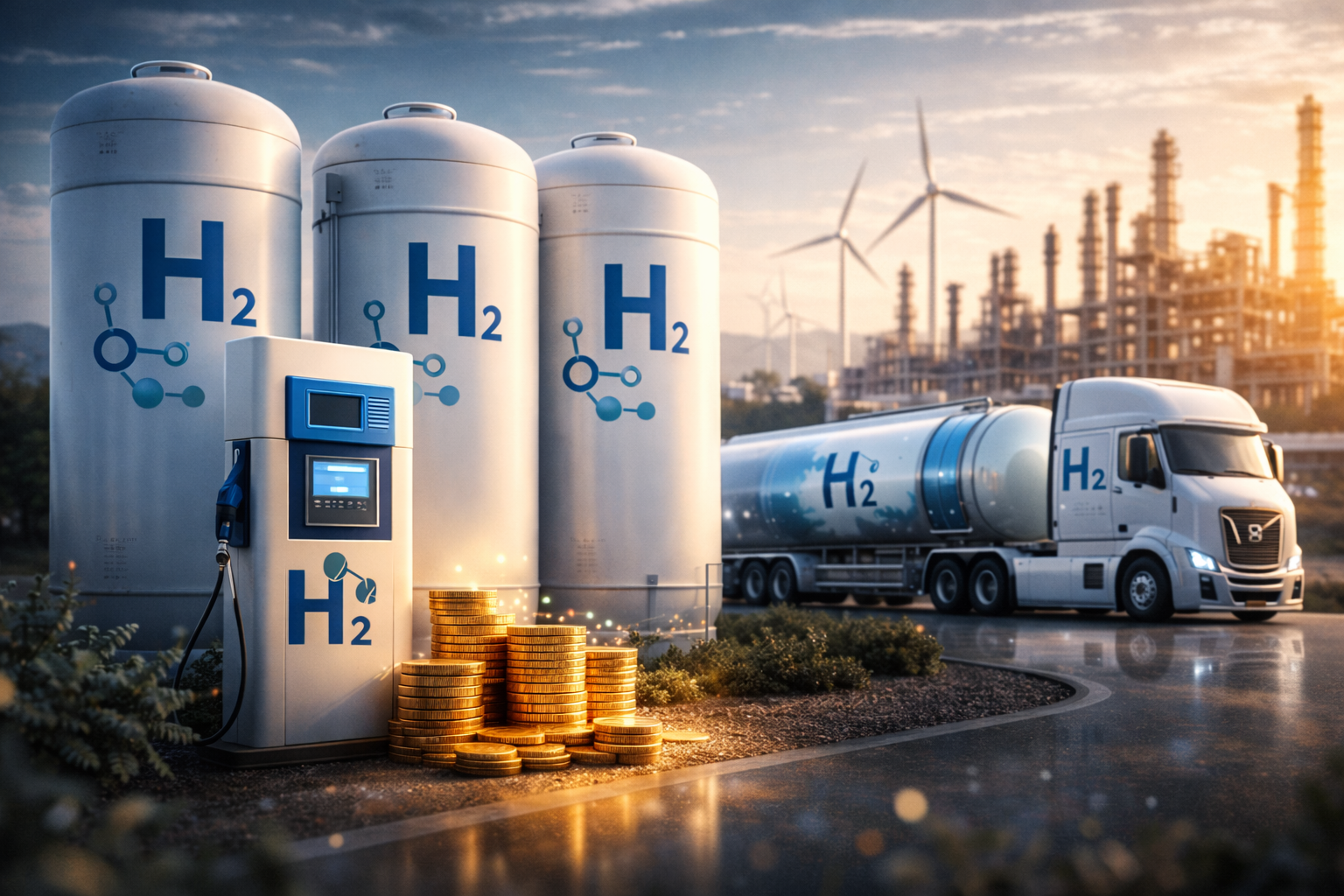
The global energy transition is accelerating, and hydrogen is quickly emerging as one of the most closely watched opportunities for investors seeking exposure to the next generation of clean energy. A new $3 billion investment consortium targeting hydrogen fuel production and infrastructure across North America signals growing momentum behind the sector as governments and corporations push to meet ambitious decarbonization targets.
According to industry coverage from Reuters Energy and the Financial Times, a coalition of energy companies, infrastructure developers, and financial institutions has committed billions of dollars toward scaling hydrogen production capacity in the United States and Canada. The investment aims to accelerate the deployment of hydrogen-powered industrial solutions, transportation fuel systems, and supporting infrastructure.
For investors, the development reflects a broader shift in global energy markets. As countries seek alternatives to fossil fuels, hydrogen is increasingly viewed as a versatile solution capable of decarbonizing sectors that renewable electricity alone cannot easily address.
With government incentives expanding and private capital flowing into hydrogen technology, the sector is gaining attention as one of the most promising emerging industries within the clean energy transition.
Hydrogen’s Growing Role in the Global Energy Transition
Hydrogen has long been discussed as a potential clean energy carrier, but only in recent years has the technology begun to scale commercially.
Unlike traditional fossil fuels, hydrogen produces no carbon emissions when used in fuel cells, making it particularly attractive for industries seeking to reduce greenhouse gas output. Hydrogen can power vehicles, support heavy industrial processes, store renewable energy, and provide backup electricity for large-scale infrastructure.
According to the International Energy Agency, hydrogen demand could increase sixfold by 2050 if governments and industries continue implementing aggressive decarbonization policies.
Much of the current excitement centers around green hydrogen, which is produced using renewable energy sources such as wind and solar power. Unlike conventional hydrogen production methods that rely on natural gas, green hydrogen generates minimal carbon emissions.
The investment consortium in North America aims to support projects that produce hydrogen using low-carbon or renewable energy sources while expanding the infrastructure necessary to transport and store the fuel.
This includes pipelines, refueling stations, and industrial distribution networks.
Why Governments Are Backing Hydrogen
Government policy is playing a major role in accelerating hydrogen investment.
The United States and Canada have both introduced incentives designed to stimulate clean energy development, including hydrogen projects.
In the U.S., the Inflation Reduction Act provides significant tax credits for clean hydrogen production. These incentives can lower production costs dramatically, making hydrogen more competitive with traditional fuels.
Similarly, Canada has introduced its own hydrogen strategy aimed at positioning the country as a major supplier of low-carbon hydrogen for both domestic and export markets.
Government support is essential because hydrogen infrastructure requires substantial upfront investment. Building production facilities, transportation networks, and fueling stations involves significant capital expenditures before projects begin generating revenue.
However, once operational, hydrogen infrastructure can serve as a long-term backbone of the clean energy economy.
According to industry analysis from BloombergNEF, global hydrogen investments could exceed $500 billion by 2030, driven by government incentives and corporate sustainability commitments.
Why This Matters for Investors
The $3 billion investment consortium signals increasing confidence among energy companies and institutional investors in the long-term potential of hydrogen.
For investors seeking exposure to emerging clean energy sectors, hydrogen presents several compelling opportunities.
Industrial Decarbonization
Heavy industries such as steel production, chemicals manufacturing, and shipping are among the most difficult sectors to electrify. Hydrogen can serve as a substitute fuel in these industries, potentially unlocking massive new markets.
Transportation Applications
Hydrogen-powered fuel cells are gaining traction in sectors such as heavy-duty trucking, public transit, and aviation. Unlike battery-electric vehicles, hydrogen fuel cells can offer faster refueling times and longer operating ranges.
Energy Storage Solutions
Hydrogen can also function as a long-term energy storage medium, allowing excess renewable energy generated during peak production periods to be stored and used later.
Infrastructure Development
The hydrogen economy requires extensive infrastructure—pipelines, refueling stations, electrolyzers, and storage facilities. Companies involved in building and supplying this infrastructure could benefit significantly as the sector expands.
The Companies Leading Hydrogen Innovation
Several companies are emerging as leaders in hydrogen technology and infrastructure.
Fuel cell developers such as Plug Power and Ballard Power Systems have attracted investor attention for their work in hydrogen-powered transportation and industrial solutions.
Meanwhile, major energy companies are increasingly entering the hydrogen market to diversify their energy portfolios.
Oil and gas companies, utilities, and infrastructure developers are exploring hydrogen projects as part of their long-term decarbonization strategies.
This convergence of traditional energy companies and clean technology innovators is creating a complex but potentially lucrative ecosystem for investors.
Future Trends to Watch in the Hydrogen Economy
The hydrogen sector remains in the early stages of development, but several key trends could shape its future growth trajectory.
Falling Production Costs
Technological advancements and economies of scale are expected to reduce hydrogen production costs significantly over the coming decade.
Electrolyzer technology—the process used to split water into hydrogen and oxygen—is becoming more efficient as manufacturing capacity increases.
Global Hydrogen Trade
Countries with abundant renewable energy resources may become major exporters of hydrogen fuel. This could create new international energy trade routes similar to those currently dominated by oil and natural gas.
Corporate Sustainability Targets
Many multinational corporations have committed to net-zero emissions goals. Hydrogen solutions may play a critical role in helping companies achieve these targets.
Infrastructure Expansion
Hydrogen infrastructure remains limited compared to traditional fuel networks. Significant investment will be required to build pipelines, storage facilities, and fueling stations.
This infrastructure buildout could create opportunities for engineering firms, industrial suppliers, and energy developers.
Key Investment Insight
For investors evaluating emerging clean energy opportunities, hydrogen represents one of the most promising long-term sectors.
However, the industry also carries risks typical of early-stage technologies, including high capital requirements, regulatory uncertainty, and evolving technology standards.
Investors may want to focus on companies positioned to benefit from multiple aspects of the hydrogen value chain, including:
- Hydrogen production technologies
- Fuel cell manufacturing
- Infrastructure development
- Industrial applications of hydrogen energy
Government incentives and policy support will likely remain critical drivers of growth in this sector.
The $3 billion investment consortium in North America highlights the growing confidence that hydrogen could play a central role in the global transition toward cleaner energy systems.
As energy markets evolve and new technologies reshape the global economy, emerging sectors like hydrogen will continue to generate both opportunities and challenges for investors.
For more insights into emerging industries, market trends, and investment opportunities shaping the future economy, stay connected with MoneyNews.Today, your trusted source for daily investor news and analysis.